THE ADVENTURE COLLECTIVE® · Independent discovery and booking for outdoor travel

A compact, two-day winter circuit from Reykjavík that stitches together Þingvellir’s tectonic rift, explosive geysers, glittering glaciers and the black-sand drama of the South Coast. Expect early starts, sturdy boots, and unforgettable geology.
A compact, two-day winter circuit from Reykjavík that stitches together Þingvellir’s tectonic rift, explosive geysers, glittering glaciers and the black-sand drama of the South Coast. Expect early starts, sturdy boots, and unforgettable geology.
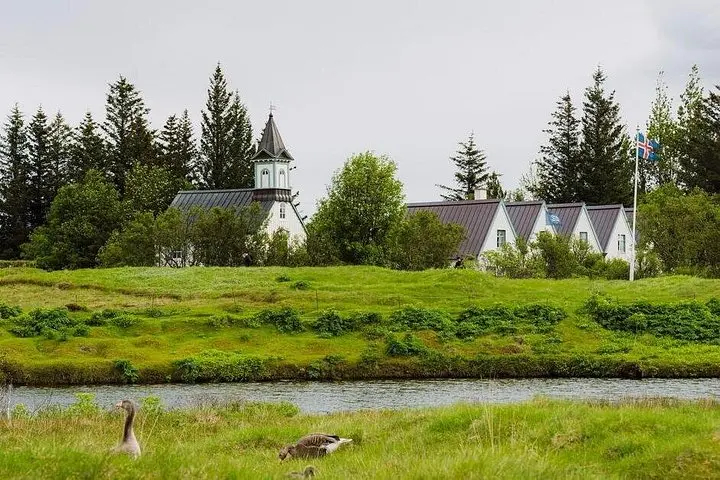
A slate-gray sky hangs low over Reykjavík as the minibus slides out of the city at first light, headlights cutting a warm path into the cold. On day one the road unfurls into the rift valley of Þingvellir, where the earth seems to be breathing—plates slowly pulling apart, a visible seam scored into basalt and birch. Guides move with practiced ease between facts and gestures: here the world divides geologically, and here the Icelandic parliament, the Althing, gathered in 930 AD to stake a claim on law and land.
Verified experiences and guided adventures in the surrounding area.
Operated by Arctic Adventures · Reykjavík, Capital Region
A slate-gray sky hangs low over Reykjavík as the minibus slides out of the city at first light, headlights cutting a warm path into the cold. On day one the road unfurls into the rift valley of Þingvellir, where the earth seems to be breathing—plates slowly pulling apart, a visible seam scored into basalt and birch. Guides move with practiced ease between facts and gestures: here the world divides geologically, and here the Icelandic parliament, the Althing, gathered in 930 AD to stake a claim on law and land.
Geysir’s steam writes short-lived signatures into the air. Strokkur punctuates the silence at regular intervals, throwing boiling water like a practiced athlete lifting a weight. At Gullfoss, the river stages a more muscular performance—two-tiered curtains dropping into a narrowing canyon, spray daring you closer, always reminding you that geology is choreography over millennia.
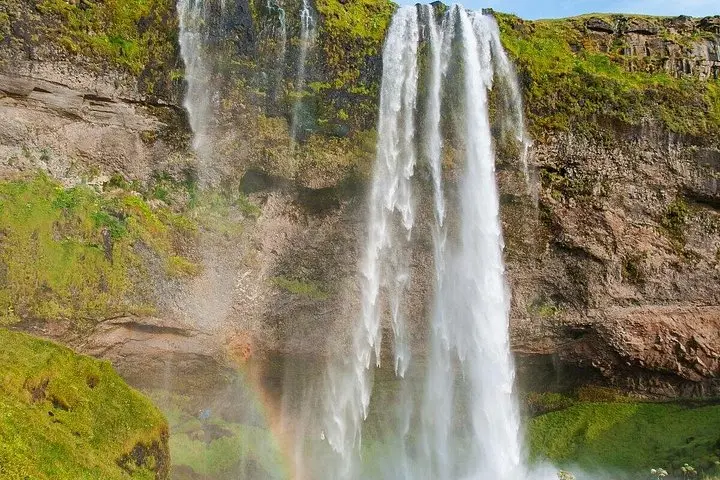
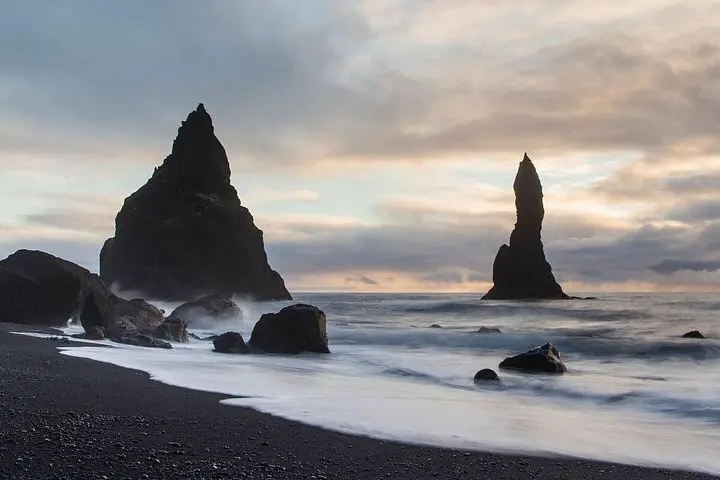
The second day opens toward the south, where ice and ocean argue for attention. Skógafoss thunders from sixty meters, its mist knitting rainbows when sun and water agree. Sólheimajökull exposes the layered scars of a glacier—blue corridors and meltwater pools—accessible from the moraine edges for a close but safe look at ancient ice. Reynisfjara’s black sand and Reynisdrangar basalt stacks feel intentionally theatrical; waves here are blunt instruments, and the arch at Dyrhólaey is a carved punctuation mark along the coast.
History and geology are the trip’s twin narrators: volcanic collapses create craters like Kerið, tectonics form rifts, and glaciers sculpt valleys and beaches. Culturally, the route threads through small coastal towns whose lives are tied to fishermen, sheep farmers, and the weather—communities that read forecasts like scripture.
Practicalities are straightforward. The tour runs in winter with hotel pickup options across Reykjavik; expect long daylight shadows and brief days—plan for early starts. Layers are the traveler's best friend: wool next to skin, an insulating mid-layer, and a waterproof shell. Footwear should be sturdy and grippy; some stops require uneven, sometimes icy walking. Bring a refillable bottle (water is potable), and a power bank for cold batteries and cameras.
Photography rewards patience—low winter sun sculpts the landscape—while guides keep timing tight to move the group between viewpoints. Respect closed areas, stay behind safety barriers near cliffs and waves, and follow your guide on glacier-edge access. With a practical pack and a mindful pace, the two-day itinerary compresses Iceland’s elemental forces into an intense, carefully choreographed weekend of waterfalls, geysers, glaciers, and coast.
Pick-up is available from a list of Reykjavik hotels and designated meeting points; you select your preferred pickup during booking. Central city pickups are limited due to traffic restrictions.
Walking is short and moderate—mostly boardwalks, viewpoints and short trails; some uneven or icy sections are present at waterfalls and glacier edges.
Breakfast is included; other meals are not. Guides will schedule stops where you can buy food in towns like Selfoss or Vík.
Yes—the itinerary runs in winter but daylight hours are shorter and weather can change rapidly; the operator may cancel for unsafe conditions with refund rules applied.
The trip visits Sólheimajökull’s edge for walking along moraine paths, but glacier walking or guided ice climbs require specialized equipment and are not included.
Drone use is restricted in many protected areas; check local regulations and ask the guide before launching to avoid fines and disturbance.
Arctic Adventures operates guided outdoor trips and adventures with an emphasis on safety, stewardship, and memorable experiences.
A slate-gray sky hangs low over Reykjavík as the minibus slides out of the city at first light, headlights cutting a warm path into the cold. On day one the road unfurls into the rift valley of Þingvellir, where the earth seems to be breathing—plates slowly pulling apart, a visible seam scored into basalt and birch. Guides move with practiced ease between facts and gestures: here the world divides geologically, and here the Icelandic parliament, the Althing, gathered in 930 AD to stake a claim on law and land.
A slate-gray sky hangs low over Reykjavík as the minibus slides out of the city at first light, headlights cutting a warm path into the cold. On day one the road unfurls into the rift valley of Þingvellir, where the earth seems to be breathing—plates slowly pulling apart, a visible seam scored into basalt and birch. Guides move with practiced ease between facts and gestures: here the world divides geologically, and here the Icelandic parliament, the Althing, gathered in 930 AD to stake a claim on law and land.
Geysir’s steam writes short-lived signatures into the air. Strokkur punctuates the silence at regular intervals, throwing boiling water like a practiced athlete lifting a weight. At Gullfoss, the river stages a more muscular performance—two-tiered curtains dropping into a narrowing canyon, spray daring you closer, always reminding you that geology is choreography over millennia.
The second day opens toward the south, where ice and ocean argue for attention. Skógafoss thunders from sixty meters, its mist knitting rainbows when sun and water agree. Sólheimajökull exposes the layered scars of a glacier—blue corridors and meltwater pools—accessible from the moraine edges for a close but safe look at ancient ice. Reynisfjara’s black sand and Reynisdrangar basalt stacks feel intentionally theatrical; waves here are blunt instruments, and the arch at Dyrhólaey is a carved punctuation mark along the coast.
History and geology are the trip’s twin narrators: volcanic collapses create craters like Kerið, tectonics form rifts, and glaciers sculpt valleys and beaches. Culturally, the route threads through small coastal towns whose lives are tied to fishermen, sheep farmers, and the weather—communities that read forecasts like scripture.
Practicalities are straightforward. The tour runs in winter with hotel pickup options across Reykjavik; expect long daylight shadows and brief days—plan for early starts. Layers are the traveler's best friend: wool next to skin, an insulating mid-layer, and a waterproof shell. Footwear should be sturdy and grippy; some stops require uneven, sometimes icy walking. Bring a refillable bottle (water is potable), and a power bank for cold batteries and cameras.
Photography rewards patience—low winter sun sculpts the landscape—while guides keep timing tight to move the group between viewpoints. Respect closed areas, stay behind safety barriers near cliffs and waves, and follow your guide on glacier-edge access. With a practical pack and a mindful pace, the two-day itinerary compresses Iceland’s elemental forces into an intense, carefully choreographed weekend of waterfalls, geysers, glaciers, and coast.