THE ADVENTURE COLLECTIVE® · Independent discovery and booking for outdoor travel

Coastal wildlife, pre-Columbian geoglyphs and adrenaline on desert dunes—this two-day route connects Ballestas Islands, Paracas Reserve, a Nazca Lines flight and Huacachina sandboarding. Expect long drives, short flights and big contrasts between ocean and desert.
Coastal wildlife, pre-Columbian geoglyphs and adrenaline on desert dunes—this two-day route connects Ballestas Islands, Paracas Reserve, a Nazca Lines flight and Huacachina sandboarding. Expect long drives, short flights and big contrasts between ocean and desert.
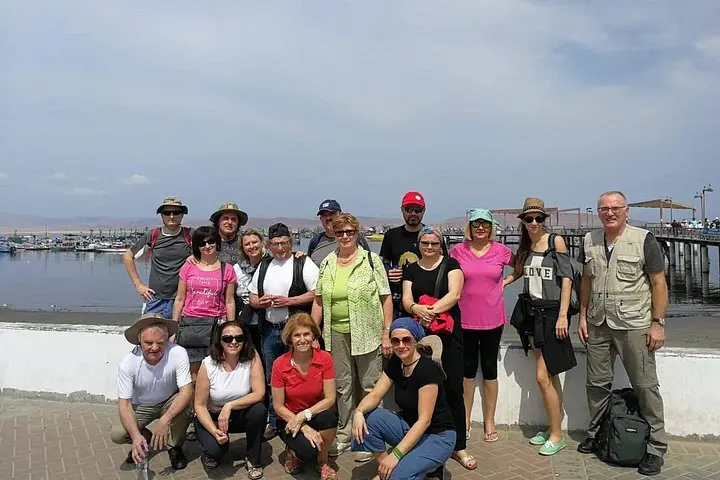
The trip begins with salt spray and a low, insistent wind as the boat cuts toward the Ballestas Islands. Sea lions bark from tumbled rocks, and darters and pelicans wheel over kelp beds while the desert cliffs of Paracas stand like bleached cliffs against the Pacific. By midday the coastline’s ochres give way to the wind-scoured flats of the Paracas National Reserve, where bird colonies and sheer coastal geology read like chapters of a living atlas.
Verified experiences and guided adventures in the surrounding area.
Operated by Peruvian Worldview · Nazca, Ica Region
The trip begins with salt spray and a low, insistent wind as the boat cuts toward the Ballestas Islands. Sea lions bark from tumbled rocks, and darters and pelicans wheel over kelp beds while the desert cliffs of Paracas stand like bleached cliffs against the Pacific. By midday the coastline’s ochres give way to the wind-scoured flats of the Paracas National Reserve, where bird colonies and sheer coastal geology read like chapters of a living atlas.
The route then moves inland: a winery stop introduces coastal Ica’s pisco culture before an evening in Nazca. The next morning, the small aircraft lifts from the desert plain and reveals the Nazca Lines—long, precise geoglyphs cut into the dry soil by pre-Columbian engineers. From the air the figures are crisp; on the ground the scale is humbling.
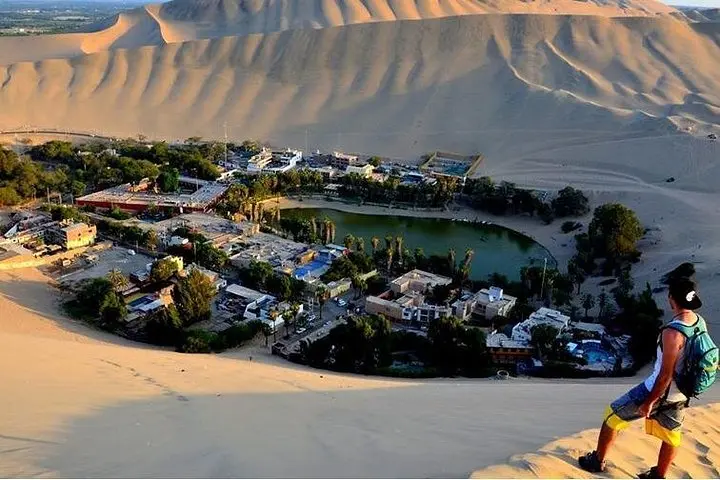
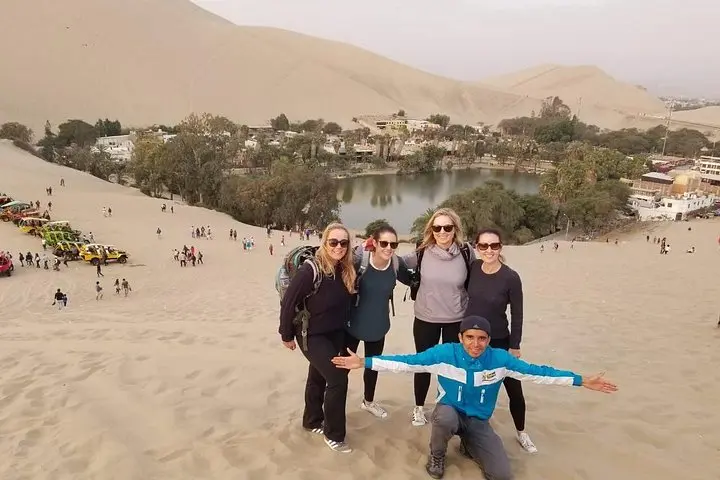
After the flight the rhythm changes again at Huacachina, a lagoon-ringed oasis where dune buggies climb soft faces and sandboards slice the slopes. Dunes here reach tens of meters and demand quick reflexes and a steady stance.
History threads through the route: Paracas and Nazca cultures shaped the coast and desert between roughly 800 BCE and 500 CE, leaving textiles and geoglyphs that still puzzle researchers. Geologically, you’ll see coastal uplift, marine terraces and aeolian dunes carved by persistent Pacific winds.
Practical: plan for strong sun, variable temperatures from sea level to desert plain, and possible motion or air sickness on the Nazca flight. Moderate fitness is enough, but bring secure footwear for dunes and layered clothing for coastal fog or desert heat.
Typical sightseeing flights last about 30–40 minutes in the air; expect preflight briefings and transit time that extend the visit to roughly an hour.
No guarantee, but operators reliably see Humboldt penguins, Guanay cormorants and South American sea lions on most calm days.
No — operators provide short coaching and adjustable boards; most beginners run a few easy slopes before trying steeper descents.
A moderate level of fitness is recommended: ability to climb in/out of boats, board small aircraft, and climb sandy slopes for short periods.
Peruvian Worldview operates guided outdoor trips and adventures with an emphasis on safety, stewardship, and memorable experiences.

The trip begins with salt spray and a low, insistent wind as the boat cuts toward the Ballestas Islands. Sea lions bark from tumbled rocks, and darters and pelicans wheel over kelp beds while the desert cliffs of Paracas stand like bleached cliffs against the Pacific. By midday the coastline’s ochres give way to the wind-scoured flats of the Paracas National Reserve, where bird colonies and sheer coastal geology read like chapters of a living atlas.
The trip begins with salt spray and a low, insistent wind as the boat cuts toward the Ballestas Islands. Sea lions bark from tumbled rocks, and darters and pelicans wheel over kelp beds while the desert cliffs of Paracas stand like bleached cliffs against the Pacific. By midday the coastline’s ochres give way to the wind-scoured flats of the Paracas National Reserve, where bird colonies and sheer coastal geology read like chapters of a living atlas.
The route then moves inland: a winery stop introduces coastal Ica’s pisco culture before an evening in Nazca. The next morning, the small aircraft lifts from the desert plain and reveals the Nazca Lines—long, precise geoglyphs cut into the dry soil by pre-Columbian engineers. From the air the figures are crisp; on the ground the scale is humbling.
After the flight the rhythm changes again at Huacachina, a lagoon-ringed oasis where dune buggies climb soft faces and sandboards slice the slopes. Dunes here reach tens of meters and demand quick reflexes and a steady stance.
History threads through the route: Paracas and Nazca cultures shaped the coast and desert between roughly 800 BCE and 500 CE, leaving textiles and geoglyphs that still puzzle researchers. Geologically, you’ll see coastal uplift, marine terraces and aeolian dunes carved by persistent Pacific winds.
Practical: plan for strong sun, variable temperatures from sea level to desert plain, and possible motion or air sickness on the Nazca flight. Moderate fitness is enough, but bring secure footwear for dunes and layered clothing for coastal fog or desert heat.