THE ADVENTURE COLLECTIVE® · Independent discovery and booking for outdoor travel

Two days of big skies and deep canyons: this private tour from Las Vegas packs Grand Canyon viewpoints, a Navajo-guided Lower Antelope Canyon walk and the Horseshoe Bend overlook into a compact, photography-friendly itinerary. Ideal for travelers who want iconic views without the planning overhead.
Two days of big skies and deep canyons: this private tour from Las Vegas packs Grand Canyon viewpoints, a Navajo-guided Lower Antelope Canyon walk and the Horseshoe Bend overlook into a compact, photography-friendly itinerary. Ideal for travelers who want iconic views without the planning overhead.
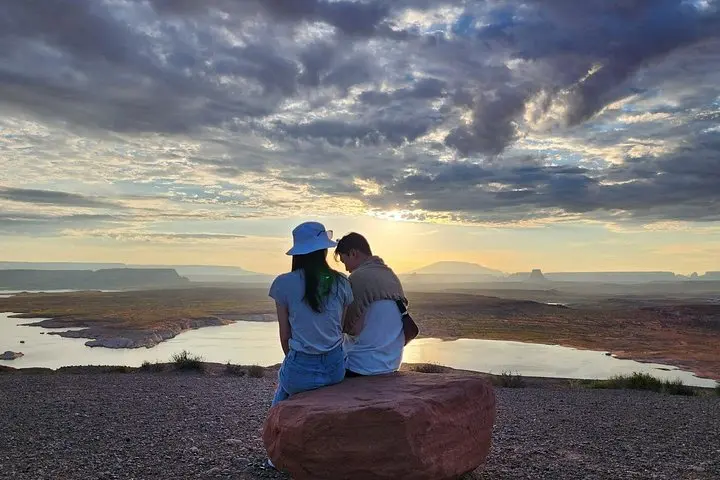
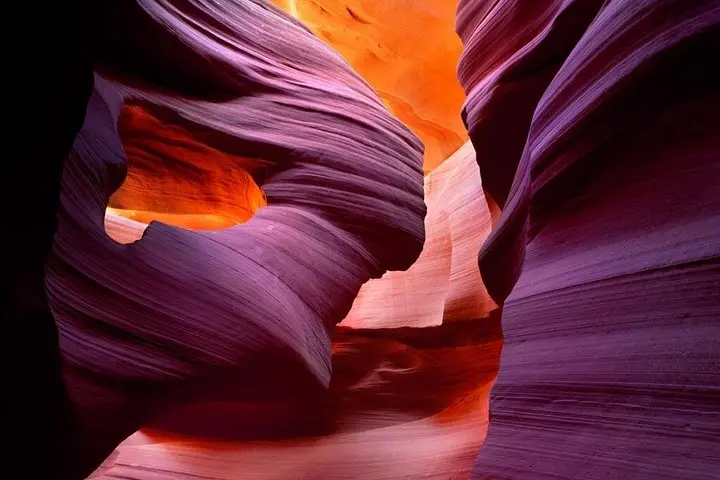
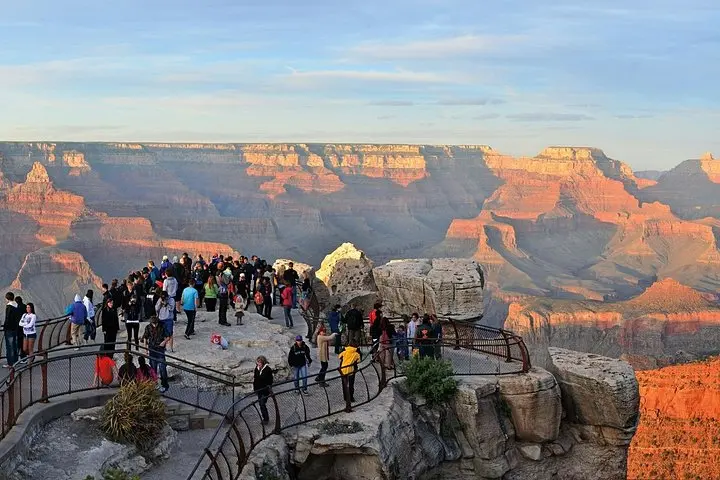
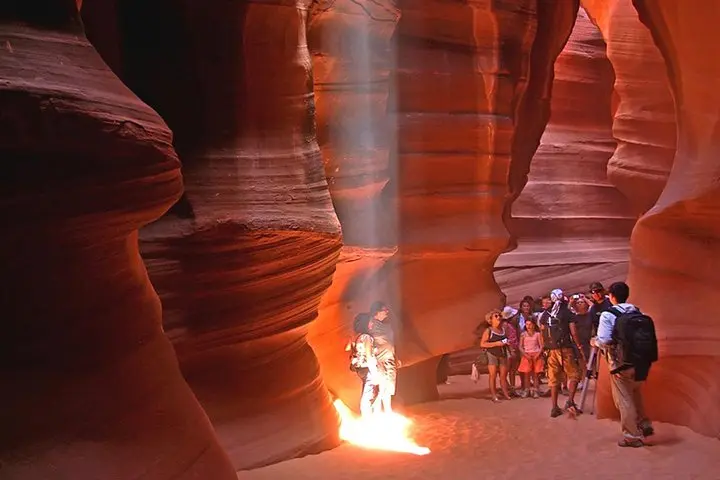
The morning light over the Mojave flattens Las Vegas into a grid of long shadows and then falls away as the tour bus hums north, the Strip shrinking behind a ribbon of highway. By midday the landscape has changed from scrub to rust-colored cliffs: first the distant rim of the Grand Canyon, then the tight, liquid curves of Antelope Canyon where sunlight threads down like a spotlight. Over two days the itinerary reads like the southwest's highlight reel — Grand Canyon viewpoints, a Navajo-guided walk through Lower Antelope Canyon, the cliff-top panorama at Horseshoe Bend, then a sweep through Zion and Bryce on the return route — but it’s the small moments that stick: the sudden quiet on a rim trail, the warm glow inside a slot canyon, wind working at millennia of sandstone.
Verified experiences and guided adventures in the surrounding area.
Operated by Q Travel LLC · Page, Arizona
The morning light over the Mojave flattens Las Vegas into a grid of long shadows and then falls away as the tour bus hums north, the Strip shrinking behind a ribbon of highway. By midday the landscape has changed from scrub to rust-colored cliffs: first the distant rim of the Grand Canyon, then the tight, liquid curves of Antelope Canyon where sunlight threads down like a spotlight. Over two days the itinerary reads like the southwest's highlight reel — Grand Canyon viewpoints, a Navajo-guided walk through Lower Antelope Canyon, the cliff-top panorama at Horseshoe Bend, then a sweep through Zion and Bryce on the return route — but it’s the small moments that stick: the sudden quiet on a rim trail, the warm glow inside a slot canyon, wind working at millennia of sandstone.
Geology here is a visible clock. The Grand Canyon's layered cliffs expose nearly 2 billion years of Earth’s history; the Colorado River, patient and persistent, cut deep while the Colorado Plateau slowly uplifted. Antelope Canyon’s narrow corridors are the work of flash-floods carving and polishing Navajo Sandstone into smooth, flowing walls. Cultural history is present too: Navajo guides lead the slot canyon walk and offer context about the land’s significance and meaning, and small towns like Page grew around dams, river routes and tourism that reshaped local economies.
The practical rhythm of this tour balances long driving legs with concentrated exploration. Expect two full travel days, one overnight in Page or nearby Kanab, and guided entries at Lower Antelope Canyon and park stops with time for short walks — Horseshoe Bend requires a steady 1.5-mile roundtrip walk on packed sand with a modest incline; Grand Canyon viewpoints are accessible but some overlooks involve uneven paths. Temperatures swing widely; desert sun can be relentless at midday while rim winds cut cool, especially in spring and fall.
Plan logistics: bring a refillable 1–2L water bottle, sturdy walking shoes with good grip, sun protection and a light layer for evening. Photography is a central part of the experience — guides often help frame shots inside Antelope Canyon — but be prepared for regulated time windows and soft light that shifts quickly.
This private two-day route offers a compressed but thoughtful way to see the region’s signature geology, cultural layers and big-sky vistas without planning every detail yourself. With a bit of preparation — timing your light, dressing in layers, and respecting local rules — it’s an efficient, memorable way to stand on the edge of some of the Southwest’s most dramatic landscapes.
Most stops require short walks from parking to viewpoints — expect up to 1.5 miles roundtrip on trails with sand and mild inclines; Antelope Canyon involves walking on narrow, even surfaces guided by your Navajo guide.
Yes — the tour is designed for a range of fitness levels, but participants should be able to walk short distances and manage steps; notify the operator of mobility needs for pickup and routing.
The tour includes specified facility fees and Antelope Canyon admission; check your booking confirmation for a full list of inclusions.
Yes — flash floods, high winds or extreme conditions can close slot canyons or modify park access; the operator may reschedule or cancel per their policy.
A wide-angle lens and a mid-range zoom are versatile; inside Antelope Canyon low-light performance helps — bring a small tripod only if allowed by your guide.
Accommodations are typically one night in Page or Kanab; your overnight will be a hotel rather than camping.
Q Travel LLC operates guided outdoor trips and adventures with an emphasis on safety, stewardship, and memorable experiences.
The morning light over the Mojave flattens Las Vegas into a grid of long shadows and then falls away as the tour bus hums north, the Strip shrinking behind a ribbon of highway. By midday the landscape has changed from scrub to rust-colored cliffs: first the distant rim of the Grand Canyon, then the tight, liquid curves of Antelope Canyon where sunlight threads down like a spotlight. Over two days the itinerary reads like the southwest's highlight reel — Grand Canyon viewpoints, a Navajo-guided walk through Lower Antelope Canyon, the cliff-top panorama at Horseshoe Bend, then a sweep through Zion and Bryce on the return route — but it’s the small moments that stick: the sudden quiet on a rim trail, the warm glow inside a slot canyon, wind working at millennia of sandstone.
The morning light over the Mojave flattens Las Vegas into a grid of long shadows and then falls away as the tour bus hums north, the Strip shrinking behind a ribbon of highway. By midday the landscape has changed from scrub to rust-colored cliffs: first the distant rim of the Grand Canyon, then the tight, liquid curves of Antelope Canyon where sunlight threads down like a spotlight. Over two days the itinerary reads like the southwest's highlight reel — Grand Canyon viewpoints, a Navajo-guided walk through Lower Antelope Canyon, the cliff-top panorama at Horseshoe Bend, then a sweep through Zion and Bryce on the return route — but it’s the small moments that stick: the sudden quiet on a rim trail, the warm glow inside a slot canyon, wind working at millennia of sandstone.
Geology here is a visible clock. The Grand Canyon's layered cliffs expose nearly 2 billion years of Earth’s history; the Colorado River, patient and persistent, cut deep while the Colorado Plateau slowly uplifted. Antelope Canyon’s narrow corridors are the work of flash-floods carving and polishing Navajo Sandstone into smooth, flowing walls. Cultural history is present too: Navajo guides lead the slot canyon walk and offer context about the land’s significance and meaning, and small towns like Page grew around dams, river routes and tourism that reshaped local economies.
The practical rhythm of this tour balances long driving legs with concentrated exploration. Expect two full travel days, one overnight in Page or nearby Kanab, and guided entries at Lower Antelope Canyon and park stops with time for short walks — Horseshoe Bend requires a steady 1.5-mile roundtrip walk on packed sand with a modest incline; Grand Canyon viewpoints are accessible but some overlooks involve uneven paths. Temperatures swing widely; desert sun can be relentless at midday while rim winds cut cool, especially in spring and fall.
Plan logistics: bring a refillable 1–2L water bottle, sturdy walking shoes with good grip, sun protection and a light layer for evening. Photography is a central part of the experience — guides often help frame shots inside Antelope Canyon — but be prepared for regulated time windows and soft light that shifts quickly.
This private two-day route offers a compressed but thoughtful way to see the region’s signature geology, cultural layers and big-sky vistas without planning every detail yourself. With a bit of preparation — timing your light, dressing in layers, and respecting local rules — it’s an efficient, memorable way to stand on the edge of some of the Southwest’s most dramatic landscapes.