THE ADVENTURE COLLECTIVE® · Independent discovery and booking for outdoor travel

Two days trace the best of Guilin: the stepped rice terraces of Longji and a peaceful Li River bamboo cruise. Expect a mix of steep stone steps, village culture and panoramic karst views.
Two days trace the best of Guilin: the stepped rice terraces of Longji and a peaceful Li River bamboo cruise. Expect a mix of steep stone steps, village culture and panoramic karst views.
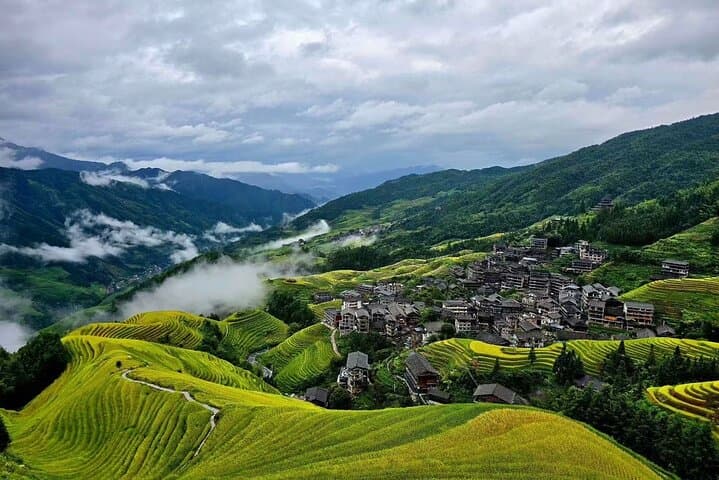
A mist lifts off the Li River as a long, narrow bamboo boat slips from Yangdi Pier; karst peaks slice the pale sky and the river seems to urge you forward. On day one the road climbs into the Dragon’s Backbone — terraces cut into slopes like giant steps — and the air tastes of wet earth and wood smoke.
Verified experiences and guided adventures in the surrounding area.
Operated by 桂林传美旅游服务有限公司 · Guilin, Guangxi
A mist lifts off the Li River as a long, narrow bamboo boat slips from Yangdi Pier; karst peaks slice the pale sky and the river seems to urge you forward. On day one the road climbs into the Dragon’s Backbone — terraces cut into slopes like giant steps — and the air tastes of wet earth and wood smoke.
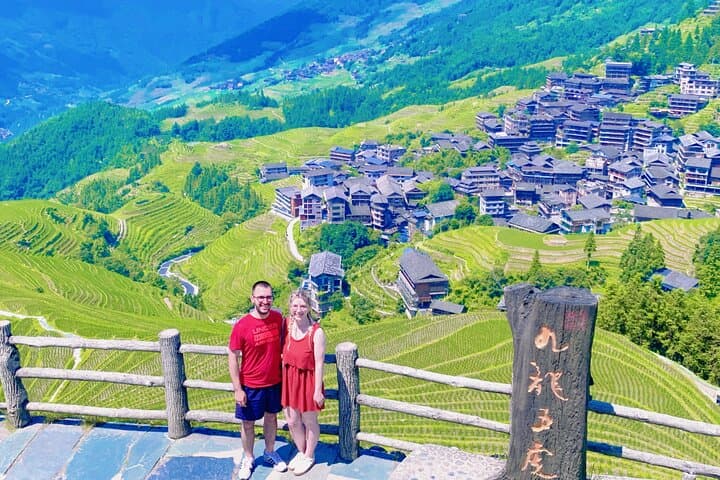
The Longji (Longsheng) terraces were sculpted over centuries by Zhuang and Yao farmers; Ping’an and Dazhai villages still show traditional stilt houses, hand-woven cloth and the Red Yao’s long hair culture in Huangluo. The karst towers of the Li River are limestone skeletons shaped by marine sediment and millennia of erosion; Xianggong Hill offers a compact panorama that photographers prize at sunrise.
Expect two contrasting days: steep stone steps and rice-bench trails with a 1.5–2 hour hike through Ping’an terraces, then a calm 50-minute bamboo-boat stretch downstream past fishermen, paddies and groves. Cultural stops include a short village visit where craft and costume explain local identity.
Practical: start early to beat buses, wear grippy footwear for wet stone steps, and carry water — several tea houses and simple restaurants provide meals. Weather shifts quickly in spring and autumn; a light rain shell and layered clothing make the trip comfortable. Mobility-wise the tour suits steady walkers; private transport cuts time between sites. Bring a small daypack, camera with extra battery, and some cash for markets. The experience balances active trail time, easy river passage and intimate cultural moments — a compact portrait of Guilin’s landscape and living traditions.
The itinerary typically covers private transport and guide/driver services; entrance fees and meals at local restaurants are usually not included—confirm at booking.
The Ping’an hike is moderate: roughly 1.5–2 hours over stone steps and narrow paths; steady footwear and basic fitness are recommended.
Yes—on the Yulong/Meeting Dragon River the option to raft or walk is commonly offered; indicate your preference when booking.
Most operators provide pickup from Guilin city—confirm your pickup point and any extra travel time with the supplier.
桂林传美旅游服务有限公司 operates guided outdoor trips and adventures with an emphasis on safety, stewardship, and memorable experiences.

A mist lifts off the Li River as a long, narrow bamboo boat slips from Yangdi Pier; karst peaks slice the pale sky and the river seems to urge you forward. On day one the road climbs into the Dragon’s Backbone — terraces cut into slopes like giant steps — and the air tastes of wet earth and wood smoke.
A mist lifts off the Li River as a long, narrow bamboo boat slips from Yangdi Pier; karst peaks slice the pale sky and the river seems to urge you forward. On day one the road climbs into the Dragon’s Backbone — terraces cut into slopes like giant steps — and the air tastes of wet earth and wood smoke.
The Longji (Longsheng) terraces were sculpted over centuries by Zhuang and Yao farmers; Ping’an and Dazhai villages still show traditional stilt houses, hand-woven cloth and the Red Yao’s long hair culture in Huangluo. The karst towers of the Li River are limestone skeletons shaped by marine sediment and millennia of erosion; Xianggong Hill offers a compact panorama that photographers prize at sunrise.
Expect two contrasting days: steep stone steps and rice-bench trails with a 1.5–2 hour hike through Ping’an terraces, then a calm 50-minute bamboo-boat stretch downstream past fishermen, paddies and groves. Cultural stops include a short village visit where craft and costume explain local identity.
Practical: start early to beat buses, wear grippy footwear for wet stone steps, and carry water — several tea houses and simple restaurants provide meals. Weather shifts quickly in spring and autumn; a light rain shell and layered clothing make the trip comfortable. Mobility-wise the tour suits steady walkers; private transport cuts time between sites. Bring a small daypack, camera with extra battery, and some cash for markets. The experience balances active trail time, easy river passage and intimate cultural moments — a compact portrait of Guilin’s landscape and living traditions.