THE ADVENTURE COLLECTIVE® · Independent discovery and booking for outdoor travel

Short on time but determined to hike the classic route? This two-day itinerary begins at Km 104 and delivers the core Inca Trail experience—archaeological sites, cloud-forest hiking, and an early-morning arrival at Machu Picchu. Ideal for fit travelers who value concentrated history and landscape in a small-group setting.
Short on time but determined to hike the classic route? This two-day itinerary begins at Km 104 and delivers the core Inca Trail experience—archaeological sites, cloud-forest hiking, and an early-morning arrival at Machu Picchu. Ideal for fit travelers who value concentrated history and landscape in a small-group setting.
Morning mist lifts off the cloud forest as you step onto the stonework left by the Incas at kilometer 104. The first day moves like a long, urgent conversation with the mountains—stepped terraces underfoot, a river daring you across narrow bridges, and the trail threading through archaeological sites before dropping into the thick, green valley at Aguas Calientes.
Verified experiences and guided adventures in the surrounding area.
Operated by Mapi Travel Agency · Aguas Calientes, Cusco
Morning mist lifts off the cloud forest as you step onto the stonework left by the Incas at kilometer 104. The first day moves like a long, urgent conversation with the mountains—stepped terraces underfoot, a river daring you across narrow bridges, and the trail threading through archaeological sites before dropping into the thick, green valley at Aguas Calientes.
The route compresses centuries: Inca waystations, stone altars at Chachabamba and the dramatic terraces of Wiñaywayna, then the narrow staircases that finish the day. Geologically the trail traces the Urubamba River’s canyon, where glacial carving meets volcanic uplift—steep slopes and sudden viewpoints are the rule. Culturally, the path still intersects Quechua-speaking communities who revere these mountains; many ruins were ceremonial or agricultural nodes in a wider Inca road network.
Practically, this is a fast-paced, permit-limited trek. You cover most distance on day one—expect steep ascents, carved stone steps, and muddy forest sections when wet. Arrive in Aguas Calientes for a single hotel night; an early bus next morning brings you to Machu Picchu for a guided two-hour visit before returning to Cusco.
Plan at least 48 hours in Cusco beforehand to acclimatize, carry rain protection and layered clothing, and use boots with good ankle support. Permits are restricted and usually handled by the operator—bring a valid passport, water, snacks, and a compact daypack. The trail rewards effort with dramatic ruins, waterfall glimpses, and an intimate first approach to Machu Picchu that larger circuits don’t provide.
Yes. Access to the Inca Trail is limited and controlled by permits; this itinerary includes the required permit for the Km 104 start and is handled by the operator.
It’s long and physically demanding with steep stone stair sections and uneven terrain—expect 6–9 hours of hiking and significant elevation changes in a single day.
No—this itinerary ends day one in Aguas Calientes; you take an early bus on day two for a guided visit to Machu Picchu before returning to Cusco.
Altitude is the main risk—spend time in Cusco to acclimatize, know symptoms of altitude sickness, and consult a physician if you have cardiovascular issues; travel insurance is recommended.
Mapi Travel Agency operates guided outdoor trips and adventures with an emphasis on safety, stewardship, and memorable experiences.


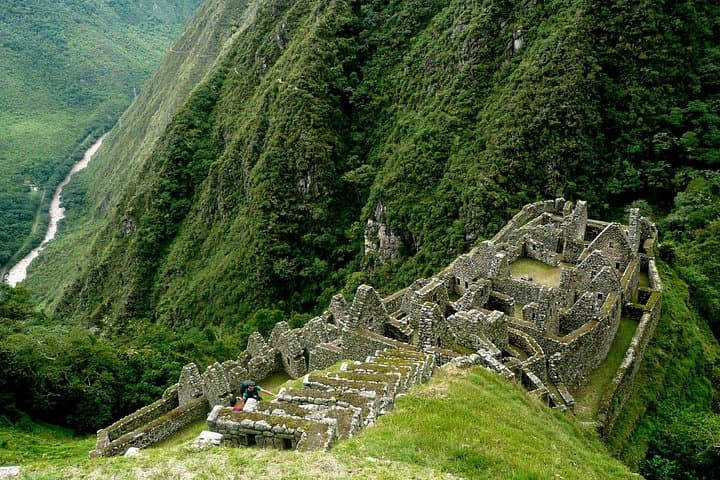

Morning mist lifts off the cloud forest as you step onto the stonework left by the Incas at kilometer 104. The first day moves like a long, urgent conversation with the mountains—stepped terraces underfoot, a river daring you across narrow bridges, and the trail threading through archaeological sites before dropping into the thick, green valley at Aguas Calientes.
Morning mist lifts off the cloud forest as you step onto the stonework left by the Incas at kilometer 104. The first day moves like a long, urgent conversation with the mountains—stepped terraces underfoot, a river daring you across narrow bridges, and the trail threading through archaeological sites before dropping into the thick, green valley at Aguas Calientes.
The route compresses centuries: Inca waystations, stone altars at Chachabamba and the dramatic terraces of Wiñaywayna, then the narrow staircases that finish the day. Geologically the trail traces the Urubamba River’s canyon, where glacial carving meets volcanic uplift—steep slopes and sudden viewpoints are the rule. Culturally, the path still intersects Quechua-speaking communities who revere these mountains; many ruins were ceremonial or agricultural nodes in a wider Inca road network.
Practically, this is a fast-paced, permit-limited trek. You cover most distance on day one—expect steep ascents, carved stone steps, and muddy forest sections when wet. Arrive in Aguas Calientes for a single hotel night; an early bus next morning brings you to Machu Picchu for a guided two-hour visit before returning to Cusco.
Plan at least 48 hours in Cusco beforehand to acclimatize, carry rain protection and layered clothing, and use boots with good ankle support. Permits are restricted and usually handled by the operator—bring a valid passport, water, snacks, and a compact daypack. The trail rewards effort with dramatic ruins, waterfall glimpses, and an intimate first approach to Machu Picchu that larger circuits don’t provide.