THE ADVENTURE COLLECTIVE® · Independent discovery and booking for outdoor travel

Move from the narrow, rose-red gorge of Petra to the wind-swept plains of Wadi Rum and end with a buoyant afternoon on the Dead Sea. This two-day guided tour stitches history, Bedouin hospitality, and desert geology into a compact Jordanian primer.
Move from the narrow, rose-red gorge of Petra to the wind-swept plains of Wadi Rum and end with a buoyant afternoon on the Dead Sea. This two-day guided tour stitches history, Bedouin hospitality, and desert geology into a compact Jordanian primer.
The Siq narrows like a throat and then opens — a sudden slice of carved rock and light revealing Al-Khazneh’s carved façade framed by sheer sandstone. You stand there with other travelers, dust on your shoes, while an unseen history hums through the canyon walls. Over the next 48 hours, the landscape will push you through three very different worlds: the rose-red crevices of Petra, the wind-sculpted emptiness of Wadi Rum, and finally, the buoyant, mineral-rich surface of the Dead Sea.
Verified experiences and guided adventures in the surrounding area.
Operated by Experience Jordan Adventures · Wadi Musa, Ma'an Governorate
The Siq narrows like a throat and then opens — a sudden slice of carved rock and light revealing Al-Khazneh’s carved façade framed by sheer sandstone. You stand there with other travelers, dust on your shoes, while an unseen history hums through the canyon walls. Over the next 48 hours, the landscape will push you through three very different worlds: the rose-red crevices of Petra, the wind-sculpted emptiness of Wadi Rum, and finally, the buoyant, mineral-rich surface of the Dead Sea.
Petra was the Nabateans’ trade-city, cut into the sandstone when camel caravans still threaded Arabia. Geologically the region is a story of uplift and erosion — layers of sandstone and conglomerate carved into slot canyons, natural arches, and the ceremonial corridors of the Siq. Wadi Rum, by contrast, is an openbook of granite and sandstone towers where wind has been the primary mason for millennia; its bedrock shelves and soft sand make for dramatic shifts in scale. The Dead Sea, at roughly 430 meters below sea level, is the planet’s lowest exposed point; its dense, saline water refuses to let you sink, and its muddy shores have been used for millennia as beauty and healing treatments.
Culturally, the itinerary stitches together Jordan’s living and ancient traditions: Nabatean remains in Petra, Bedouin hospitality under the desert sky in Wadi Rum, and modern resort facilities along the Dead Sea where tourism meets therapeutic ritual. You’ll eat a Zarb dinner — vegetables and lamb slow-cooked in a sand pit — and learn how local guides read wind and stone to move through the desert safely.
Practical guide: expect an early pickup from Amman (about 3 hours to Petra by road), a roughly 2–3 km walk inside Petra’s main trail including the 1.2 km Siq, and a 2-hour off-road Jeep tour in Wadi Rum. Bring at least 2 liters of water per day, sturdy walking shoes with good traction for loose sandstone, high-SPF sun protection, and a swimsuit for the Dead Sea. Temperatures swing widely: mornings in the desert can be cool, afternoons hot; layered clothing helps. The experience is physically accessible to most travelers but includes uneven terrain and some short climbs if you opt for viewpoints like Jabal Khubtha.
Tips on timing: visit Petra early to avoid crowds and harsh light in the Siq, and time your Wadi Rum jeep run for late afternoon to catch long shadows on the dunes. At the Dead Sea, rinse thoroughly after floating to remove salt.
In short: this condensed loop across Petra, Wadi Rum, and the Dead Sea compresses Jordan’s most elemental landscapes into two days — a fast, sensory-driven journey that mixes archeology, Bedouin culture, and a peculiar kind of flotation therapy at the world’s lowest shoreline.
Petra entry is typically not included in many tour prices—confirm with the supplier; the tour lists a local guide for Petra but notes admission as not included, so have your ticket or Jordan Pass ready.
The overnight is in a touristic Bedouin camp on twin-share basis—expect basic, clean tents with shared facilities and a strong focus on cultural experience rather than luxury.
Most people can float safely, but avoid putting your head underwater; those with open wounds, skin conditions, or high blood pressure should check with a doctor before entering.
The tour is labeled suitable for all fitness levels, but Petra involves several kilometers of walking on uneven paths and optional climbs to viewpoints, so moderate mobility is helpful.
Breakfast at the Bedouin camp, a Zarb dinner, and lunch at a Dead Sea resort are included as specified in the itinerary.
The tour handles driver transportation and luggage transfer; for the jeep sector, you’ll move to off-road vehicles and only take essential items for the camp or day trip.
Experience Jordan Adventures operates guided outdoor trips and adventures with an emphasis on safety, stewardship, and memorable experiences.


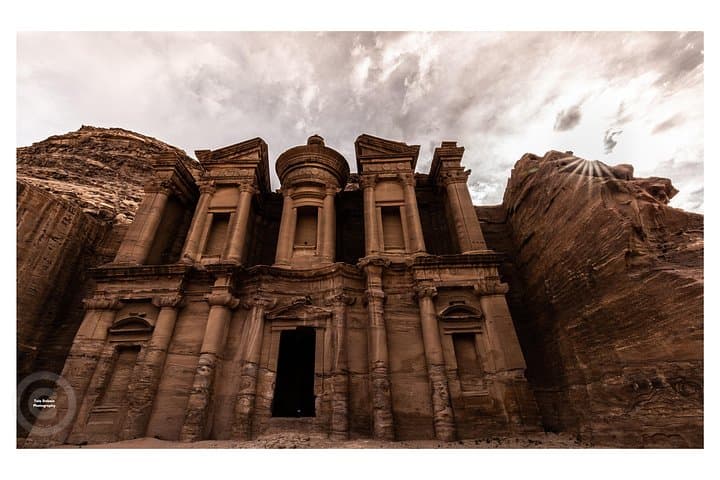
The Siq narrows like a throat and then opens — a sudden slice of carved rock and light revealing Al-Khazneh’s carved façade framed by sheer sandstone. You stand there with other travelers, dust on your shoes, while an unseen history hums through the canyon walls. Over the next 48 hours, the landscape will push you through three very different worlds: the rose-red crevices of Petra, the wind-sculpted emptiness of Wadi Rum, and finally, the buoyant, mineral-rich surface of the Dead Sea.
The Siq narrows like a throat and then opens — a sudden slice of carved rock and light revealing Al-Khazneh’s carved façade framed by sheer sandstone. You stand there with other travelers, dust on your shoes, while an unseen history hums through the canyon walls. Over the next 48 hours, the landscape will push you through three very different worlds: the rose-red crevices of Petra, the wind-sculpted emptiness of Wadi Rum, and finally, the buoyant, mineral-rich surface of the Dead Sea.
Petra was the Nabateans’ trade-city, cut into the sandstone when camel caravans still threaded Arabia. Geologically the region is a story of uplift and erosion — layers of sandstone and conglomerate carved into slot canyons, natural arches, and the ceremonial corridors of the Siq. Wadi Rum, by contrast, is an openbook of granite and sandstone towers where wind has been the primary mason for millennia; its bedrock shelves and soft sand make for dramatic shifts in scale. The Dead Sea, at roughly 430 meters below sea level, is the planet’s lowest exposed point; its dense, saline water refuses to let you sink, and its muddy shores have been used for millennia as beauty and healing treatments.
Culturally, the itinerary stitches together Jordan’s living and ancient traditions: Nabatean remains in Petra, Bedouin hospitality under the desert sky in Wadi Rum, and modern resort facilities along the Dead Sea where tourism meets therapeutic ritual. You’ll eat a Zarb dinner — vegetables and lamb slow-cooked in a sand pit — and learn how local guides read wind and stone to move through the desert safely.
Practical guide: expect an early pickup from Amman (about 3 hours to Petra by road), a roughly 2–3 km walk inside Petra’s main trail including the 1.2 km Siq, and a 2-hour off-road Jeep tour in Wadi Rum. Bring at least 2 liters of water per day, sturdy walking shoes with good traction for loose sandstone, high-SPF sun protection, and a swimsuit for the Dead Sea. Temperatures swing widely: mornings in the desert can be cool, afternoons hot; layered clothing helps. The experience is physically accessible to most travelers but includes uneven terrain and some short climbs if you opt for viewpoints like Jabal Khubtha.
Tips on timing: visit Petra early to avoid crowds and harsh light in the Siq, and time your Wadi Rum jeep run for late afternoon to catch long shadows on the dunes. At the Dead Sea, rinse thoroughly after floating to remove salt.
In short: this condensed loop across Petra, Wadi Rum, and the Dead Sea compresses Jordan’s most elemental landscapes into two days — a fast, sensory-driven journey that mixes archeology, Bedouin culture, and a peculiar kind of flotation therapy at the world’s lowest shoreline.