THE ADVENTURE COLLECTIVE® · Independent discovery and booking for outdoor travel

Two days compress Jordan’s essentials: a walking tour through Petra’s carved façades, a 4x4 Bedouin jeep ride in Wadi Rum with an overnight camp, and a restorative float at the Dead Sea. Practical logistics, cultural notes and what to pack for each stop.
Two days compress Jordan’s essentials: a walking tour through Petra’s carved façades, a 4x4 Bedouin jeep ride in Wadi Rum with an overnight camp, and a restorative float at the Dead Sea. Practical logistics, cultural notes and what to pack for each stop.
Morning light slices through the Siq and you step into Petra’s carved heart—the Treasury rising like a city shaped from stone. The air smells faintly of dust and citrus; footsteps echo on ancient sandstone. Later the desert of Wadi Rum opens, its wind-sculpted ridges daring you to cross them in an open 4x4, Bedouin stories riding the gusts.
Verified experiences and guided adventures in the surrounding area.
Operated by The Jordanian Mappers · Wadi Musa, Ma'an Governorate
Morning light slices through the Siq and you step into Petra’s carved heart—the Treasury rising like a city shaped from stone. The air smells faintly of dust and citrus; footsteps echo on ancient sandstone. Later the desert of Wadi Rum opens, its wind-sculpted ridges daring you to cross them in an open 4x4, Bedouin stories riding the gusts.
Petra is Nabataean engineering in rock: water channels, façades and tombs hewn into Cambrian sandstone that records millions of years of geological layering. Wadi Rum’s granite and sandstone plates bear aeolian weathering and millennia of nomadic culture; its Bedouin camps offer an introduction to local hospitality. The Dead Sea, the world’s lowest point, is a saline lake with therapeutic mud and buoyant water made famous by ancient trade and religious lore.
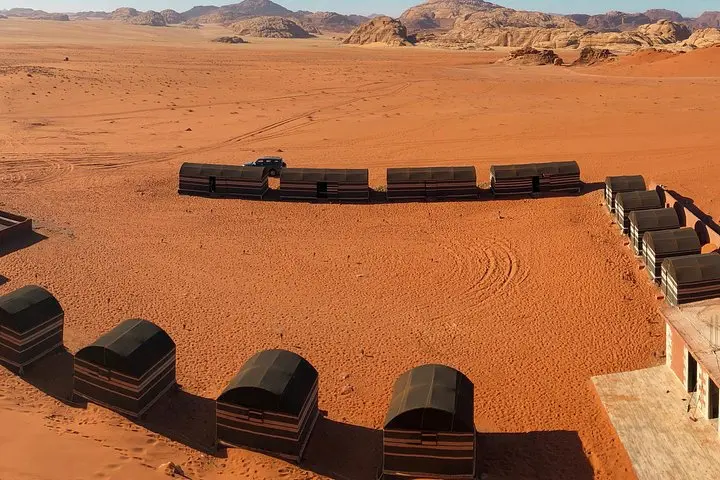
Practically: expect about 2–3 hours guided walking in Petra on uneven stone paths and stairs, a 3‑hour jeep exploration across variable desert terrain, an overnight in a modern Bedouin-style camp with private bathroom and A/C, and a Dead Sea stop for floating and mud. Bring sturdy shoes, sun protection and a reusable water bottle; pack swimwear and a towel for the Dead Sea. Moderate fitness is sufficient—the route requires comfortable walking and short climbs but no technical skills.
Time your days for cooler morning or late-afternoon exploration, respect Bedouin customs when photographing villages, and rinse thoroughly after the Dead Sea to protect your skin and garments. This compact loop compresses Jordan’s big contrasts—rock, sand, and salt—into two concentrated days of history, geology and desert motion.
Expect roughly 2–3 hours of guided walking on uneven stone paths and steps; additional free time can extend that depending on how far you explore.
Yes—jeep rides are family-friendly, though the terrain can be bumpy; children should be seated and supervised, and infants often required to sit on laps per operator rules.
Avoid floating if you have open cuts or severe skin conditions—salt will sting; consult a doctor for chronic issues and rinse immediately after floating.
Casual, modest clothing by daytime; layers for cool nights; camps provide basic amenities but avoid beachwear in communal areas outside swimming spots.
The Jordanian Mappers operates guided outdoor trips and adventures with an emphasis on safety, stewardship, and memorable experiences.
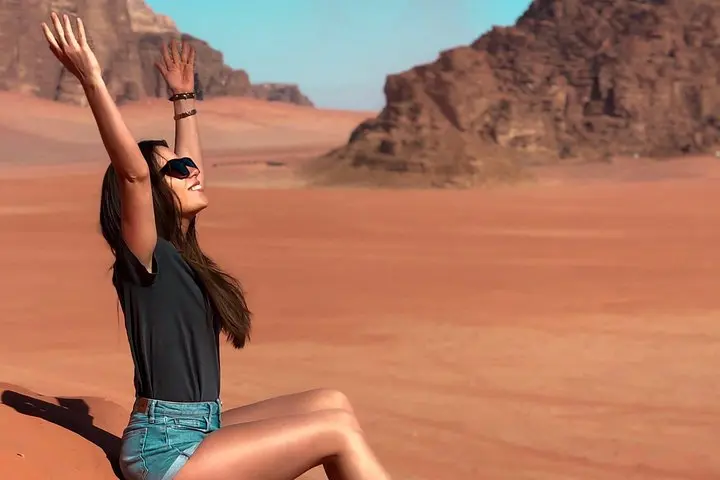
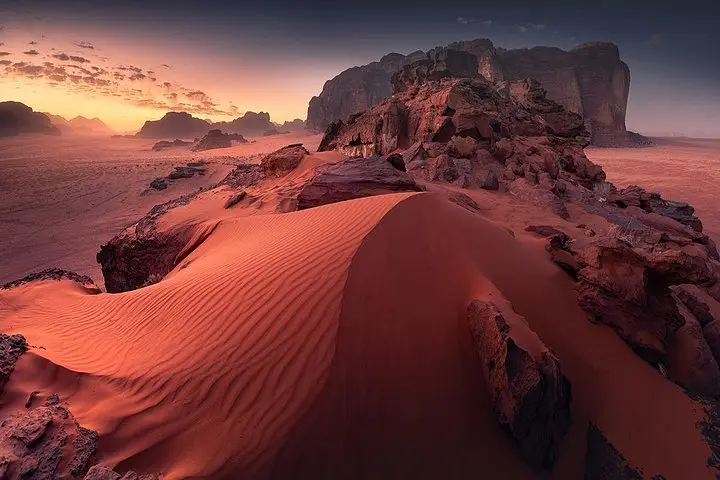
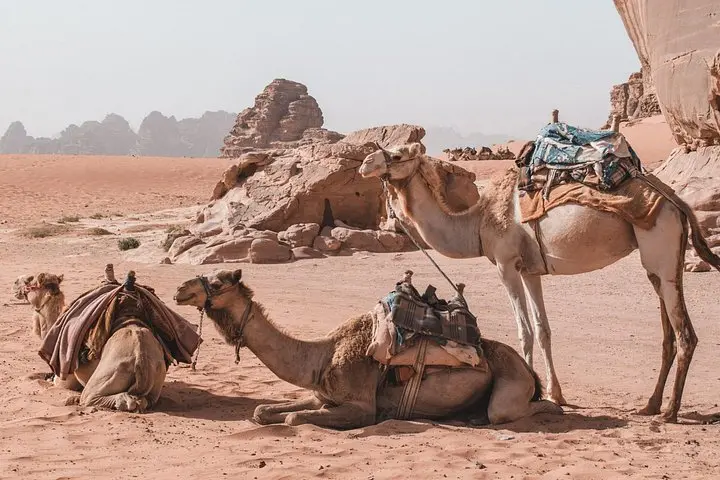
Morning light slices through the Siq and you step into Petra’s carved heart—the Treasury rising like a city shaped from stone. The air smells faintly of dust and citrus; footsteps echo on ancient sandstone. Later the desert of Wadi Rum opens, its wind-sculpted ridges daring you to cross them in an open 4x4, Bedouin stories riding the gusts.
Morning light slices through the Siq and you step into Petra’s carved heart—the Treasury rising like a city shaped from stone. The air smells faintly of dust and citrus; footsteps echo on ancient sandstone. Later the desert of Wadi Rum opens, its wind-sculpted ridges daring you to cross them in an open 4x4, Bedouin stories riding the gusts.
Petra is Nabataean engineering in rock: water channels, façades and tombs hewn into Cambrian sandstone that records millions of years of geological layering. Wadi Rum’s granite and sandstone plates bear aeolian weathering and millennia of nomadic culture; its Bedouin camps offer an introduction to local hospitality. The Dead Sea, the world’s lowest point, is a saline lake with therapeutic mud and buoyant water made famous by ancient trade and religious lore.
Practically: expect about 2–3 hours guided walking in Petra on uneven stone paths and stairs, a 3‑hour jeep exploration across variable desert terrain, an overnight in a modern Bedouin-style camp with private bathroom and A/C, and a Dead Sea stop for floating and mud. Bring sturdy shoes, sun protection and a reusable water bottle; pack swimwear and a towel for the Dead Sea. Moderate fitness is sufficient—the route requires comfortable walking and short climbs but no technical skills.
Time your days for cooler morning or late-afternoon exploration, respect Bedouin customs when photographing villages, and rinse thoroughly after the Dead Sea to protect your skin and garments. This compact loop compresses Jordan’s big contrasts—rock, sand, and salt—into two concentrated days of history, geology and desert motion.