THE ADVENTURE COLLECTIVE® · Independent discovery and booking for outdoor travel

A fast-paced two-day circuit from Amman that pairs Petra’s carved canyon city with the red-rock theater of Wadi Rum and a coastal or Dead Sea stop. Expect long days, big views, and cultural contrasts—from Nabataean ruins to Bedouin nights.
A fast-paced two-day circuit from Amman that pairs Petra’s carved canyon city with the red-rock theater of Wadi Rum and a coastal or Dead Sea stop. Expect long days, big views, and cultural contrasts—from Nabataean ruins to Bedouin nights.
You step out of the minivan before dawn and the stillness is a kind of permission. The highway from Amman loosens into ochre hills, then folds into the canyon throat of Petra — the city carved into rock that seems to breathe heat back at the sky. For two days the landscape keeps changing: the carved facades of Nabataean engineers, the cathedral-sized canyons of Wadi Rum whose cliffs throw back color at sunset, and the sudden, saline quiet of the Dead Sea or the blue fringe of Aqaba.
Verified experiences and guided adventures in the surrounding area.
Operated by Retaj Jordan Tours and transportation · Wadi Musa, Ma'an Governorate
You step out of the minivan before dawn and the stillness is a kind of permission. The highway from Amman loosens into ochre hills, then folds into the canyon throat of Petra — the city carved into rock that seems to breathe heat back at the sky. For two days the landscape keeps changing: the carved facades of Nabataean engineers, the cathedral-sized canyons of Wadi Rum whose cliffs throw back color at sunset, and the sudden, saline quiet of the Dead Sea or the blue fringe of Aqaba.
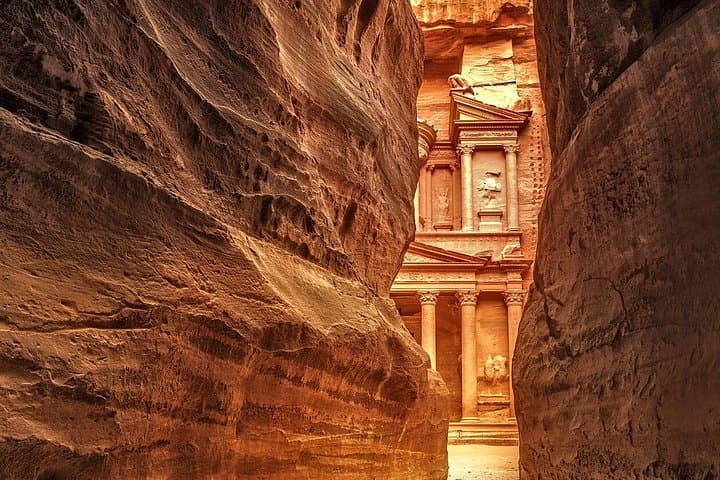
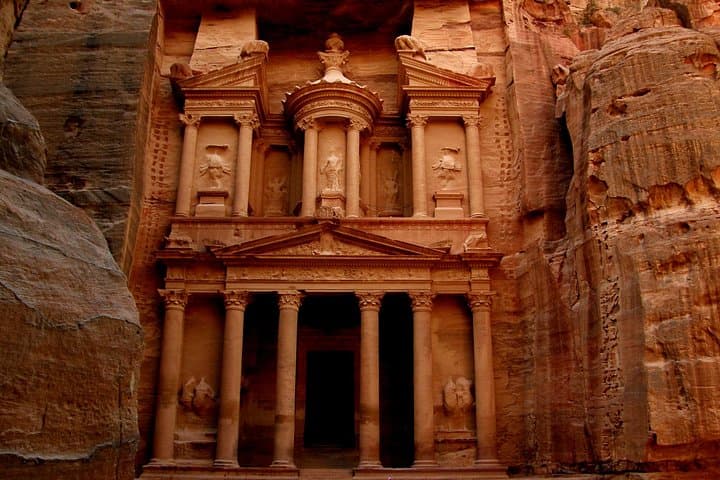
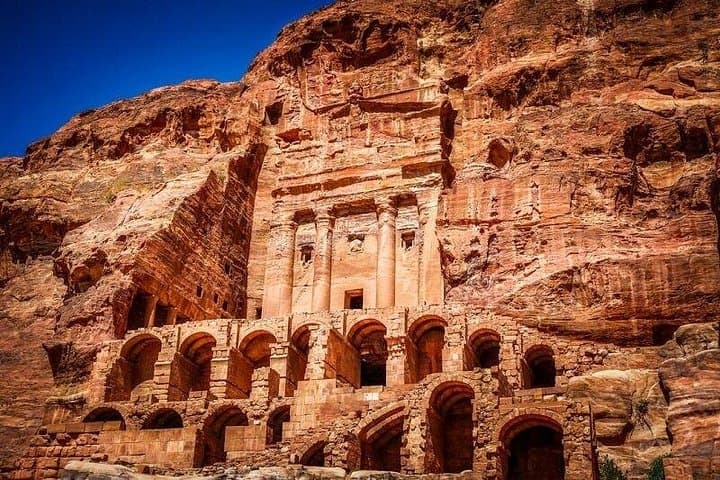
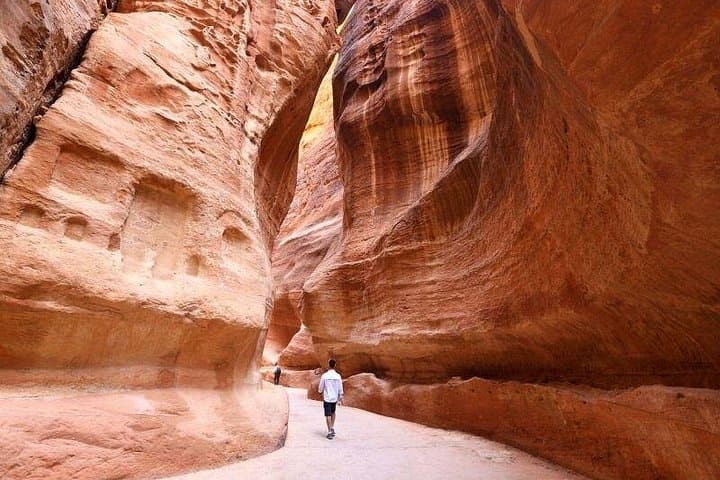
Petra is not only a photo; it’s a walk through millennia. The Siq narrows and the Treasury appears like a memory reconstructed in stone—Nabataean merchants shaping trade routes and water channels here around the first century BCE. Geologically, Petra’s rose-red sandstone shows bands of mineral deposits that weather into drips and columns, a lesson in time that feels immediate underfoot.
Drive time knits the story together: roughly 3 hours from Amman to Petra, then a shorter 1.5-hour run to Wadi Rum. Wadi Rum’s desert geology—wind-sculpted mesas and volcanic breccia—creates a horizon that rearranges itself with each hour of light. Aqaba gives you the Red Sea’s coral colors in contrast; the Dead Sea presents a different geology entirely, a hyper-saline shoreline where buoyancy alters how you move.
Culturally, this route threads Bedouin hospitality and Jordanian urban life. Your English-speaking driver guides logistics and local context; for an authentic overnight, arrange a Bedouin camp stay in advance to support local hosts. Respect local customs—modest dress in towns and reverence at religious sites.
Practical guidance: Petra’s core walk is about 6–8 km (round-trip through the Siq and the main sites) with uneven stone, steps, and short climbs. Expect long days—plan for 10–12 hours of travel and activity across the two days. Water, sun protection, and steady footwear are non-negotiable. In Wadi Rum, temperatures drop fast after sunset; pack a warm layer even in summer.
Timing matters: arrive at Petra early for softer light and fewer crowds; Wadi Rum’s sunset is worth scheduling your camp arrival around. If you choose the Dead Sea, plan for a short photo stop or a longer float; hotels at the shore offer changing facilities.
Logistics note: entrance fees to Petra and optional horse or carriage rides are usually paid on-site. Pickup from Amman is standard; confirm your pickup point and exact timing. For a private two-day run through Jordan’s signature sites, this itinerary balances immersive history with the rawness of desert and sea—compact, achievable, and distinctly Jordanian.
No — entrance fees and optional services (horse ride through the Siq, local guides) are typically paid on arrival.
About 3 hours by road, depending on traffic; tours usually depart early to maximize time on-site.
The tour includes transfer to Wadi Rum but the Bedouin camp stay is arranged separately—confirm booking with the operator if you want a specific camp experience.
Yes — the tour offers a stop in Aqaba (2 hours) or a photo/short visit at the Dead Sea depending on your selection and timing.
Some transport options are accessible, but Petra’s main archaeological areas have uneven terrain and many steps; accessibility is limited.
Tipping is customary in Jordan; budget a small tip for the driver and any local guides or camp hosts who assist you.
Retaj Jordan Tours and transportation operates guided outdoor trips and adventures with an emphasis on safety, stewardship, and memorable experiences.
You step out of the minivan before dawn and the stillness is a kind of permission. The highway from Amman loosens into ochre hills, then folds into the canyon throat of Petra — the city carved into rock that seems to breathe heat back at the sky. For two days the landscape keeps changing: the carved facades of Nabataean engineers, the cathedral-sized canyons of Wadi Rum whose cliffs throw back color at sunset, and the sudden, saline quiet of the Dead Sea or the blue fringe of Aqaba.
You step out of the minivan before dawn and the stillness is a kind of permission. The highway from Amman loosens into ochre hills, then folds into the canyon throat of Petra — the city carved into rock that seems to breathe heat back at the sky. For two days the landscape keeps changing: the carved facades of Nabataean engineers, the cathedral-sized canyons of Wadi Rum whose cliffs throw back color at sunset, and the sudden, saline quiet of the Dead Sea or the blue fringe of Aqaba.
Petra is not only a photo; it’s a walk through millennia. The Siq narrows and the Treasury appears like a memory reconstructed in stone—Nabataean merchants shaping trade routes and water channels here around the first century BCE. Geologically, Petra’s rose-red sandstone shows bands of mineral deposits that weather into drips and columns, a lesson in time that feels immediate underfoot.
Drive time knits the story together: roughly 3 hours from Amman to Petra, then a shorter 1.5-hour run to Wadi Rum. Wadi Rum’s desert geology—wind-sculpted mesas and volcanic breccia—creates a horizon that rearranges itself with each hour of light. Aqaba gives you the Red Sea’s coral colors in contrast; the Dead Sea presents a different geology entirely, a hyper-saline shoreline where buoyancy alters how you move.
Culturally, this route threads Bedouin hospitality and Jordanian urban life. Your English-speaking driver guides logistics and local context; for an authentic overnight, arrange a Bedouin camp stay in advance to support local hosts. Respect local customs—modest dress in towns and reverence at religious sites.
Practical guidance: Petra’s core walk is about 6–8 km (round-trip through the Siq and the main sites) with uneven stone, steps, and short climbs. Expect long days—plan for 10–12 hours of travel and activity across the two days. Water, sun protection, and steady footwear are non-negotiable. In Wadi Rum, temperatures drop fast after sunset; pack a warm layer even in summer.
Timing matters: arrive at Petra early for softer light and fewer crowds; Wadi Rum’s sunset is worth scheduling your camp arrival around. If you choose the Dead Sea, plan for a short photo stop or a longer float; hotels at the shore offer changing facilities.
Logistics note: entrance fees to Petra and optional horse or carriage rides are usually paid on-site. Pickup from Amman is standard; confirm your pickup point and exact timing. For a private two-day run through Jordan’s signature sites, this itinerary balances immersive history with the rawness of desert and sea—compact, achievable, and distinctly Jordanian.