THE ADVENTURE COLLECTIVE® · Independent discovery and booking for outdoor travel

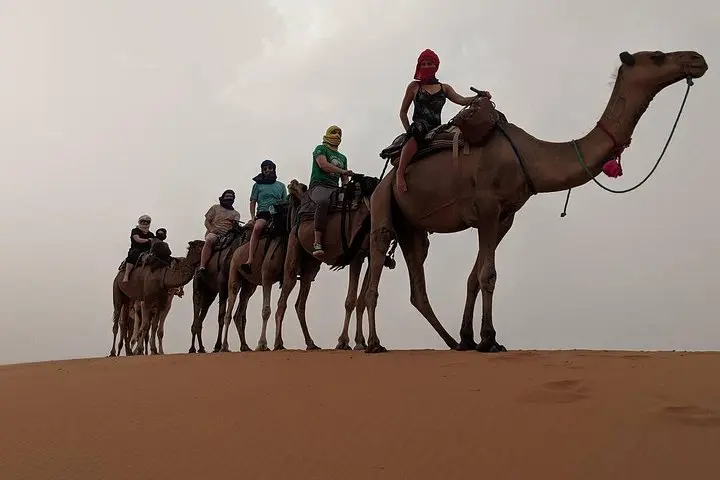
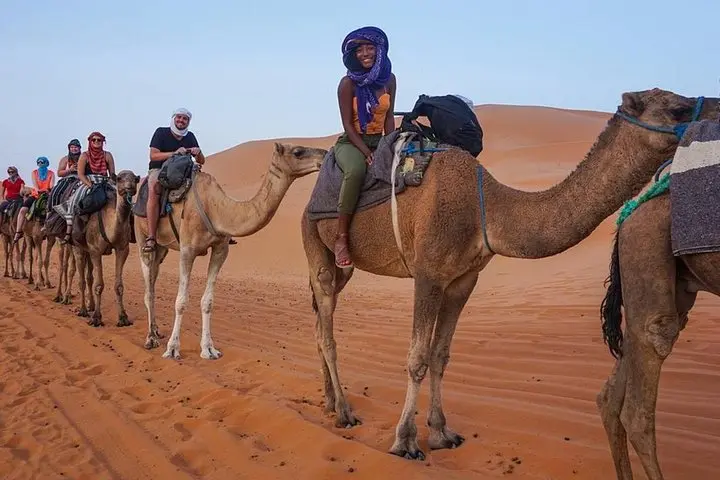
Leave Fes for two days of mountain passes, cedar forests and a private Berber camp on the Erg Chebbi dunes. Expect a sunset camel trek, a night under desert stars, and an early sunrise ride back across shifting sand.
Leave Fes for two days of mountain passes, cedar forests and a private Berber camp on the Erg Chebbi dunes. Expect a sunset camel trek, a night under desert stars, and an early sunrise ride back across shifting sand.
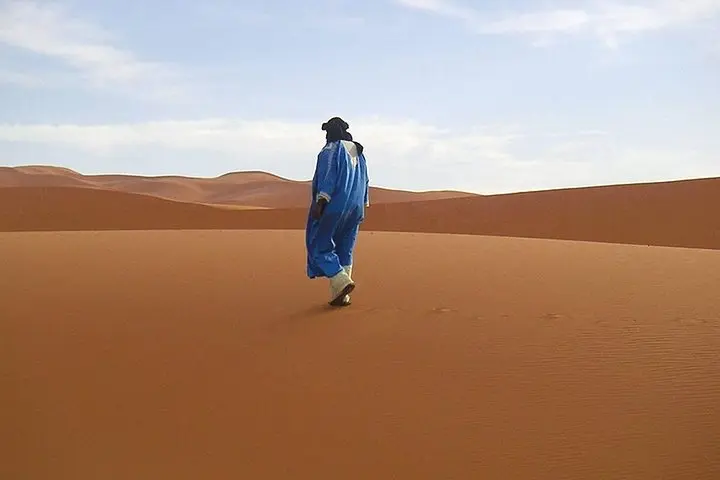
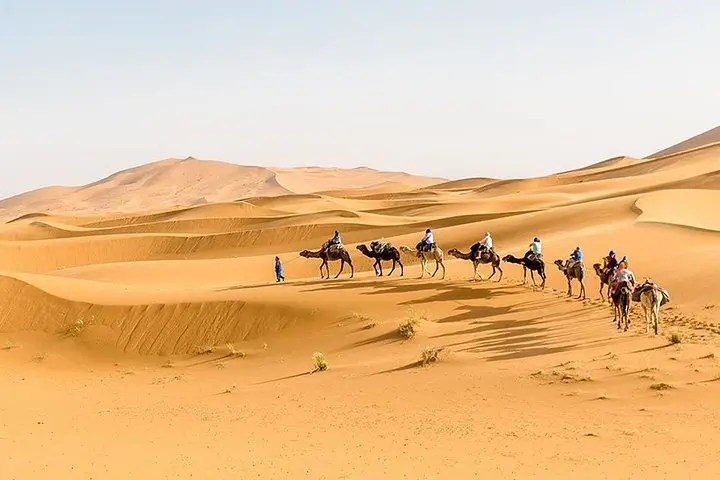
Dawn in Fes, a driver waits at a riad door and the road unfurls south toward the Atlas. The caravan of minivans climbs through cedar-scented passes, past Ifrane’s tidy chalets and into the tree-studded middle ranges where macaques bolder than their forest are. By late afternoon the asphalt gives way to ochre, and the Erg Chebbi dunes rise like a sudden sea of sand—soft ridgelines that push and pull with the wind.
Verified experiences and guided adventures in the surrounding area.
Operated by Morocco Desert Travels · Merzouga, Drâa-Tafilalet
Dawn in Fes, a driver waits at a riad door and the road unfurls south toward the Atlas. The caravan of minivans climbs through cedar-scented passes, past Ifrane’s tidy chalets and into the tree-studded middle ranges where macaques bolder than their forest are. By late afternoon the asphalt gives way to ochre, and the Erg Chebbi dunes rise like a sudden sea of sand—soft ridgelines that push and pull with the wind.
The route traces layers of Morocco’s history: Ifrane’s 1930s French planning, Azrou’s Berber villages, and Rissani, a former caravan hub on routes that threaded the Sahara. Geologically, the Middle Atlas is folded limestone and volcanic highlands; the Sahara here is wind-sculpted erg, dunes up to 50 metres tall composed of reworked quartz and feldspar. Culturally the trip is an encounter with contemporary Berber hospitality—tent camps built for comfort, evening drums, and communal tagine.
Practical guide: the itinerary covers roughly 450–500 km over two days with multiple stops; driving includes mountain passes that reach ~1,600–2,000 m before descending to near 700 m at Merzouga. Expect a 90-minute camel ride at sunset, a Berber-style overnight in a private camp, and an early-morning camel return for sunrise.
Pack layers for large diurnal swings, sunscreen and sunglasses for sand glare, and a small daypack for water and camera. If you’re sensitive to motion, choose a front-row seat in the van and avoid hand-feeding wildlife in cedar forests. Bookings typically include dinner and breakfast; plan for limited phone signal around the dunes and arrive rested—the desert rewards those who come prepared.
Pickup is typically around 7:00 AM from riads or hotels in Fes—confirm exact time with the operator the evening before.
The camel trek is about 90 minutes each way; mounting is assisted and the pace is gentle—no prior experience required.
Overnight is in a private Berber-style tent with basic bedding; camps serve a communal dinner and provide toilet facilities—comfort varies by operator.
Yes, but consider ages and mobility: camel rides and long drives can be hard for very young children; infant seats may be available.
Morocco Desert Travels operates guided outdoor trips and adventures with an emphasis on safety, stewardship, and memorable experiences.
Dawn in Fes, a driver waits at a riad door and the road unfurls south toward the Atlas. The caravan of minivans climbs through cedar-scented passes, past Ifrane’s tidy chalets and into the tree-studded middle ranges where macaques bolder than their forest are. By late afternoon the asphalt gives way to ochre, and the Erg Chebbi dunes rise like a sudden sea of sand—soft ridgelines that push and pull with the wind.
Dawn in Fes, a driver waits at a riad door and the road unfurls south toward the Atlas. The caravan of minivans climbs through cedar-scented passes, past Ifrane’s tidy chalets and into the tree-studded middle ranges where macaques bolder than their forest are. By late afternoon the asphalt gives way to ochre, and the Erg Chebbi dunes rise like a sudden sea of sand—soft ridgelines that push and pull with the wind.
The route traces layers of Morocco’s history: Ifrane’s 1930s French planning, Azrou’s Berber villages, and Rissani, a former caravan hub on routes that threaded the Sahara. Geologically, the Middle Atlas is folded limestone and volcanic highlands; the Sahara here is wind-sculpted erg, dunes up to 50 metres tall composed of reworked quartz and feldspar. Culturally the trip is an encounter with contemporary Berber hospitality—tent camps built for comfort, evening drums, and communal tagine.
Practical guide: the itinerary covers roughly 450–500 km over two days with multiple stops; driving includes mountain passes that reach ~1,600–2,000 m before descending to near 700 m at Merzouga. Expect a 90-minute camel ride at sunset, a Berber-style overnight in a private camp, and an early-morning camel return for sunrise.
Pack layers for large diurnal swings, sunscreen and sunglasses for sand glare, and a small daypack for water and camera. If you’re sensitive to motion, choose a front-row seat in the van and avoid hand-feeding wildlife in cedar forests. Bookings typically include dinner and breakfast; plan for limited phone signal around the dunes and arrive rested—the desert rewards those who come prepared.