THE ADVENTURE COLLECTIVE® · Independent discovery and booking for outdoor travel

Spend two days traveling from Cusco to Machu Picchu with a night in a luxury geodesic dome, a soak in Cocalmayo hot springs, a 3-hour railway walk from the Hydroelectric plant to Aguas Calientes, and a guided visit to the Inca citadel.
Spend two days traveling from Cusco to Machu Picchu with a night in a luxury geodesic dome, a soak in Cocalmayo hot springs, a 3-hour railway walk from the Hydroelectric plant to Aguas Calientes, and a guided visit to the Inca citadel.
Dawn breaks over the Vilcanota valley as your minivan climbs toward Abra Málaga; clouds spool off the high ridges and the landscape exhales into subtropical green. By midday the jungle presses close—ferns and orchids crowd the road—and the Cocalmayo hot springs hiss like a promised reward after the morning drive. You sleep that night in a geodesic dome whose panoramic windows catch mountain light and a sky full of stars.
Verified experiences and guided adventures in the surrounding area.
Operated by Incredible Peru Tours · Aguas Calientes, Cusco
Dawn breaks over the Vilcanota valley as your minivan climbs toward Abra Málaga; clouds spool off the high ridges and the landscape exhales into subtropical green. By midday the jungle presses close—ferns and orchids crowd the road—and the Cocalmayo hot springs hiss like a promised reward after the morning drive. You sleep that night in a geodesic dome whose panoramic windows catch mountain light and a sky full of stars.
This itinerary threads modern comforts with classic Inca geography. Machu Picchu, built in the mid-15th century, sits on a limestone shoulder carved by tectonic uplift and river incision; its terraces cling to steep slopes above the Urubamba, whose current still shapes the valley below. The route touches Santa Teresa and the hydroelectric line, a corridor where cloud forest gives way to orchid-studded understory and lively birdlife—local culture blends Quechua traditions with tourist services in Aguas Calientes.
Practically: plan for altitude shifts—Cusco sits higher than Machu Picchu—and a mix of transport modes: vehicle, short train transfer, a flat 3‑hour walk along the railway from Hydroelectric to Aguas Calientes, and a shuttle bus up to the citadel. Bring waterproof layers, good trail shoes for the hydroelectric walk, and your passport for park entry. Reserve your Machu Picchu ticket and train early, and budget small cash for local vendors.
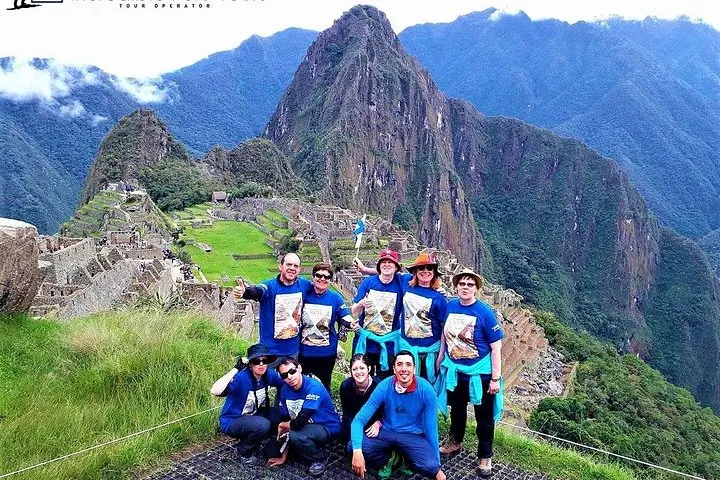
This tour balances restorative hot springs, a manageable trek through cloud forest, and a guided, 2–3 hour exploration of the Inca citadel—an efficient, scenic way to experience one of South America’s defining landscapes.
The walk follows mostly flat railway tracks for about 3 hours; basic fitness and steady footing are enough—expect some uneven sections and river-side stretches.
Entry to Cocalmayo hot springs is included on day one; facilities have changing rooms and showers but bring your own towel just in case.
The guided portion is approximately 2–2.5 hours, covering principal sectors of the citadel—extra time for independent exploration depends on your ticket type and schedule.
Yes; the itinerary notes a place to leave backpacks in Aguas Calientes before the bus to Machu Picchu, and the lodge can manage luggage transportation as arranged.
Incredible Peru Tours operates guided outdoor trips and adventures with an emphasis on safety, stewardship, and memorable experiences.
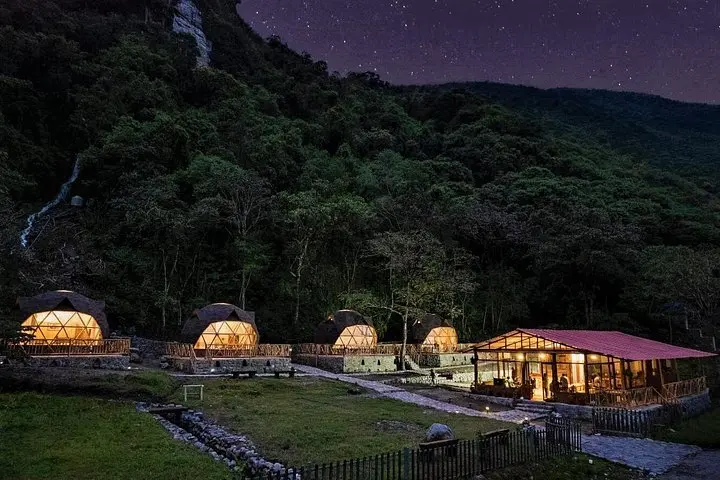
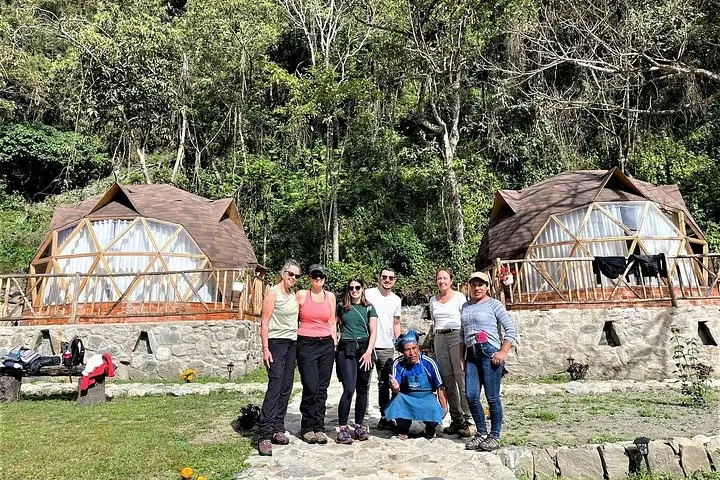
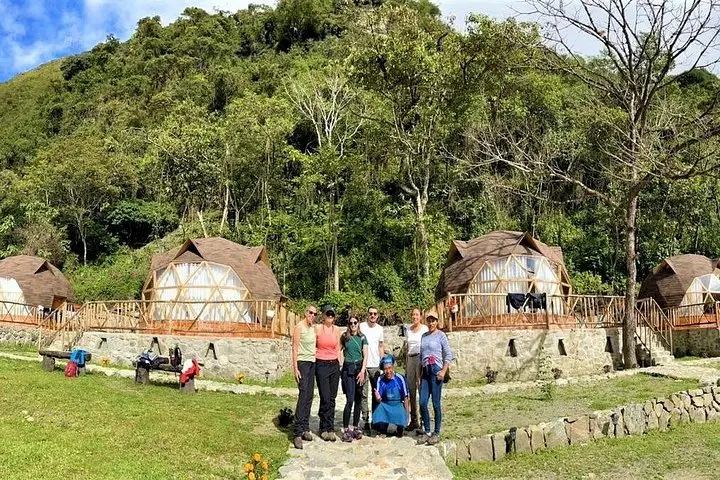
Dawn breaks over the Vilcanota valley as your minivan climbs toward Abra Málaga; clouds spool off the high ridges and the landscape exhales into subtropical green. By midday the jungle presses close—ferns and orchids crowd the road—and the Cocalmayo hot springs hiss like a promised reward after the morning drive. You sleep that night in a geodesic dome whose panoramic windows catch mountain light and a sky full of stars.
Dawn breaks over the Vilcanota valley as your minivan climbs toward Abra Málaga; clouds spool off the high ridges and the landscape exhales into subtropical green. By midday the jungle presses close—ferns and orchids crowd the road—and the Cocalmayo hot springs hiss like a promised reward after the morning drive. You sleep that night in a geodesic dome whose panoramic windows catch mountain light and a sky full of stars.
This itinerary threads modern comforts with classic Inca geography. Machu Picchu, built in the mid-15th century, sits on a limestone shoulder carved by tectonic uplift and river incision; its terraces cling to steep slopes above the Urubamba, whose current still shapes the valley below. The route touches Santa Teresa and the hydroelectric line, a corridor where cloud forest gives way to orchid-studded understory and lively birdlife—local culture blends Quechua traditions with tourist services in Aguas Calientes.
Practically: plan for altitude shifts—Cusco sits higher than Machu Picchu—and a mix of transport modes: vehicle, short train transfer, a flat 3‑hour walk along the railway from Hydroelectric to Aguas Calientes, and a shuttle bus up to the citadel. Bring waterproof layers, good trail shoes for the hydroelectric walk, and your passport for park entry. Reserve your Machu Picchu ticket and train early, and budget small cash for local vendors.
This tour balances restorative hot springs, a manageable trek through cloud forest, and a guided, 2–3 hour exploration of the Inca citadel—an efficient, scenic way to experience one of South America’s defining landscapes.