THE ADVENTURE COLLECTIVE® · Independent discovery and booking for outdoor travel

Cross the High Atlas, explore Ait Benhaddou and Todra Gorge, then ride camels into Erg Chebbi for an overnight luxury desert camp. This two-day loop from Marrakech combines geology, culture, and a true Sahara night sky.
Cross the High Atlas, explore Ait Benhaddou and Todra Gorge, then ride camels into Erg Chebbi for an overnight luxury desert camp. This two-day loop from Marrakech combines geology, culture, and a true Sahara night sky.
You leave Marrakech before dawn, the city’s ochre buildings shrinking as the road climbs into the High Atlas. The pass at Tizi n'Tichka opens like a weathered map—rock ribs and shale slopes giving way to villages perched on terraces. By afternoon you’ll be walking through the honeycombed streets of Ait Benhaddou and later threading the narrow cleft of Todra Gorge, where canyon walls push the light into dramatic slivers.
Verified experiences and guided adventures in the surrounding area.
Operated by Morocco lifetime Tours · Merzouga, Drâa-Tafilalet
You leave Marrakech before dawn, the city’s ochre buildings shrinking as the road climbs into the High Atlas. The pass at Tizi n'Tichka opens like a weathered map—rock ribs and shale slopes giving way to villages perched on terraces. By afternoon you’ll be walking through the honeycombed streets of Ait Benhaddou and later threading the narrow cleft of Todra Gorge, where canyon walls push the light into dramatic slivers.
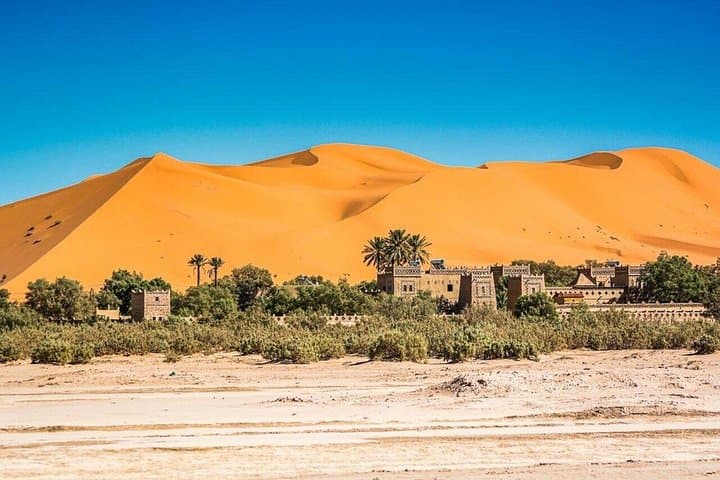
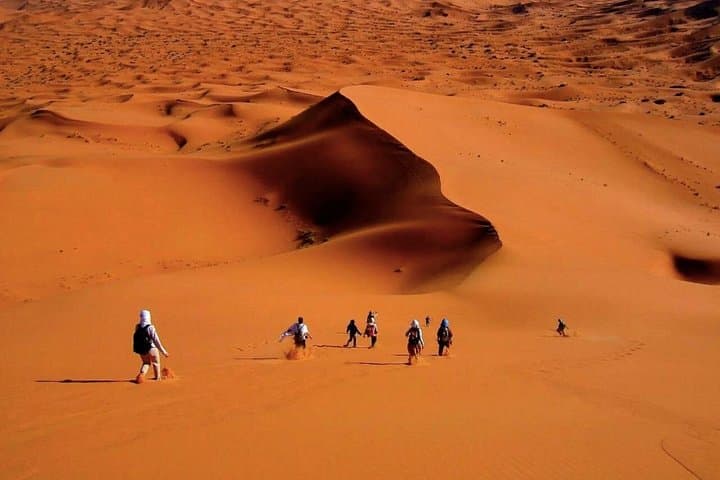
Geology and history are front and center: the High Atlas is a collision zone of African and Eurasian plates, while Erg Chebbi’s dunes are wind-sculpted seas of sand that migrated millennia ago from dried riverbeds. Cultural notes follow the route—ksars and kasbahs built of local mudbrick, and Berber hospitality that shows up in the rhythm of shared bread and tea.
Practically, expect long road time—roughly 8–10 hours each way (about 500–600 km) with stops—and a short camel ride into the desert camp. The camp offers insulated tents, a communal dining area, and traditional music under a wide sky. Nights get cold; days can be hot and bright. Bring layers, sun protection, sturdy shoes for rocky stops, and a small daypack for camera gear and water.
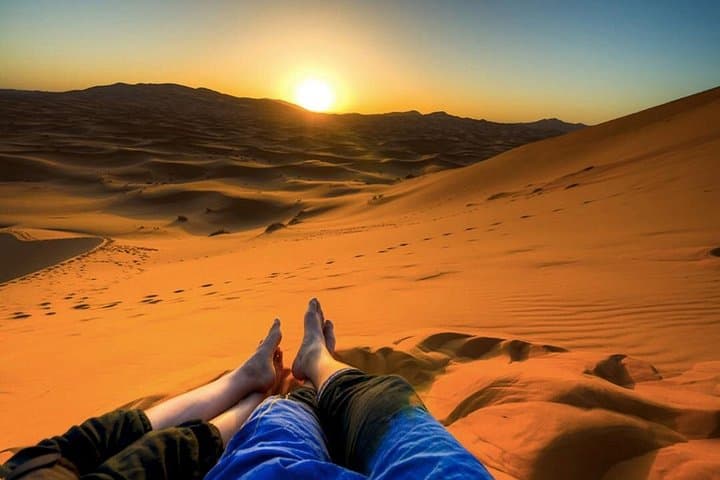
Timing tips: start early from Marrakech to maximize light at Ait Benhaddou and avoid peak heat in the Todra Gorge. Rise for the desert sunrise—it’s the reward for the drive. The experience balances motion and stillness: long road passages punctuated by concentrated moments of landscape and culture, ending in a silent, starlit desert that feels actively alive.
Expect about 8–10 hours of driving each way (roughly 500–600 km) with scheduled stops at sites like Ait Benhaddou and Todra Gorge.
Yes—short camel treks are included to reach the desert camp; rides typically last 45–90 minutes depending on the camp’s location in the dunes.
The advertised overnight is a luxury desert camp with private or shared tents, communal dining, and traditional meals—basic plumbing varies by camp.
The operator lists it as suitable for all fitness levels; however camel saddles and dune walking require basic mobility—check about infant seats and special assistance when booking.
Morocco lifetime Tours operates guided outdoor trips and adventures with an emphasis on safety, stewardship, and memorable experiences.
You leave Marrakech before dawn, the city’s ochre buildings shrinking as the road climbs into the High Atlas. The pass at Tizi n'Tichka opens like a weathered map—rock ribs and shale slopes giving way to villages perched on terraces. By afternoon you’ll be walking through the honeycombed streets of Ait Benhaddou and later threading the narrow cleft of Todra Gorge, where canyon walls push the light into dramatic slivers.
You leave Marrakech before dawn, the city’s ochre buildings shrinking as the road climbs into the High Atlas. The pass at Tizi n'Tichka opens like a weathered map—rock ribs and shale slopes giving way to villages perched on terraces. By afternoon you’ll be walking through the honeycombed streets of Ait Benhaddou and later threading the narrow cleft of Todra Gorge, where canyon walls push the light into dramatic slivers.
Geology and history are front and center: the High Atlas is a collision zone of African and Eurasian plates, while Erg Chebbi’s dunes are wind-sculpted seas of sand that migrated millennia ago from dried riverbeds. Cultural notes follow the route—ksars and kasbahs built of local mudbrick, and Berber hospitality that shows up in the rhythm of shared bread and tea.
Practically, expect long road time—roughly 8–10 hours each way (about 500–600 km) with stops—and a short camel ride into the desert camp. The camp offers insulated tents, a communal dining area, and traditional music under a wide sky. Nights get cold; days can be hot and bright. Bring layers, sun protection, sturdy shoes for rocky stops, and a small daypack for camera gear and water.
Timing tips: start early from Marrakech to maximize light at Ait Benhaddou and avoid peak heat in the Todra Gorge. Rise for the desert sunrise—it’s the reward for the drive. The experience balances motion and stillness: long road passages punctuated by concentrated moments of landscape and culture, ending in a silent, starlit desert that feels actively alive.