THE ADVENTURE COLLECTIVE® · Independent discovery and booking for outdoor travel

Swap Marrakech’s medina heat for a night beneath the vast Saharan sky on this 2-day excursion to Merzouga. Expect long drives, a camel trek into Erg Chebbi, a Berber camp night, and spectacular sunrise over the dunes.
Swap Marrakech’s medina heat for a night beneath the vast Saharan sky on this 2-day excursion to Merzouga. Expect long drives, a camel trek into Erg Chebbi, a Berber camp night, and spectacular sunrise over the dunes.
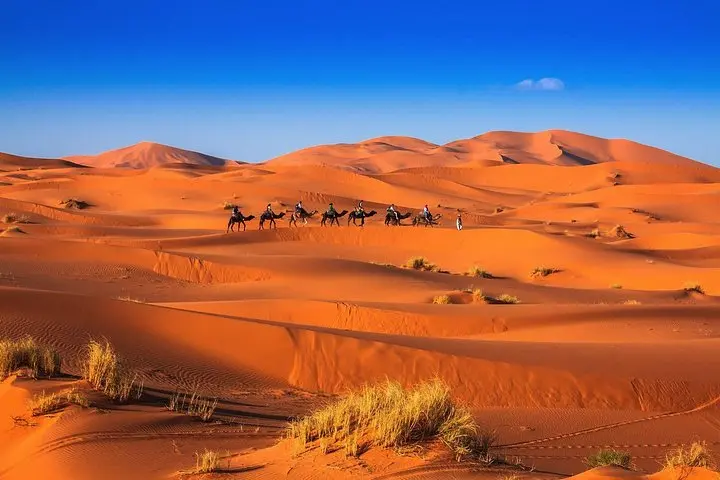
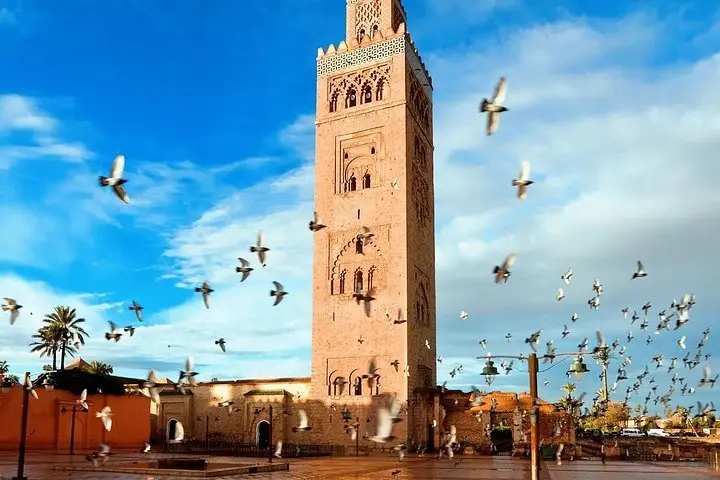
Dust from the High Atlas settles on the windshield as the road climbs toward Tizi n’Tichka; by mid-afternoon the plains open and the first orange teeth of Erg Chebbi appear on the horizon. On this two-day loop from Marrakech, travelers trade the city’s ochre alleys for a night under a desert sky, riding camels across shifting sand and sleeping in a Berber tented camp where stars push through an immense dark.
Verified experiences and guided adventures in the surrounding area.
Operated by Berber Planet Tours & Travel Agency · Merzouga, Drâa-Tafilalet
Dust from the High Atlas settles on the windshield as the road climbs toward Tizi n’Tichka; by mid-afternoon the plains open and the first orange teeth of Erg Chebbi appear on the horizon. On this two-day loop from Marrakech, travelers trade the city’s ochre alleys for a night under a desert sky, riding camels across shifting sand and sleeping in a Berber tented camp where stars push through an immense dark.
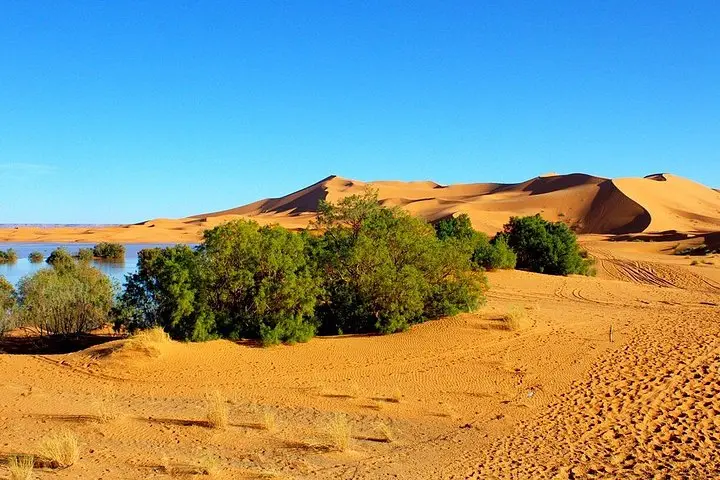
The route threads history — fortified ksars like Ait Ben Haddou, a UNESCO site, stand where trans‑Saharan caravans once met— and geology: wind-sculpted dunes made of sediments swept from central Sahara, some dunes rising as much as 100–150 meters. Local life is equally visible: villages of rammed-earth houses, acacia trees marking scarce water, and nomadic music that carries into the campfire night.
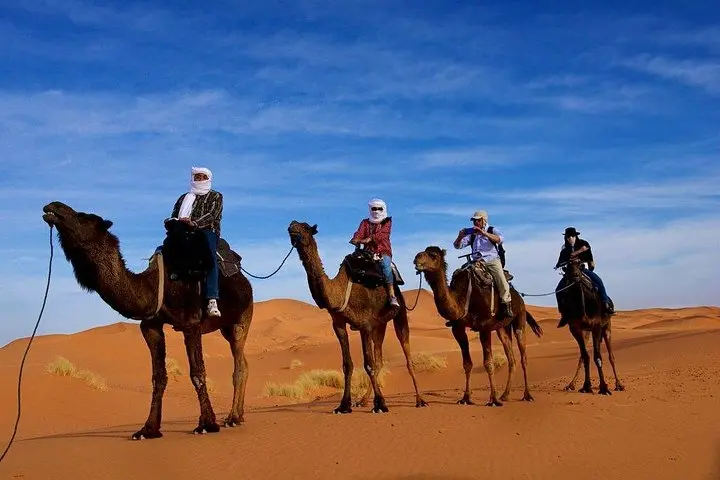
Practical notes: expect long drives (Marrakech–Merzouga is roughly 9–10 hours of driving with stops, about 560 km one-way), early-riser sunrises in the dunes, and a camel trek of about 1–2 hours to reach the camp. Wear closed shoes for sand, bring at least 1.5–2 liters of water per person, and layer for cool desert nights—temperatures swing fast.
Photography is best at golden hour; protect gear from sand and sun. If you’re prone to motion sickness, plan medications for the mountain passes. Camps range from standard to luxury—confirm your option when booking. Respect local customs, follow guides’ directions on fragile dune areas, and leave no trace: the desert is both playground and delicate ecosystem.
Typical camel treks to the camp are 1–2 hours depending on the camp location; guides set a comfortable pace suitable for most travelers.
Camps vary—standard tents are simple but clean; upgraded or luxury options offer private facilities and thicker mattresses—confirm when booking.
Yes; spring and fall offer the most moderate temperatures. Summers are very hot during the day, and winters are cold at night.
Generally yes—infant seats and prams are noted as possible, but camel rides and long drives may be challenging for very young children.
Berber Planet Tours & Travel Agency operates guided outdoor trips and adventures with an emphasis on safety, stewardship, and memorable experiences.
Dust from the High Atlas settles on the windshield as the road climbs toward Tizi n’Tichka; by mid-afternoon the plains open and the first orange teeth of Erg Chebbi appear on the horizon. On this two-day loop from Marrakech, travelers trade the city’s ochre alleys for a night under a desert sky, riding camels across shifting sand and sleeping in a Berber tented camp where stars push through an immense dark.
Dust from the High Atlas settles on the windshield as the road climbs toward Tizi n’Tichka; by mid-afternoon the plains open and the first orange teeth of Erg Chebbi appear on the horizon. On this two-day loop from Marrakech, travelers trade the city’s ochre alleys for a night under a desert sky, riding camels across shifting sand and sleeping in a Berber tented camp where stars push through an immense dark.
The route threads history — fortified ksars like Ait Ben Haddou, a UNESCO site, stand where trans‑Saharan caravans once met— and geology: wind-sculpted dunes made of sediments swept from central Sahara, some dunes rising as much as 100–150 meters. Local life is equally visible: villages of rammed-earth houses, acacia trees marking scarce water, and nomadic music that carries into the campfire night.
Practical notes: expect long drives (Marrakech–Merzouga is roughly 9–10 hours of driving with stops, about 560 km one-way), early-riser sunrises in the dunes, and a camel trek of about 1–2 hours to reach the camp. Wear closed shoes for sand, bring at least 1.5–2 liters of water per person, and layer for cool desert nights—temperatures swing fast.
Photography is best at golden hour; protect gear from sand and sun. If you’re prone to motion sickness, plan medications for the mountain passes. Camps range from standard to luxury—confirm your option when booking. Respect local customs, follow guides’ directions on fragile dune areas, and leave no trace: the desert is both playground and delicate ecosystem.