THE ADVENTURE COLLECTIVE® · Independent discovery and booking for outdoor travel

Cross the High Atlas on a two-day route from Marrakech to Zagora, passing Aït Ben Haddou and the Draa Oasis before an evening camel trek and night in a desert bivouac. Expect long drives, dramatic light, and a sunrise over small dunes.
Cross the High Atlas on a two-day route from Marrakech to Zagora, passing Aït Ben Haddou and the Draa Oasis before an evening camel trek and night in a desert bivouac. Expect long drives, dramatic light, and a sunrise over small dunes.
You leave Marrakech before dawn and the road climbs into Tizi n'Tichka, where the Atlas throws its red and gray shoulders into view and wind dares you to watch every ridge. Villages crouch on slopes, gullies cut the hills like old seams, and the air thins as you crest 2,260 meters. By midafternoon the landscape softens into the palm-lined Draa Valley and the fortified profiles of Ksar Aït Ben Haddou appear like an adobe city holding its breath.
Verified experiences and guided adventures in the surrounding area.
Operated by Chez Ali Marrakech · Zagora, Drâa-Tafilalet
You leave Marrakech before dawn and the road climbs into Tizi n'Tichka, where the Atlas throws its red and gray shoulders into view and wind dares you to watch every ridge. Villages crouch on slopes, gullies cut the hills like old seams, and the air thins as you crest 2,260 meters. By midafternoon the landscape softens into the palm-lined Draa Valley and the fortified profiles of Ksar Aït Ben Haddou appear like an adobe city holding its breath.
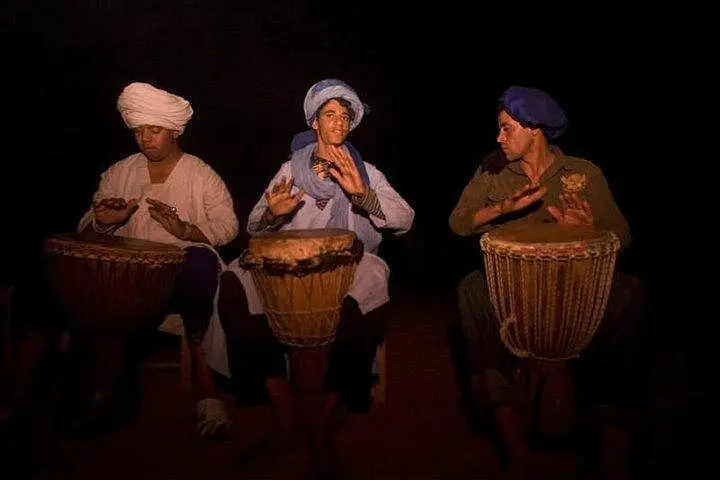
This route threads Berber history, Roman-era trade corridors and cinematic landscapes—Ouarzazate’s kasbahs doubled for Hollywood epics while the Draa’s alluvial plains sustained caravans for centuries. Geologically, you move from folded, metamorphic High Atlas to the sedimentary basins that shelter palm groves and dune fields. Culture is tactile: kasbah courtyards, tamarisk stands, and evening drums at the bivouac where local guides share stories under a wide, unblinking sky.
Expect a long day of driving, a late-afternoon camel trek and an overnight in a desert bivouac. Sunrise on the dunes is the payoff—thin light sharpening ridgelines and the camp’s smoke curling like a private signal.
Practical notes: bring layered clothing for hot days and cold nights, sun protection, and at least 2 liters of water for the on-foot sections. Wear closed shoes for dunes and soft-soled shoes for the bivouac. Be ready for unpaved exits, brief climbs onto dune shoulders and sitting for several hours between stops. If you have back or heart problems, discuss concerns with the operator before booking.
Expect about 7–8 hours of total driving each way with stops; time varies by traffic, road conditions and sightseeing pauses.
The camel ride is short and suitable for most travelers; it requires basic balance and can be adjusted for comfort by the guide.
Overnight is in a traditional-style bivouac camp with basic bedding, communal dining and a fire; facilities are rustic, not hotel-standard.
Yes: dinner at the bivouac and breakfast the next morning are included; other meals depend on the itinerary and stops in Ouarzazate or villages.
Chez Ali Marrakech operates guided outdoor trips and adventures with an emphasis on safety, stewardship, and memorable experiences.
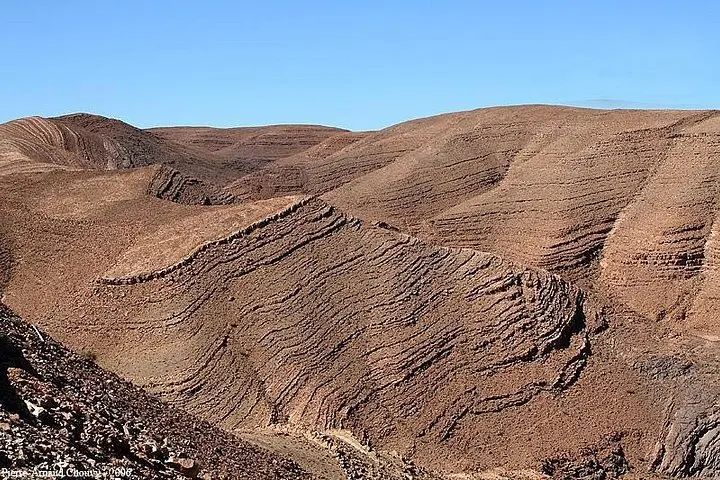
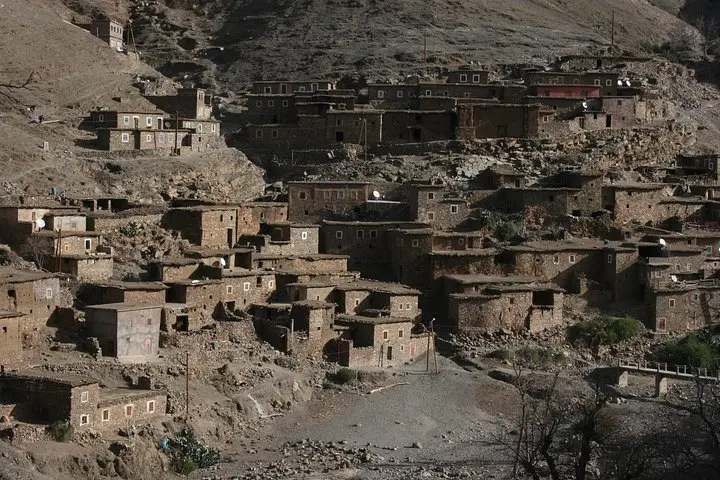
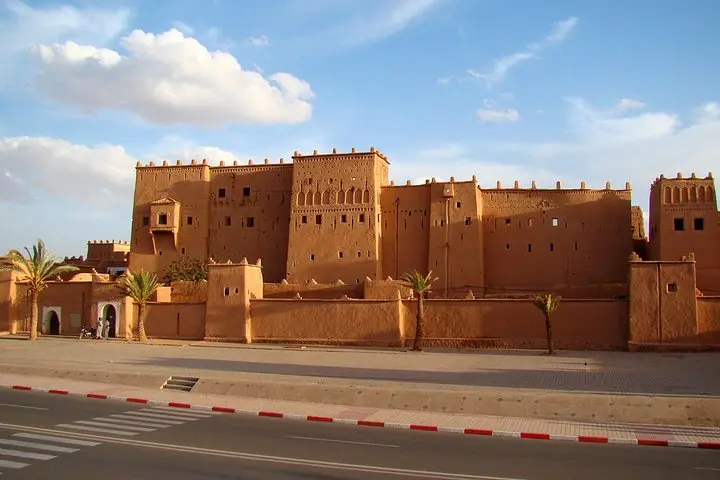
You leave Marrakech before dawn and the road climbs into Tizi n'Tichka, where the Atlas throws its red and gray shoulders into view and wind dares you to watch every ridge. Villages crouch on slopes, gullies cut the hills like old seams, and the air thins as you crest 2,260 meters. By midafternoon the landscape softens into the palm-lined Draa Valley and the fortified profiles of Ksar Aït Ben Haddou appear like an adobe city holding its breath.
You leave Marrakech before dawn and the road climbs into Tizi n'Tichka, where the Atlas throws its red and gray shoulders into view and wind dares you to watch every ridge. Villages crouch on slopes, gullies cut the hills like old seams, and the air thins as you crest 2,260 meters. By midafternoon the landscape softens into the palm-lined Draa Valley and the fortified profiles of Ksar Aït Ben Haddou appear like an adobe city holding its breath.
This route threads Berber history, Roman-era trade corridors and cinematic landscapes—Ouarzazate’s kasbahs doubled for Hollywood epics while the Draa’s alluvial plains sustained caravans for centuries. Geologically, you move from folded, metamorphic High Atlas to the sedimentary basins that shelter palm groves and dune fields. Culture is tactile: kasbah courtyards, tamarisk stands, and evening drums at the bivouac where local guides share stories under a wide, unblinking sky.
Expect a long day of driving, a late-afternoon camel trek and an overnight in a desert bivouac. Sunrise on the dunes is the payoff—thin light sharpening ridgelines and the camp’s smoke curling like a private signal.
Practical notes: bring layered clothing for hot days and cold nights, sun protection, and at least 2 liters of water for the on-foot sections. Wear closed shoes for dunes and soft-soled shoes for the bivouac. Be ready for unpaved exits, brief climbs onto dune shoulders and sitting for several hours between stops. If you have back or heart problems, discuss concerns with the operator before booking.