THE ADVENTURE COLLECTIVE® · Independent discovery and booking for outdoor travel
A compact, two-day overland journey from Marrakech to the Zagora dunes that combines high-Atlas passes, palm oases and a sunset camel trek to an overnight Berber bivouac. Expect long drives, cinematic kasbahs and a clear night sky over the Sahara.
A compact, two-day overland journey from Marrakech to the Zagora dunes that combines high-Atlas passes, palm oases and a sunset camel trek to an overnight Berber bivouac. Expect long drives, cinematic kasbahs and a clear night sky over the Sahara.
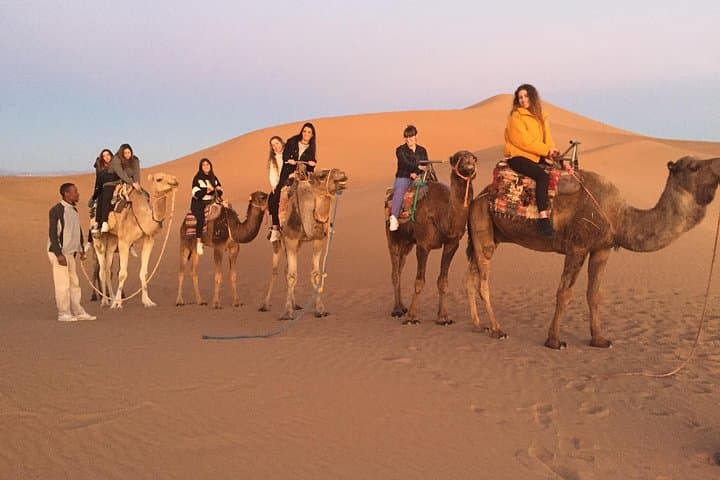
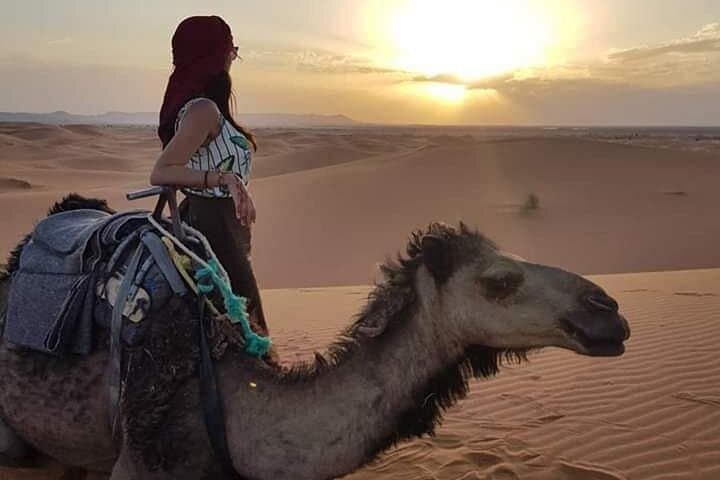
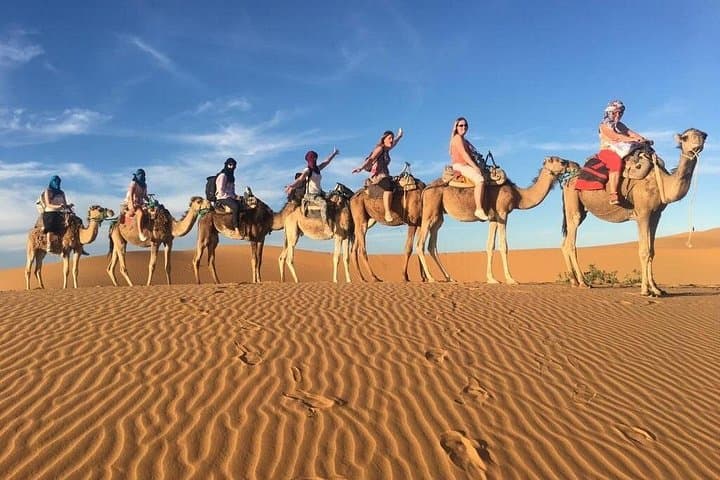
By mid-afternoon the road opens: the ochre walls of the Atlas range shift color, the air thins and the palm groves of the Draa valley sprawl like a patchwork of green against baked earth. You arrive at the paved road’s end, mount a camel at sunset and let the dunes pull you toward a small bivouac where stars read like a map.
Verified experiences and guided adventures in the surrounding area.
Operated by GetExcursion · Zagora, Drâa-Tafilalet
By mid-afternoon the road opens: the ochre walls of the Atlas range shift color, the air thins and the palm groves of the Draa valley sprawl like a patchwork of green against baked earth. You arrive at the paved road’s end, mount a camel at sunset and let the dunes pull you toward a small bivouac where stars read like a map.
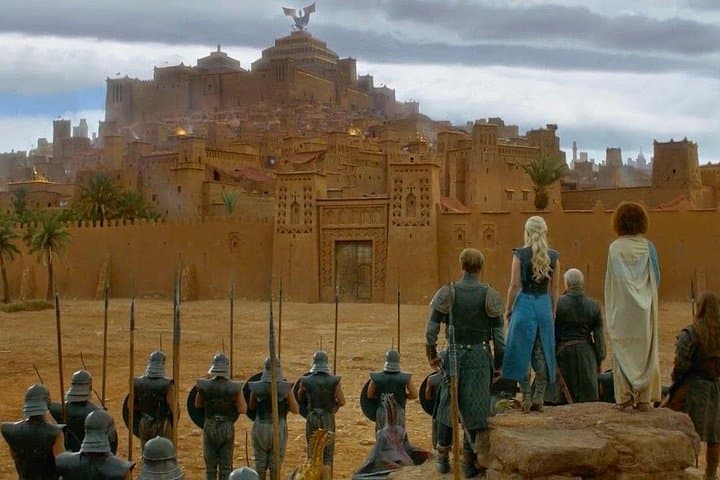
This two-day route follows old caravan lines. You cross Tizi N-Tichka (2,160 m), a high Atlas pass that still holds winter snow, then descend through terraced Berber villages, kasbahs and the cinematic sets of Ouarzazate and Ait Benhaddou — a UNESCO ksar that once hosted salt and silver caravans and now hosts film crews. Geologically the trip traces Morocco’s collision zones: folded sedimentary ridges giving way to alluvial plains and sand formed by millennia of wind and river action, with the Draa’s palm groves fed by narrow rivers that dare the desert to dry up.
Culturally the route is led by Berber hospitality — mint tea, shared dinners in the camp and music around the fire. Expect a roughly 2-day itinerary with long road stretches (several hours each day), a roughly 40-minute sunset camel ride and a night under tents with clear, star-rich skies.
Practical guidance: start early to avoid midday heat, carry 2–3 liters of water and sun protection, and wear sturdy shoes for uneven surfaces. Nights can be chilly; bring warm layers and a headlamp. Cameras charge during long stops in Ouarzazate and Ait Benhaddou; be respectful when photographing people and private homes. The experience balances long driving with short, vivid outdoor moments — a compact introduction to the Atlas and the Sahara.
The sunset camel ride to the bivouac is about 30–45 minutes one-way, timed to reach camp around dusk.
Overnight is in a Berber bivouac tent; basic bedding and a blanket are provided but camps are rustic rather than hotel-standard.
Yes, but it involves long vehicle transfers and a camel ride; families with young children should check camel and tent safety with the operator in advance.
Expect several hours of driving each day — roughly 8–10 hours total across both days including stops, sightseeing and borderlands driving.
GetExcursion operates guided outdoor trips and adventures with an emphasis on safety, stewardship, and memorable experiences.
By mid-afternoon the road opens: the ochre walls of the Atlas range shift color, the air thins and the palm groves of the Draa valley sprawl like a patchwork of green against baked earth. You arrive at the paved road’s end, mount a camel at sunset and let the dunes pull you toward a small bivouac where stars read like a map.
By mid-afternoon the road opens: the ochre walls of the Atlas range shift color, the air thins and the palm groves of the Draa valley sprawl like a patchwork of green against baked earth. You arrive at the paved road’s end, mount a camel at sunset and let the dunes pull you toward a small bivouac where stars read like a map.
This two-day route follows old caravan lines. You cross Tizi N-Tichka (2,160 m), a high Atlas pass that still holds winter snow, then descend through terraced Berber villages, kasbahs and the cinematic sets of Ouarzazate and Ait Benhaddou — a UNESCO ksar that once hosted salt and silver caravans and now hosts film crews. Geologically the trip traces Morocco’s collision zones: folded sedimentary ridges giving way to alluvial plains and sand formed by millennia of wind and river action, with the Draa’s palm groves fed by narrow rivers that dare the desert to dry up.
Culturally the route is led by Berber hospitality — mint tea, shared dinners in the camp and music around the fire. Expect a roughly 2-day itinerary with long road stretches (several hours each day), a roughly 40-minute sunset camel ride and a night under tents with clear, star-rich skies.
Practical guidance: start early to avoid midday heat, carry 2–3 liters of water and sun protection, and wear sturdy shoes for uneven surfaces. Nights can be chilly; bring warm layers and a headlamp. Cameras charge during long stops in Ouarzazate and Ait Benhaddou; be respectful when photographing people and private homes. The experience balances long driving with short, vivid outdoor moments — a compact introduction to the Atlas and the Sahara.
