THE ADVENTURE COLLECTIVE® · Independent discovery and booking for outdoor travel

Swap Marrakech’s bustle for the endless Saharan sands on a two-day Merzouga tour. Ride camels across Erg Chebbi, sleep under the desert sky in a camp, and return via Ait Ben Haddou and the High Atlas.
Swap Marrakech’s bustle for the endless Saharan sands on a two-day Merzouga tour. Ride camels across Erg Chebbi, sleep under the desert sky in a camp, and return via Ait Ben Haddou and the High Atlas.
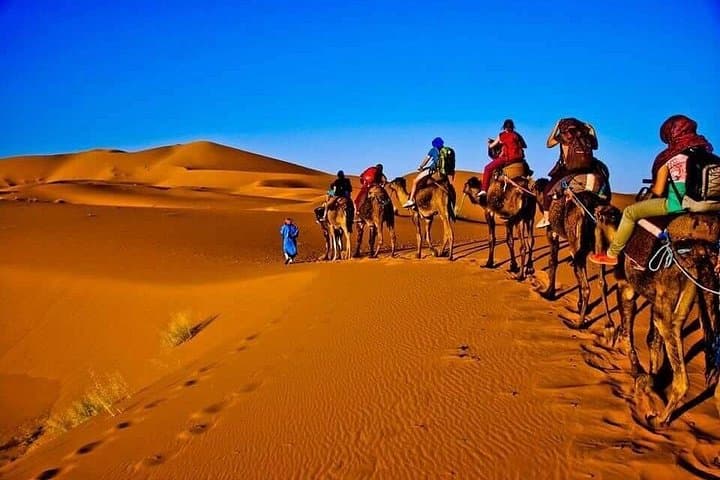
A low sun spills across the Atlas as the road twists up and over Tizi n’Tichka; by dusk the dunes of Erg Chebbi rise like a moving wall of ochre. On this two-day loop from Marrakech, travelers trade red-city alleys for wind-sculpted sand, arriving by late afternoon to mount a single-hump camel and cross the shifting ridgeline toward a desert camp.
Verified experiences and guided adventures in the surrounding area.
Operated by Sahara Desert Guided Tours · Merzouga, Drâa-Tafilalet
A low sun spills across the Atlas as the road twists up and over Tizi n’Tichka; by dusk the dunes of Erg Chebbi rise like a moving wall of ochre. On this two-day loop from Marrakech, travelers trade red-city alleys for wind-sculpted sand, arriving by late afternoon to mount a single-hump camel and cross the shifting ridgeline toward a desert camp.
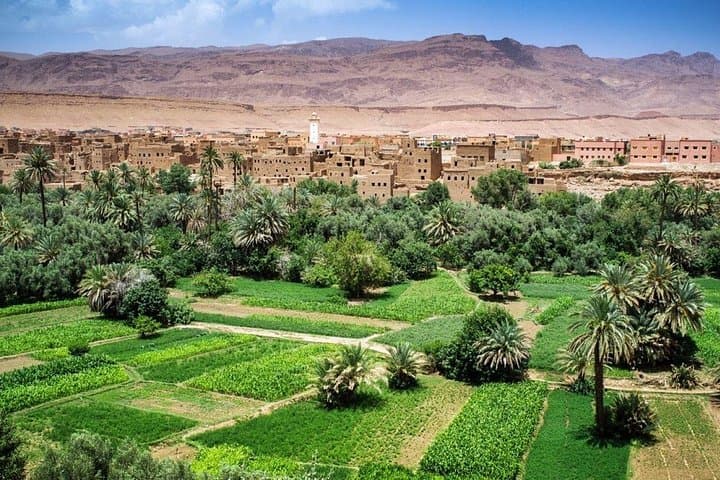
Geology here is obvious: fine Saharan sand piled by prevailing northeasterly winds into dunes that reach 150 meters at their tallest; the driving route crosses volcanic and sedimentary layers exposed on the Atlas escarpments. Culturally, the tour threads through kasbah towns—Ouarzazate and Ait Ben Haddou—sites on old caravan corridors and modern film maps. Expect Berber hospitality at the camp, evening Gnawa rhythms, and an ink-black sky interrupted only by satellite streaks.
Practically, the return trip covers roughly 500–600 km round-trip from Marrakech with long stretches on two-lane roads; plan for 8–10 hours’ driving each way. Camel rides to and from camp are typically 60–90 minutes; surface is soft sand, so steady balance helps more than fitness. Camping is in basic but comfortable tents with dinner and breakfast provided; nights can drop sharply in temperature.
Bring layered clothing for dramatic diurnal swings, at least 2–3 liters of water per person for touring and trekking, and sun protection for midday crossings. Aim to photograph sunset and sunrise from the dune crests—early starts yield the best light and cooler conditions. This is a compact desert immersion: long roads, immediate desert reward.
Expect 8–10 hours of driving each way depending on stops—route crosses Tizi n’Tichka and includes photo stops at Ouarzazate and Ait Ben Haddou.
No technical skill is required; the camel handlers guide the caravan and treks typically last 60–90 minutes to reach camp—basic balance and mobility are helpful.
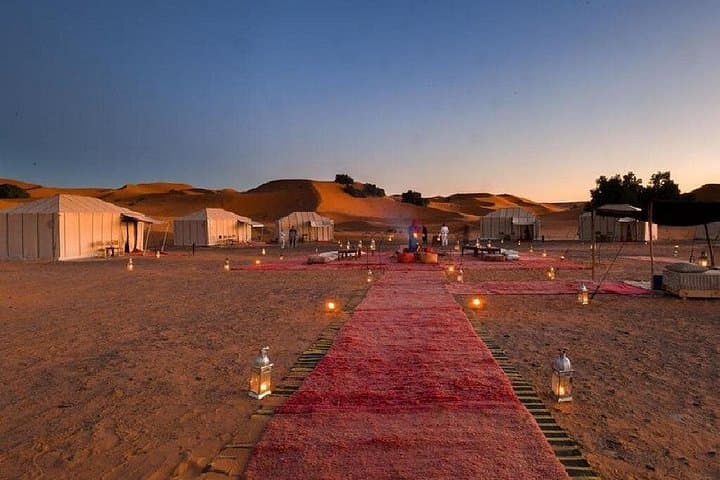
Overnight is in a private desert camp in individual or shared tents with simple bedding; facilities are basic but include dinner and breakfast as described in the itinerary.
Yes—service animals allowed and infant seats available per operator notes—but infants usually sit on laps during vehicle transfers and families should plan for long driving stretches.
Sahara Desert Guided Tours operates guided outdoor trips and adventures with an emphasis on safety, stewardship, and memorable experiences.

A low sun spills across the Atlas as the road twists up and over Tizi n’Tichka; by dusk the dunes of Erg Chebbi rise like a moving wall of ochre. On this two-day loop from Marrakech, travelers trade red-city alleys for wind-sculpted sand, arriving by late afternoon to mount a single-hump camel and cross the shifting ridgeline toward a desert camp.
A low sun spills across the Atlas as the road twists up and over Tizi n’Tichka; by dusk the dunes of Erg Chebbi rise like a moving wall of ochre. On this two-day loop from Marrakech, travelers trade red-city alleys for wind-sculpted sand, arriving by late afternoon to mount a single-hump camel and cross the shifting ridgeline toward a desert camp.
Geology here is obvious: fine Saharan sand piled by prevailing northeasterly winds into dunes that reach 150 meters at their tallest; the driving route crosses volcanic and sedimentary layers exposed on the Atlas escarpments. Culturally, the tour threads through kasbah towns—Ouarzazate and Ait Ben Haddou—sites on old caravan corridors and modern film maps. Expect Berber hospitality at the camp, evening Gnawa rhythms, and an ink-black sky interrupted only by satellite streaks.
Practically, the return trip covers roughly 500–600 km round-trip from Marrakech with long stretches on two-lane roads; plan for 8–10 hours’ driving each way. Camel rides to and from camp are typically 60–90 minutes; surface is soft sand, so steady balance helps more than fitness. Camping is in basic but comfortable tents with dinner and breakfast provided; nights can drop sharply in temperature.
Bring layered clothing for dramatic diurnal swings, at least 2–3 liters of water per person for touring and trekking, and sun protection for midday crossings. Aim to photograph sunset and sunrise from the dune crests—early starts yield the best light and cooler conditions. This is a compact desert immersion: long roads, immediate desert reward.