THE ADVENTURE COLLECTIVE® · Independent discovery and booking for outdoor travel

Climb a living volcano, circle its crater rim and bike through gorges—this two-day circuit pairs Mount Longonot’s crater loop with Hell’s Gate’s cycling trails and walking safaris. Expect crisp Rift Valley views, close wildlife sightings and varied terrain.
Climb a living volcano, circle its crater rim and bike through gorges—this two-day circuit pairs Mount Longonot’s crater loop with Hell’s Gate’s cycling trails and walking safaris. Expect crisp Rift Valley views, close wildlife sightings and varied terrain.
Dawn on the Nairobi skyline is still a bruise when the minivan threads out toward the Rift Valley. By the time the road opens and the air thins, the volcano’s grey cone—Mount Longonot—appears, its shoulders cleaved by old lava flows and crowned by a jagged rim. The trail starts steep and honest: a switchback climb that urges you into a steady rhythm, breath matching bootfalls as the crater opens up above you.
Verified experiences and guided adventures in the surrounding area.
Operated by Shagami Kenya Tours and Safaris · Naivasha, Nakuru County
Dawn on the Nairobi skyline is still a bruise when the minivan threads out toward the Rift Valley. By the time the road opens and the air thins, the volcano’s grey cone—Mount Longonot—appears, its shoulders cleaved by old lava flows and crowned by a jagged rim. The trail starts steep and honest: a switchback climb that urges you into a steady rhythm, breath matching bootfalls as the crater opens up above you.
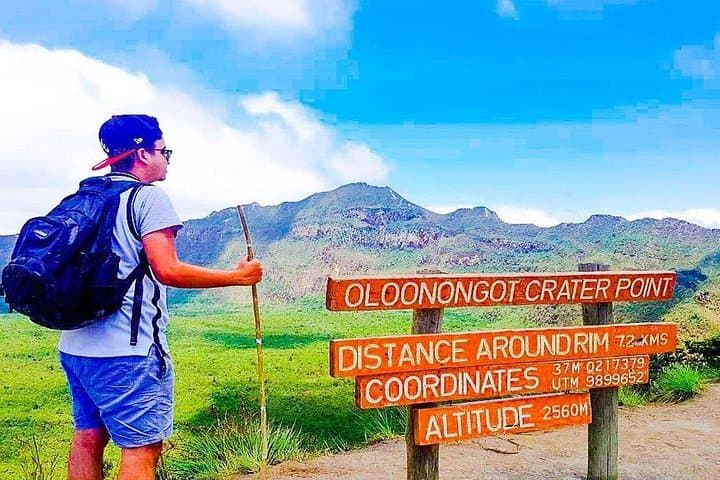
Longonot is young in geological terms, a Plio-Pleistocene stratovolcano whose 2,886 m summit frames a crater that hikers can loop. The rim trail is a compact loop—about 8 km—and the route around the crater offers alternating exposures: dense scrub and a surprising pocket of forested microclimate tucked inside the hollow. On clear mornings the Rift Valley spreads below like a carved bowl; Lake Naivasha sits to the southwest, a pale, shimmering eye.
Local history is simple and raw: this landscape shaped migration, grazing, and the hunting patterns of wildlife that still move between parks. Mount Longonot National Park and nearby Hell’s Gate preserve a cross-section of East Africa’s savanna and volcanic geology—gorges, geothermal vents and towering cliffs carved by millennia of erosion. Hell’s Gate, once a trade corridor for pastoralists, is now known for its walkable gorges, hot springs and dramatic rock faces that invite beginner climbers.
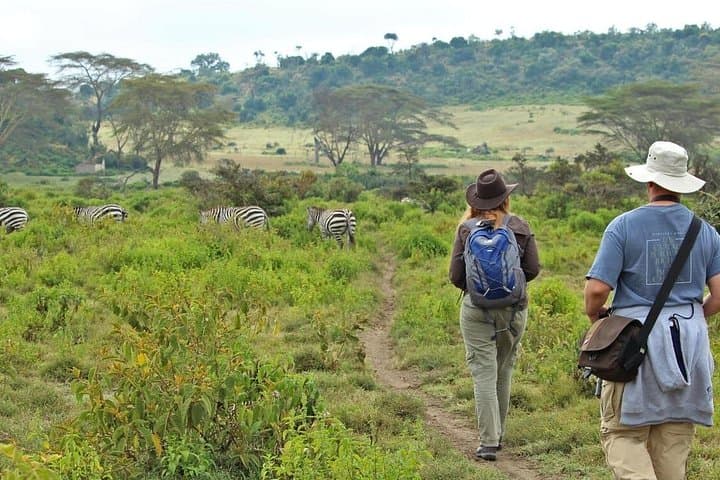
Day one is steady hiking—expect roughly 600–900 m of elevation gain depending on your starting point, and about 4–5 hours on the trail with pauses for views and wildlife spotting. Keep an eye for zebras, giraffes, buffalo and eland grazing below; elusive leopards are present but rarely seen. Night is spent at a tented lodge or local hotel near the park, where dinner and an early stretch of sleep reset you for Hell’s Gate.
Day two trades vertical for kinetic: a morning of cycling through Hell’s Gate—roughly 7 km of easy singletrack and road—before dismounting for a 3-hour walking safari through gorges and past hot springs. Rangers often leave bikes at a midpoint so you can hike the cliffs and return on two wheels. The route is compact but varied: dusty plains, sculpted cliffs and close-up wildlife encounters.
Practical edge: start early to avoid midday heat, carry 2–3 liters of water, and wear sturdy hiking boots—the crater rim is rocky and can be slick after rain. Permits and park entry are generally included on organized tours, and pickup from Nairobi hotels makes logistics straightforward. Not recommended for travelers with serious back, heart conditions, or pregnancy. With simple preparation this two-day circuit delivers volcanic vistas, hands-on geology and a surprisingly intimate slice of Kenya’s wild Rift Valley.
The loop is moderate: steep sections and loose scree occur, but the distance (about 8 km) and time (3–5 hours) are achievable for most fit hikers.
On organized tours these are typically included—confirm when booking; independent visitors can pay at park gates.
Families with older children who can hike several hours are fine, but very young children or infants are not recommended for the crater hike.
Common sightings include zebras, giraffes, Grant’s gazelles and buffalo; predators like leopards are present but uncommon to spot.
The main cycling stretches are beginner- to intermediate-level and about 7 km; bikes are provided and a ranger support vehicle is often available.
Mount Longonot reaches 2,886 m; if you have heart, respiratory, or spinal conditions, consult a doctor—tour operators flag these as restrictions.
Shagami Kenya Tours and Safaris operates guided outdoor trips and adventures with an emphasis on safety, stewardship, and memorable experiences.


Dawn on the Nairobi skyline is still a bruise when the minivan threads out toward the Rift Valley. By the time the road opens and the air thins, the volcano’s grey cone—Mount Longonot—appears, its shoulders cleaved by old lava flows and crowned by a jagged rim. The trail starts steep and honest: a switchback climb that urges you into a steady rhythm, breath matching bootfalls as the crater opens up above you.
Dawn on the Nairobi skyline is still a bruise when the minivan threads out toward the Rift Valley. By the time the road opens and the air thins, the volcano’s grey cone—Mount Longonot—appears, its shoulders cleaved by old lava flows and crowned by a jagged rim. The trail starts steep and honest: a switchback climb that urges you into a steady rhythm, breath matching bootfalls as the crater opens up above you.
Longonot is young in geological terms, a Plio-Pleistocene stratovolcano whose 2,886 m summit frames a crater that hikers can loop. The rim trail is a compact loop—about 8 km—and the route around the crater offers alternating exposures: dense scrub and a surprising pocket of forested microclimate tucked inside the hollow. On clear mornings the Rift Valley spreads below like a carved bowl; Lake Naivasha sits to the southwest, a pale, shimmering eye.
Local history is simple and raw: this landscape shaped migration, grazing, and the hunting patterns of wildlife that still move between parks. Mount Longonot National Park and nearby Hell’s Gate preserve a cross-section of East Africa’s savanna and volcanic geology—gorges, geothermal vents and towering cliffs carved by millennia of erosion. Hell’s Gate, once a trade corridor for pastoralists, is now known for its walkable gorges, hot springs and dramatic rock faces that invite beginner climbers.
Day one is steady hiking—expect roughly 600–900 m of elevation gain depending on your starting point, and about 4–5 hours on the trail with pauses for views and wildlife spotting. Keep an eye for zebras, giraffes, buffalo and eland grazing below; elusive leopards are present but rarely seen. Night is spent at a tented lodge or local hotel near the park, where dinner and an early stretch of sleep reset you for Hell’s Gate.
Day two trades vertical for kinetic: a morning of cycling through Hell’s Gate—roughly 7 km of easy singletrack and road—before dismounting for a 3-hour walking safari through gorges and past hot springs. Rangers often leave bikes at a midpoint so you can hike the cliffs and return on two wheels. The route is compact but varied: dusty plains, sculpted cliffs and close-up wildlife encounters.
Practical edge: start early to avoid midday heat, carry 2–3 liters of water, and wear sturdy hiking boots—the crater rim is rocky and can be slick after rain. Permits and park entry are generally included on organized tours, and pickup from Nairobi hotels makes logistics straightforward. Not recommended for travelers with serious back, heart conditions, or pregnancy. With simple preparation this two-day circuit delivers volcanic vistas, hands-on geology and a surprisingly intimate slice of Kenya’s wild Rift Valley.