THE ADVENTURE COLLECTIVE® · Independent discovery and booking for outdoor travel

A brisk, two-day ascent of Mount Toubkal from Marrakech that packs the essentials — local transport, a night in the refuge, and a pre-dawn summit push to 4,167 m. Ideal for fit hikers who want a rapid but rewarding high-altitude trek paired with Berber hospitality.
A brisk, two-day ascent of Mount Toubkal from Marrakech that packs the essentials — local transport, a night in the refuge, and a pre-dawn summit push to 4,167 m. Ideal for fit hikers who want a rapid but rewarding high-altitude trek paired with Berber hospitality.
Dawn light fractures the High Atlas as a convoy leaves Marrakech behind, the city heat giving way to rocky slopes and scattered Berber villages.
Verified experiences and guided adventures in the surrounding area.
Operated by Toubkal Hiking Team · Imlil, Marrakesh-Safi
Dawn light fractures the High Atlas as a convoy leaves Marrakech behind, the city heat giving way to rocky slopes and scattered Berber villages.
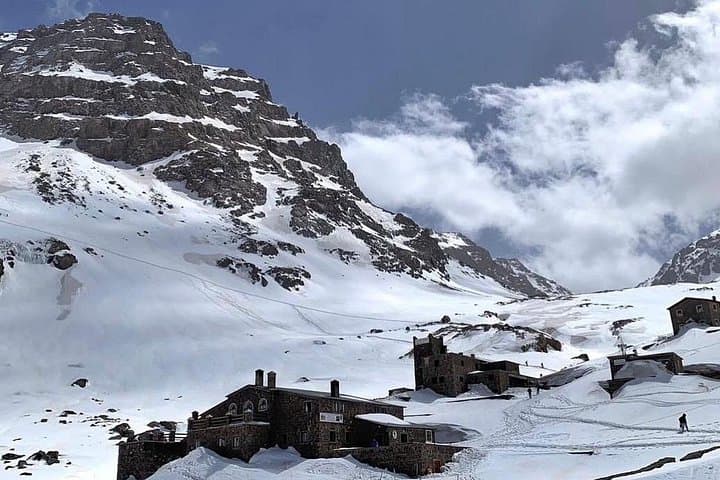
On a compact two-day schedule you'll travel by private car into the Atlas, start from Imlil or a nearby village, and push up to the Toubkal Refuge before an early-morning summit bid to 4,167 m. The terrain moves from mule tracks and stony switchbacks to steep scree and occasional snowfields; in winter you may need crampons and an ice axe for stability.
The High Atlas has shaped local culture for millennia — seasonal pastures, terraced fields and villages where Amazigh (Berber) hospitality remains central. Geologically the range is young and craggy, carved by uplift and erosion into sharp ridges and deep valleys that frame panoramic views north toward Marrakech and, on clear days, the faint blue of the Sahara to the south.
Expect roughly 12–15 km of walking over two days with about 2,400 m of cumulative elevation gain from valley trailheads. Day one finishes at the refuge (simple alpine accommodation and meals included), day two starts pre-dawn for the summit push. Practical essentials: acclimatize if possible, carry layered clothing, 2–3 L water and snacks, and use trekking poles to protect knees on descent.
This itinerary is fast and demanding rather than technical; it rewards fitness, planning and respect for mountain weather, and it delivers a genuine summit moment above North Africa.
You should have good cardiovascular fitness and experience with long uphill hiking; the schedule is fast with significant elevation gain and long summit-day hours.
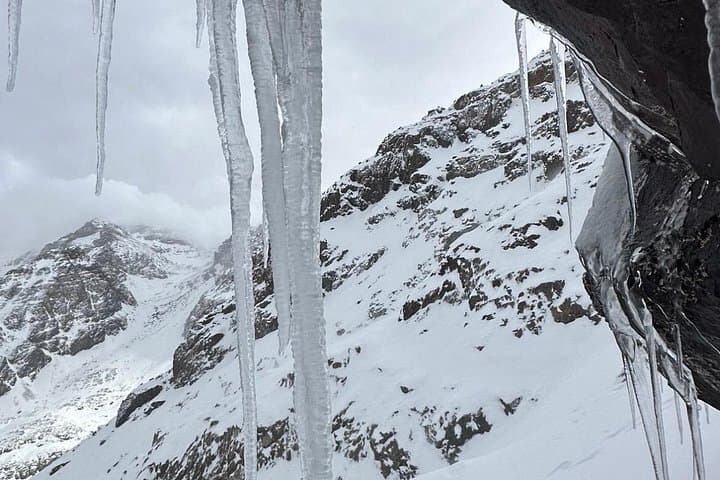
The route is a non-technical trek in summer; between November and April you may need crampons and an ice axe for snow slopes, and guides will advise accordingly.
Most itineraries start and finish in Marrakech with private transfer to the Atlas and trailheads near Imlil; transport and one refuge night are typically included.
At 4,167 m the summit can cause altitude symptoms; pace yourself, hydrate, and inform guides if you feel unwell — descent is the primary remedy.
Toubkal Hiking Team operates guided outdoor trips and adventures with an emphasis on safety, stewardship, and memorable experiences.


Dawn light fractures the High Atlas as a convoy leaves Marrakech behind, the city heat giving way to rocky slopes and scattered Berber villages.
Dawn light fractures the High Atlas as a convoy leaves Marrakech behind, the city heat giving way to rocky slopes and scattered Berber villages.
On a compact two-day schedule you'll travel by private car into the Atlas, start from Imlil or a nearby village, and push up to the Toubkal Refuge before an early-morning summit bid to 4,167 m. The terrain moves from mule tracks and stony switchbacks to steep scree and occasional snowfields; in winter you may need crampons and an ice axe for stability.
The High Atlas has shaped local culture for millennia — seasonal pastures, terraced fields and villages where Amazigh (Berber) hospitality remains central. Geologically the range is young and craggy, carved by uplift and erosion into sharp ridges and deep valleys that frame panoramic views north toward Marrakech and, on clear days, the faint blue of the Sahara to the south.
Expect roughly 12–15 km of walking over two days with about 2,400 m of cumulative elevation gain from valley trailheads. Day one finishes at the refuge (simple alpine accommodation and meals included), day two starts pre-dawn for the summit push. Practical essentials: acclimatize if possible, carry layered clothing, 2–3 L water and snacks, and use trekking poles to protect knees on descent.
This itinerary is fast and demanding rather than technical; it rewards fitness, planning and respect for mountain weather, and it delivers a genuine summit moment above North Africa.