THE ADVENTURE COLLECTIVE® · Independent discovery and booking for outdoor travel
A compact, two-day ascent of Jebel Toubkal from Imlil that pairs a long valley approach with an early summit push. Expect refuge accommodation, scree and high-altitude hiking—sunrise from 4,167 m is the clear reward.
A compact, two-day ascent of Jebel Toubkal from Imlil that pairs a long valley approach with an early summit push. Expect refuge accommodation, scree and high-altitude hiking—sunrise from 4,167 m is the clear reward.
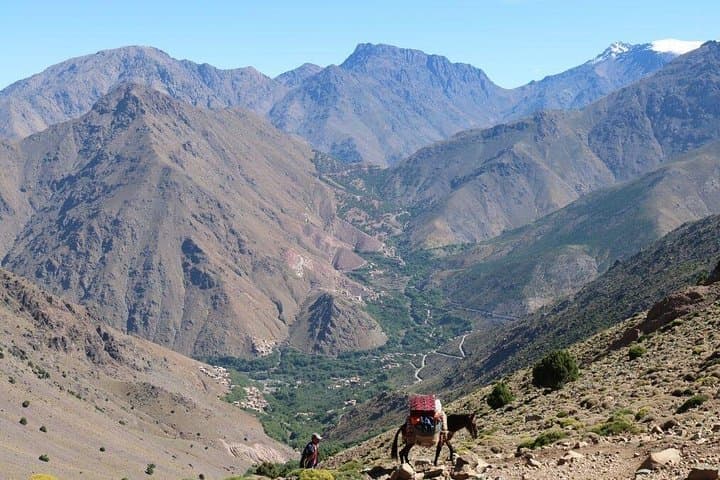
You leave Marrakech before dawn, the city lights thinning as the road climbs toward the High Atlas. By the time the minibus drops you in Imlil, the valley air is crisp and the peaks of Jebel Toubkal loom like a challenge waiting to be met. The river dares you to move faster; scree fields push back at each step higher on the mountain.
Verified experiences and guided adventures in the surrounding area.
Operated by Omar Adventures · Imlil, Marrakech-Safi
You leave Marrakech before dawn, the city lights thinning as the road climbs toward the High Atlas. By the time the minibus drops you in Imlil, the valley air is crisp and the peaks of Jebel Toubkal loom like a challenge waiting to be met. The river dares you to move faster; scree fields push back at each step higher on the mountain.
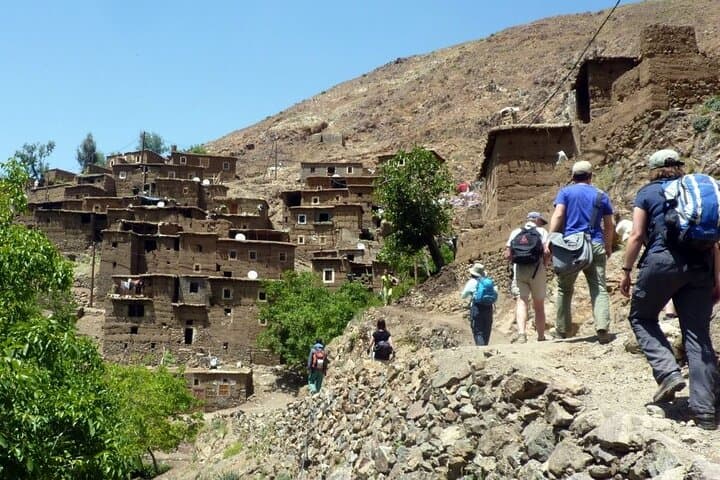
Toubkal is North Africa's highest summit at 4,167 m, carved from ancient volcanic and metamorphic rocks that tilt and fracture into steep ridges and boulder fields. The valley settlements—Aremd, Imlil and small Berber hamlets—have shepherding and irrigated agriculture traditions that go back centuries; shrines like Sidi Chamarouch mark local spiritual routes. On clear mornings the Rif and Anti-Atlas appear faint on the horizon, a reminder of Morocco's layered geology and trade routes.
The two-day itinerary is straightforward but uncompromising: a long approach to the Toubkal refuge, an alpine wake-up and a summit push across loose scree and snow patches depending on season. Expect basic refuge accommodation, group meals, mule support for luggage and constant altitude effects.
Practical guidance: pace conservatively on steep scree, use trekking poles to protect knees on descent, and carry layers for wind and cold above 3,000 m. Hydrate before and during the climb—altitude, sun and effort combine quickly. Plan logistics from Marrakech with an extra day for acclimatization if you’re sensitive to altitude. With the right kit and respect for the mountain, the sunrise from the summit delivers a panoramic payoff that justifies every rocky step.
No technical climbing skills are required; the route is a strenuous hike but includes scree and altitude challenges—guide support is provided.
Overnight is at the Toubkal Refuge with basic dormitory-style rooms and communal meals—expect simple bedding and shared facilities.
Yes; altitude can affect anyone. Hydrate, pace steadily, and inform guides of symptoms—descend if signs worsen.
Yes, mule support for luggage is included so you only need to carry a daypack for summit day.
Omar Adventures operates guided outdoor trips and adventures with an emphasis on safety, stewardship, and memorable experiences.
You leave Marrakech before dawn, the city lights thinning as the road climbs toward the High Atlas. By the time the minibus drops you in Imlil, the valley air is crisp and the peaks of Jebel Toubkal loom like a challenge waiting to be met. The river dares you to move faster; scree fields push back at each step higher on the mountain.
You leave Marrakech before dawn, the city lights thinning as the road climbs toward the High Atlas. By the time the minibus drops you in Imlil, the valley air is crisp and the peaks of Jebel Toubkal loom like a challenge waiting to be met. The river dares you to move faster; scree fields push back at each step higher on the mountain.
Toubkal is North Africa's highest summit at 4,167 m, carved from ancient volcanic and metamorphic rocks that tilt and fracture into steep ridges and boulder fields. The valley settlements—Aremd, Imlil and small Berber hamlets—have shepherding and irrigated agriculture traditions that go back centuries; shrines like Sidi Chamarouch mark local spiritual routes. On clear mornings the Rif and Anti-Atlas appear faint on the horizon, a reminder of Morocco's layered geology and trade routes.
The two-day itinerary is straightforward but uncompromising: a long approach to the Toubkal refuge, an alpine wake-up and a summit push across loose scree and snow patches depending on season. Expect basic refuge accommodation, group meals, mule support for luggage and constant altitude effects.
Practical guidance: pace conservatively on steep scree, use trekking poles to protect knees on descent, and carry layers for wind and cold above 3,000 m. Hydrate before and during the climb—altitude, sun and effort combine quickly. Plan logistics from Marrakech with an extra day for acclimatization if you’re sensitive to altitude. With the right kit and respect for the mountain, the sunrise from the summit delivers a panoramic payoff that justifies every rocky step.
