THE ADVENTURE COLLECTIVE® · Independent discovery and booking for outdoor travel

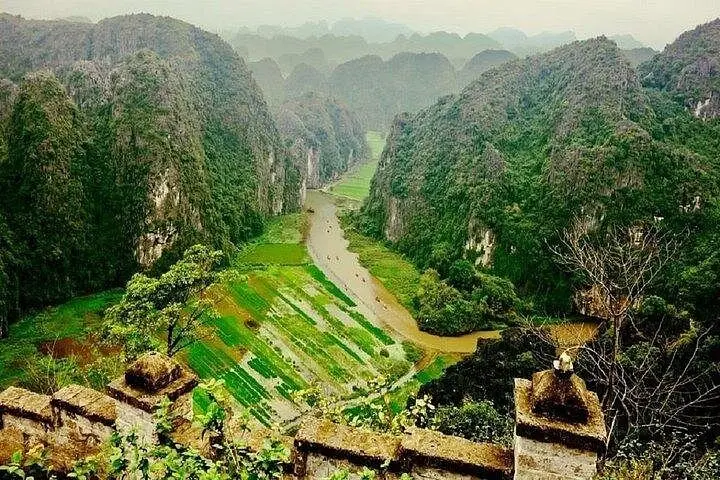
Glide under towering karst cliffs, climb to a sharp panorama above rice paddies, and explore ancient temples on a compact 2‑day loop from Hanoi. This tour pairs slow river travel with a strenuous viewpoint ascent—ideal for travelers who want variety in two days.
Glide under towering karst cliffs, climb to a sharp panorama above rice paddies, and explore ancient temples on a compact 2‑day loop from Hanoi. This tour pairs slow river travel with a strenuous viewpoint ascent—ideal for travelers who want variety in two days.
You push off from a low wooden boat and the river takes you between limestone towers that rise abruptly from flooded rice fields; the oarsman’s rhythm sets the day’s pace and the karst walls seem to lean closer with every stroke.
Verified experiences and guided adventures in the surrounding area.
You push off from a low wooden boat and the river takes you between limestone towers that rise abruptly from flooded rice fields; the oarsman’s rhythm sets the day’s pace and the karst walls seem to lean closer with every stroke.
Over two days this loop through Ninh Binh province moves from quiet paddies and boat grottos to a demanding stair climb at Mua Cave and the vast courtyards of Bai Dinh pagoda. Geologically the region is classic tropical karst—limestone folded and eroded into steep cliffs, caves and narrow river passages that funnel monsoon waters and create the sheltered channels you glide through.
Historically the valley held Hoa Lu, the 10th-century Vietnamese capital, and the temples there give a direct line to the area’s royal past. Culturally, travel here blends boatmen’s centuries-old rowing techniques, rural rice farming rhythms, and living pagoda traditions at Bai Dinh.
Practical notes: expect two full days with about 1–3 hours of easy-pace rowing or walking at several stops, plus a steep ascent at Mua Cave—roughly 400–500 stone steps and 150–200m elevation gain to reach the viewpoint. Terrain alternates between flat dirt tracks, slick river boards, and worn stone steps.
Bring sun protection, insect repellent, and sturdy shoes for the climb; carry 1–2 liters of water and some cash for entrance fees and snacks. Start early to avoid mid-day heat and allow time for photography and slow boat sections—this route rewards patient observation more than speed.
Ninh Binh province is about 90 km south of Hanoi; transfer times by road are roughly 1.5–2.5 hours depending on traffic.
Yes; boats are low and stable with experienced rowers. Life vests are often available—ask your guide if you want one.
Expect a steep climb of roughly 400–500 stone steps and 150–200m elevation gain; pace yourself and take breaks for photos and water.
Inclusions vary by operator—confirm whether meals, boat fees and temple entrances are covered before booking and carry small cash for extras.
You push off from a low wooden boat and the river takes you between limestone towers that rise abruptly from flooded rice fields; the oarsman’s rhythm sets the day’s pace and the karst walls seem to lean closer with every stroke.
You push off from a low wooden boat and the river takes you between limestone towers that rise abruptly from flooded rice fields; the oarsman’s rhythm sets the day’s pace and the karst walls seem to lean closer with every stroke.
Over two days this loop through Ninh Binh province moves from quiet paddies and boat grottos to a demanding stair climb at Mua Cave and the vast courtyards of Bai Dinh pagoda. Geologically the region is classic tropical karst—limestone folded and eroded into steep cliffs, caves and narrow river passages that funnel monsoon waters and create the sheltered channels you glide through.
Historically the valley held Hoa Lu, the 10th-century Vietnamese capital, and the temples there give a direct line to the area’s royal past. Culturally, travel here blends boatmen’s centuries-old rowing techniques, rural rice farming rhythms, and living pagoda traditions at Bai Dinh.
Practical notes: expect two full days with about 1–3 hours of easy-pace rowing or walking at several stops, plus a steep ascent at Mua Cave—roughly 400–500 stone steps and 150–200m elevation gain to reach the viewpoint. Terrain alternates between flat dirt tracks, slick river boards, and worn stone steps.
Bring sun protection, insect repellent, and sturdy shoes for the climb; carry 1–2 liters of water and some cash for entrance fees and snacks. Start early to avoid mid-day heat and allow time for photography and slow boat sections—this route rewards patient observation more than speed.