THE ADVENTURE COLLECTIVE® · Independent discovery and booking for outdoor travel

Cross from Eilat into Jordan for a two‑day sweep through Aqaba’s coast, the alien landscapes of Wadi Rum and the carved city of Petra. Expect a Jeep safari, a night in a Bedouin glamping camp, and 3–4 hours to explore Petra’s monumental facades.
Cross from Eilat into Jordan for a two‑day sweep through Aqaba’s coast, the alien landscapes of Wadi Rum and the carved city of Petra. Expect a Jeep safari, a night in a Bedouin glamping camp, and 3–4 hours to explore Petra’s monumental facades.
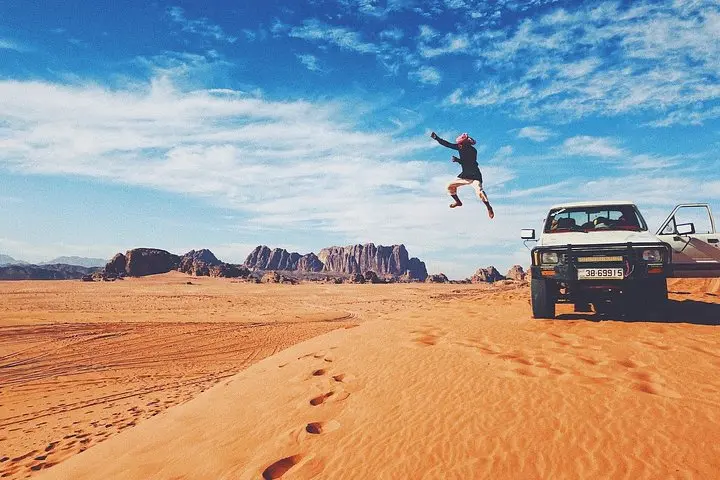
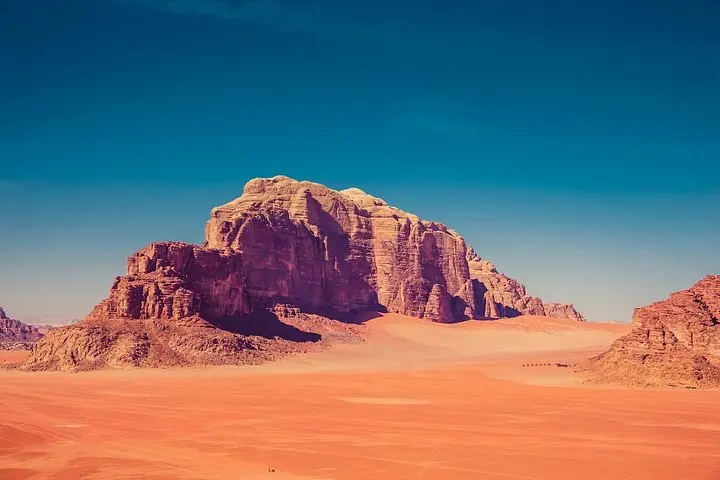
The morning air off the Gulf of Aqaba is sharp as you board an air‑conditioned transfer in Eilat and watch the coastline recede. By midday you’re standing on red sand that seems to shift beneath the tires of a Jeep, Wadi Rum’s towers and arches dwarfing the horizon as the sun leans west.
Verified experiences and guided adventures in the surrounding area.
Operated by Bein Harim Ltd · Wadi Musa, Ma'an Governorate
The morning air off the Gulf of Aqaba is sharp as you board an air‑conditioned transfer in Eilat and watch the coastline recede. By midday you’re standing on red sand that seems to shift beneath the tires of a Jeep, Wadi Rum’s towers and arches dwarfing the horizon as the sun leans west.
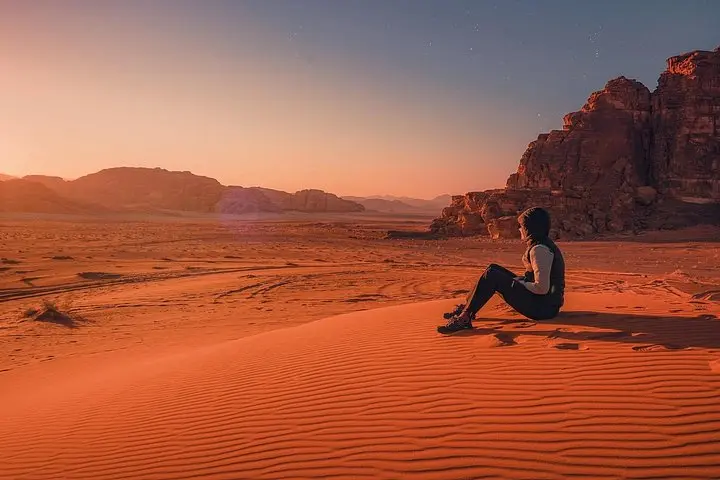
Wadi Rum is a geologic page—wind‑carved sandstone and granite that the Nabateans and later Bedouin learned to read and travel. The following night, under a clear desert sky, a Bedouin camp offers simple luxury with firelit gatherings and grilled dinner, the same routes that Lawrence of Arabia followed to move between dunes and rock. Petra, roughly 2,300 years old, opens the next day via the Siq, a narrow gorge that funnels into Al‑Khazneh (the Treasury), carved into rose‑red cliffs by the Nabateans.
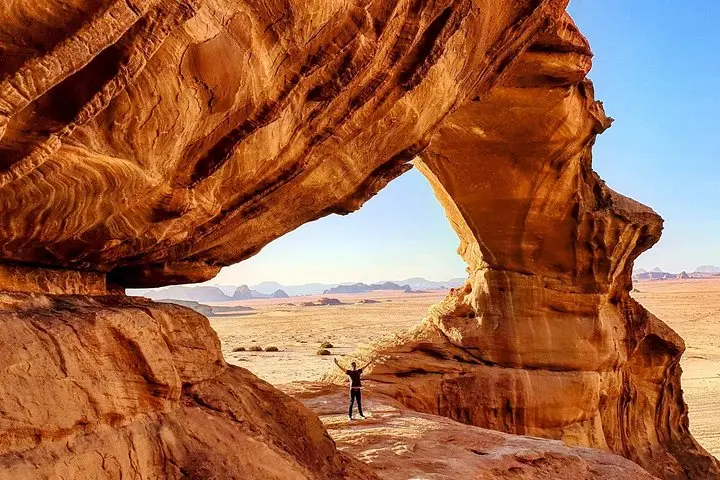
Culturally the region blends Arab desert life, Ottoman and Mamluk history in Aqaba’s fort, and modern cross‑border logistics—expect passport stamping and visa fees at the Jordanian entry. Geologically, look for stratified sandstone, natural bridges and wind‑smoothed hollows in Wadi Rum, and the polished Siq walls in Petra.
Practical guidance: pack sturdy walking shoes for uneven rock and cobbles, bring 2–3 liters of water per day, and layer for hot days and cool desert nights. Border control can add 30–60 minutes—have passport copies and cash for visa fees ready. Allow at least 3–4 hours to explore Petra’s main monuments and a few hours for a Wadi Rum Jeep tour; the pace is active but accessible to most fit travelers.
Many nationalities require a visa—check with the Jordanian Ministry of Interior; the tour notes a cash fee payable at the border (amount varies by status).
This tour is not recommended for children under 2 or pregnant travelers due to border procedures and active walking segments.
Expect about 3–4 hours to walk the Siq, see the Treasury and several major tombs and façades; longer stays require independent planning.
Beach time in Aqaba is included as free time, but boat tours, snorkeling and private beach access are optional and typically cost extra.
Bein Harim Ltd operates guided outdoor trips and adventures with an emphasis on safety, stewardship, and memorable experiences.
The morning air off the Gulf of Aqaba is sharp as you board an air‑conditioned transfer in Eilat and watch the coastline recede. By midday you’re standing on red sand that seems to shift beneath the tires of a Jeep, Wadi Rum’s towers and arches dwarfing the horizon as the sun leans west.
The morning air off the Gulf of Aqaba is sharp as you board an air‑conditioned transfer in Eilat and watch the coastline recede. By midday you’re standing on red sand that seems to shift beneath the tires of a Jeep, Wadi Rum’s towers and arches dwarfing the horizon as the sun leans west.
Wadi Rum is a geologic page—wind‑carved sandstone and granite that the Nabateans and later Bedouin learned to read and travel. The following night, under a clear desert sky, a Bedouin camp offers simple luxury with firelit gatherings and grilled dinner, the same routes that Lawrence of Arabia followed to move between dunes and rock. Petra, roughly 2,300 years old, opens the next day via the Siq, a narrow gorge that funnels into Al‑Khazneh (the Treasury), carved into rose‑red cliffs by the Nabateans.
Culturally the region blends Arab desert life, Ottoman and Mamluk history in Aqaba’s fort, and modern cross‑border logistics—expect passport stamping and visa fees at the Jordanian entry. Geologically, look for stratified sandstone, natural bridges and wind‑smoothed hollows in Wadi Rum, and the polished Siq walls in Petra.
Practical guidance: pack sturdy walking shoes for uneven rock and cobbles, bring 2–3 liters of water per day, and layer for hot days and cool desert nights. Border control can add 30–60 minutes—have passport copies and cash for visa fees ready. Allow at least 3–4 hours to explore Petra’s main monuments and a few hours for a Wadi Rum Jeep tour; the pace is active but accessible to most fit travelers.