THE ADVENTURE COLLECTIVE® · Independent discovery and booking for outdoor travel

Two days in Pian-Upe means empty plains, rare roan antelope sightings and cultural visits with local pastoral communities. This concise guide covers what to expect, how to prepare, and the best ways to experience Uganda’s lesser-visited reserve.
Two days in Pian-Upe means empty plains, rare roan antelope sightings and cultural visits with local pastoral communities. This concise guide covers what to expect, how to prepare, and the best ways to experience Uganda’s lesser-visited reserve.
Dawn spills across the plains of Pian-Upe and the scrub rises to meet it like an audience. Dust lifts under the 4x4, and the reserve—vast, quiet, almost defiantly empty—unfurls for two days of close-up wildlife viewing, short hikes and cultural exchange.
Verified experiences and guided adventures in the surrounding area.
Operated by Discover Sipi · Nakapiripirit, Nakapiripirit District
Dawn spills across the plains of Pian-Upe and the scrub rises to meet it like an audience. Dust lifts under the 4x4, and the reserve—vast, quiet, almost defiantly empty—unfurls for two days of close-up wildlife viewing, short hikes and cultural exchange.
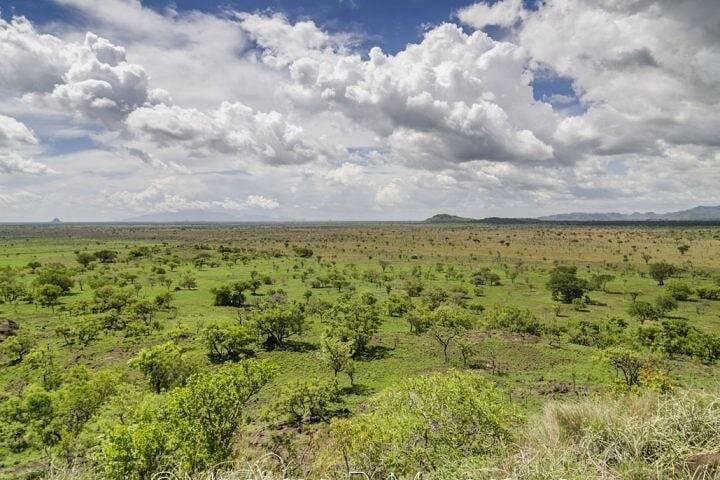
Pian-Upe sits on the northeastern flank of Mount Elgon and covers almost 2,800 km²; its geology is a mix of volcanic basalt flows and eroded savanna plains that create long sightlines and scattered rocky kopjes. The reserve’s name reflects local history: the Pian (a Karimojong subgroup) and the Upe (Pokot/Kalenjin) — ‘‘friendly enemies’’ who have shared this landscape for generations. Human history appears in sites like Napendio cave, where ancient rock art still reads like a weathered diary.
Wildlife here has a deliberate rhythm—roan antelope and Rothschild’s giraffes move through tall grasses, while ostriches and baboons stake out the ridgelines. Birders count more than 240 species; the open plains make for exceptional raptor and ground-bird viewing. Local communities offer cultural visits with traditional dances and household demonstrations, adding context to any safari.
Practical side: roads are rough and 4x4s are essential; allow extra time for transfers from Mbale or Sipi Falls. Morning drives are best for sightings; afternoons can bring heat and sudden showers. Pack lightweight breathable clothing for the day, a warm layer for cool nights, sturdy hiking shoes for short climbs, and good binoculars. Respect wildlife distances, support local guides, and expect simple meals and basic accommodation or camping. Pian-Upe rewards patience: solitude here is part of the experience, and the landscape will make you lean in to listen.
Most travelers drive by 4x4: about 2–2.5 hours from Mbale and roughly 8–9 hours from Kampala. Roads can be rough, so allow extra travel time and use a vehicle with high clearance.
Expect antelope species (including Uganda’s roan antelope), giraffes, zebras, baboons and a rich variety of birds—early morning drives increase your chances for sightings.
Guided nature walks are led by Uganda Wildlife Authority rangers and are family-friendly, though trails can be uneven—children should be supervised and wear sturdy shoes.
Dry months (January–March) offer clearer views and easier driving; the long rains (April–October) can make tracks muddy and some areas less accessible.
Discover Sipi operates guided outdoor trips and adventures with an emphasis on safety, stewardship, and memorable experiences.


Dawn spills across the plains of Pian-Upe and the scrub rises to meet it like an audience. Dust lifts under the 4x4, and the reserve—vast, quiet, almost defiantly empty—unfurls for two days of close-up wildlife viewing, short hikes and cultural exchange.
Dawn spills across the plains of Pian-Upe and the scrub rises to meet it like an audience. Dust lifts under the 4x4, and the reserve—vast, quiet, almost defiantly empty—unfurls for two days of close-up wildlife viewing, short hikes and cultural exchange.
Pian-Upe sits on the northeastern flank of Mount Elgon and covers almost 2,800 km²; its geology is a mix of volcanic basalt flows and eroded savanna plains that create long sightlines and scattered rocky kopjes. The reserve’s name reflects local history: the Pian (a Karimojong subgroup) and the Upe (Pokot/Kalenjin) — ‘‘friendly enemies’’ who have shared this landscape for generations. Human history appears in sites like Napendio cave, where ancient rock art still reads like a weathered diary.
Wildlife here has a deliberate rhythm—roan antelope and Rothschild’s giraffes move through tall grasses, while ostriches and baboons stake out the ridgelines. Birders count more than 240 species; the open plains make for exceptional raptor and ground-bird viewing. Local communities offer cultural visits with traditional dances and household demonstrations, adding context to any safari.
Practical side: roads are rough and 4x4s are essential; allow extra time for transfers from Mbale or Sipi Falls. Morning drives are best for sightings; afternoons can bring heat and sudden showers. Pack lightweight breathable clothing for the day, a warm layer for cool nights, sturdy hiking shoes for short climbs, and good binoculars. Respect wildlife distances, support local guides, and expect simple meals and basic accommodation or camping. Pian-Upe rewards patience: solitude here is part of the experience, and the landscape will make you lean in to listen.