THE ADVENTURE COLLECTIVE® · Independent discovery and booking for outdoor travel

Witness sunrise at Angkor Wat, wander tree-swallowed Ta Prohm and study pink-sandstone carvings at Banteay Srei on this private two-day tour. Expect long, rewarding days, an English-speaking driver, and the logistical comfort of private transport.
Witness sunrise at Angkor Wat, wander tree-swallowed Ta Prohm and study pink-sandstone carvings at Banteay Srei on this private two-day tour. Expect long, rewarding days, an English-speaking driver, and the logistical comfort of private transport.
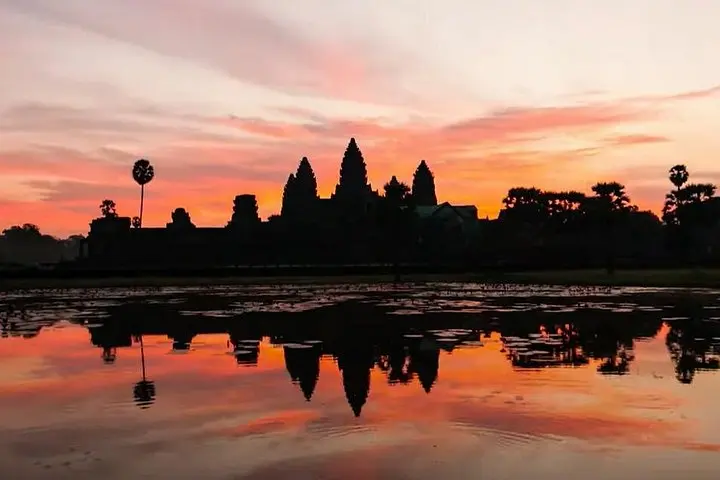
You arrive before dawn, jeep headlights carving a path through shallow mist as Angkor’s reflection shivers in the moat. The soft hush breaks when the first towers of Angkor Wat silhouette against a rising sun — a moment the driver and temple stones seem to hold their breath for.
Verified experiences and guided adventures in the surrounding area.
Operated by Khmer Temples & Nature · Siem Reap, Siem Reap Province
You arrive before dawn, jeep headlights carving a path through shallow mist as Angkor’s reflection shivers in the moat. The soft hush breaks when the first towers of Angkor Wat silhouette against a rising sun — a moment the driver and temple stones seem to hold their breath for.
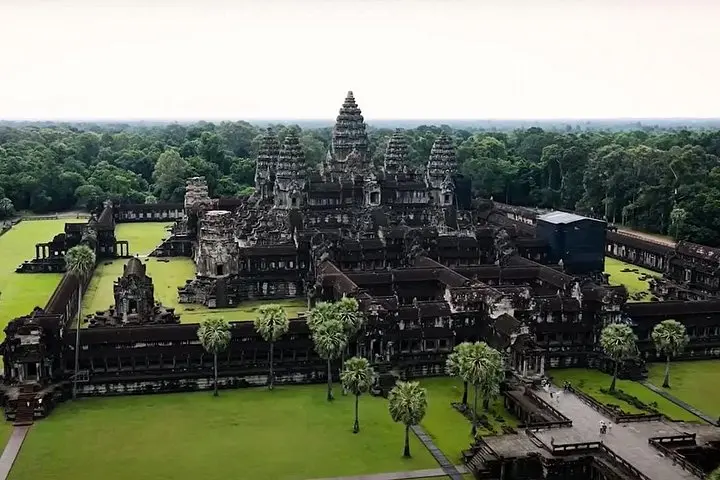
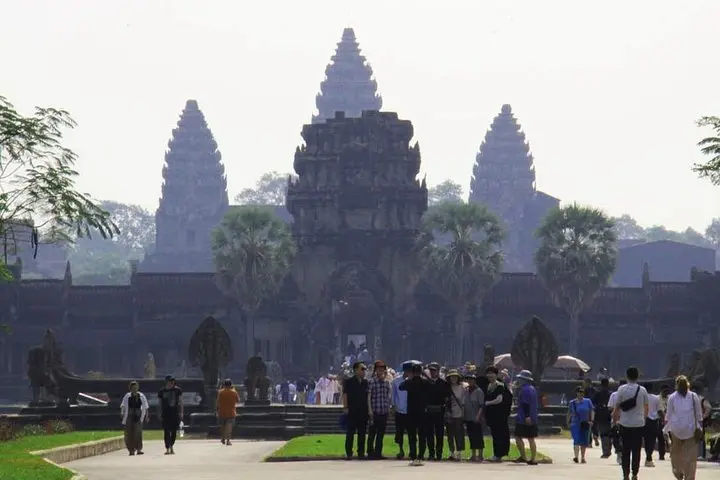
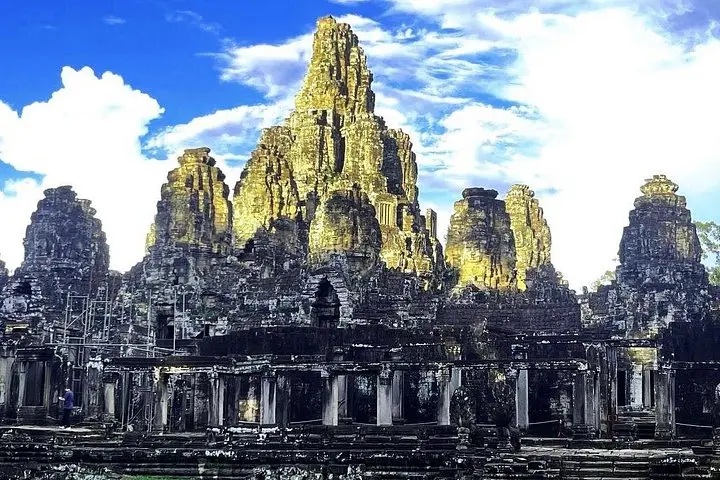
This two-day private tour threads together the park’s high notes: Angkor Wat’s temple-mountain, Ta Prohm’s trees threading roots through stone, the enigmatic faces of the Bayon, and the pink sandstone carvings of Banteay Srei. Geologically, the monuments are built from sandstone and laterite hewn from nearby quarries; centuries of monsoon and sun have given the blocks their warm, textured finish.
Culturally you’ll move from royal funerary architecture to sites tied to Jayavarman VII’s Buddhist renaissance, and pass villages where traditional fishing and rice cultivation still shape daily life. The route rewards moments of quiet observation — a monk’s procession, waterbirds on the East Baray, or villagers tending buffalo.
Practically, expect long days with short walks between monuments, uneven stonework and steep stairways, and warm, humid weather. Your private air-conditioned car and English-speaking driver handle logistics and local navigation; bring a valid Angkor pass, arrive early for sunrises, and plan sunsets from Phnom Bakheng to avoid crowds.
Footwear, shade, and water make the experience usable as well as memorable. Move deliberately: photograph, listen, and give the ruins time — these are living footprints of the Khmer empire, asking only for respectful attention.
Yes — entry to the Angkor Archaeological Park requires an Angkor pass (1-, 3- or 7-day) obtained at the official ticket center.
Some areas and paths near major temples are relatively level, but many inner sanctuaries and stairs are not; accessibility varies by site.
The itinerary is suitable for most ages since transport is private and air-conditioned, but expect walking and stairs; notify guides of mobility needs.
Yes — the tour includes private pickup and drop-off from hotels in Siem Reap as noted in the booking details.
Khmer Temples & Nature operates guided outdoor trips and adventures with an emphasis on safety, stewardship, and memorable experiences.
You arrive before dawn, jeep headlights carving a path through shallow mist as Angkor’s reflection shivers in the moat. The soft hush breaks when the first towers of Angkor Wat silhouette against a rising sun — a moment the driver and temple stones seem to hold their breath for.
You arrive before dawn, jeep headlights carving a path through shallow mist as Angkor’s reflection shivers in the moat. The soft hush breaks when the first towers of Angkor Wat silhouette against a rising sun — a moment the driver and temple stones seem to hold their breath for.
This two-day private tour threads together the park’s high notes: Angkor Wat’s temple-mountain, Ta Prohm’s trees threading roots through stone, the enigmatic faces of the Bayon, and the pink sandstone carvings of Banteay Srei. Geologically, the monuments are built from sandstone and laterite hewn from nearby quarries; centuries of monsoon and sun have given the blocks their warm, textured finish.
Culturally you’ll move from royal funerary architecture to sites tied to Jayavarman VII’s Buddhist renaissance, and pass villages where traditional fishing and rice cultivation still shape daily life. The route rewards moments of quiet observation — a monk’s procession, waterbirds on the East Baray, or villagers tending buffalo.
Practically, expect long days with short walks between monuments, uneven stonework and steep stairways, and warm, humid weather. Your private air-conditioned car and English-speaking driver handle logistics and local navigation; bring a valid Angkor pass, arrive early for sunrises, and plan sunsets from Phnom Bakheng to avoid crowds.
Footwear, shade, and water make the experience usable as well as memorable. Move deliberately: photograph, listen, and give the ruins time — these are living footprints of the Khmer empire, asking only for respectful attention.