THE ADVENTURE COLLECTIVE® · Independent discovery and booking for outdoor travel

Two full days touring Angkor’s signature temples with a private guide—sunrise at Angkor Wat, the many faces of Bayon, and the pink carvings of Banteay Srei. Practical pacing, respectful etiquette, and local context make this a focused introduction to the Khmer capital.
Two full days touring Angkor’s signature temples with a private guide—sunrise at Angkor Wat, the many faces of Bayon, and the pink carvings of Banteay Srei. Practical pacing, respectful etiquette, and local context make this a focused introduction to the Khmer capital.
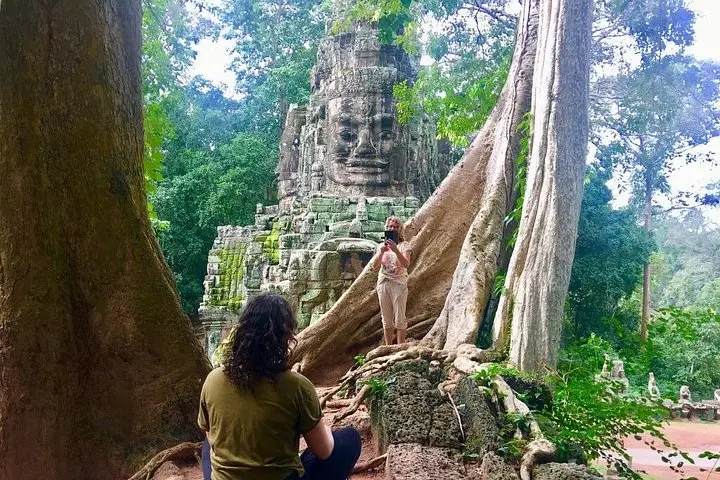
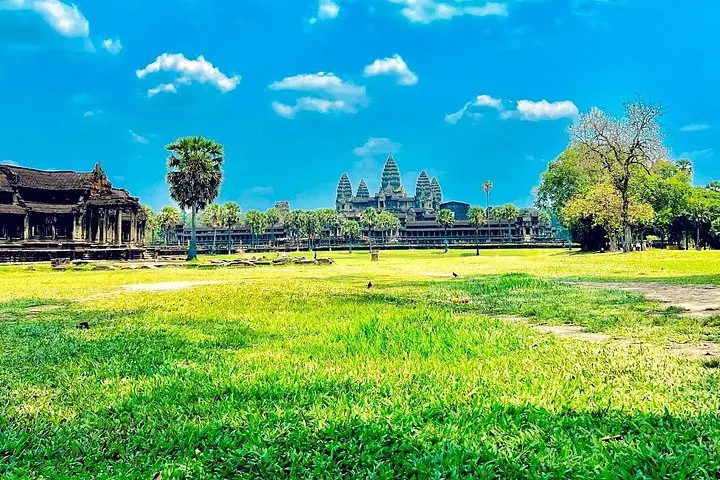
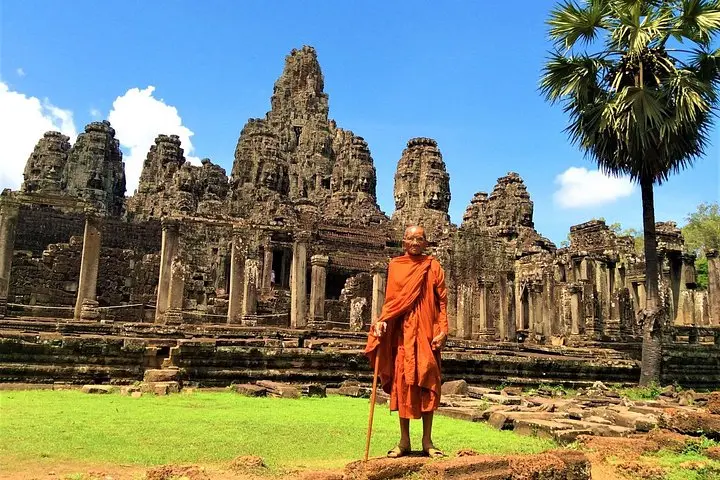
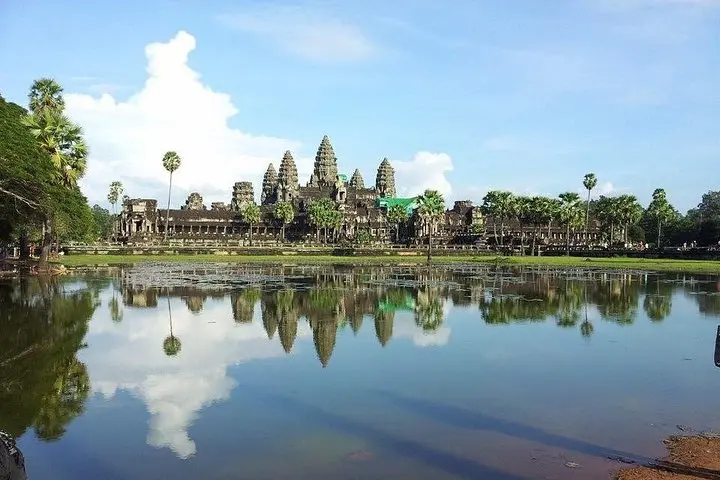
A light mist lifts off the moat as a private van threads the quiet road toward stone towers—Angkor’s silhouettes sharpen into view as the sun climbs. On day one, narrow causeways and carved faces frame steps and terraces; on day two, pink sandstone and intimate reliefs reward those who step beyond the busiest circuits. The experience places you inside a living archaeological park where jungle, water, and stone keep company.
Verified experiences and guided adventures in the surrounding area.
Operated by About Cambodia Travel & Tours · Siem Reap, Siem Reap Province
A light mist lifts off the moat as a private van threads the quiet road toward stone towers—Angkor’s silhouettes sharpen into view as the sun climbs. On day one, narrow causeways and carved faces frame steps and terraces; on day two, pink sandstone and intimate reliefs reward those who step beyond the busiest circuits. The experience places you inside a living archaeological park where jungle, water, and stone keep company.
The Angkor complex reflects centuries of Khmer empire ambition: Angkor Wat’s westward funerary orientation, Bayon’s many smiling faces from Jayavarman VII’s Buddhist phase, and Banteay Srei’s delicate pink sandstone carved by craftsmen with an eye for miniature detail. Geologically the park sits on alluvial plains and ancient reservoirs (barays) that sustained a vast hydraulic system; those man-made lakes still edge the temples and invite early-morning reflections. Local villages around Siem Reap keep traditional crafts and rice farming alive; expect friendly market chatter and the smell of grilled fish at day’s end.
Practically, the itinerary is full days of walking on uneven stone and compacted dirt—flat but demanding in heat. Angkor requires an Angkor pass (available as 1-, 3- and 7-day tickets) and respectful dress: shoulders and knees covered at active religious sites. Bring sun protection, durable walking shoes, and a refillable water bottle; plan to start early for cooler light and to avoid crowds. Your licensed English-speaking guide steers routes, explains iconography, and times a sunset at one of the temples. Two full days deliver the highlights and a few quieter ruins for perspective—an efficient, immersive way to read stone, soil, and history together.
You buy Angkor passes at the official ticket center near the park or arrange pickup through your operator; have photo ID ready and consider a 3-day pass for better pacing.
Expect 6–12 km of walking across uneven ground and many short stair sections during two full days—routes are flexible with the guide to suit stamina.
Yes—this private tour includes hotel pickup and drop-off within Siem Reap; confirm your hotel name and pickup time when booking.
Shoulders must be covered and knee-length bottoms worn at religious sites; lightweight fabrics are recommended to manage heat and humidity.
About Cambodia Travel & Tours operates guided outdoor trips and adventures with an emphasis on safety, stewardship, and memorable experiences.
A light mist lifts off the moat as a private van threads the quiet road toward stone towers—Angkor’s silhouettes sharpen into view as the sun climbs. On day one, narrow causeways and carved faces frame steps and terraces; on day two, pink sandstone and intimate reliefs reward those who step beyond the busiest circuits. The experience places you inside a living archaeological park where jungle, water, and stone keep company.
A light mist lifts off the moat as a private van threads the quiet road toward stone towers—Angkor’s silhouettes sharpen into view as the sun climbs. On day one, narrow causeways and carved faces frame steps and terraces; on day two, pink sandstone and intimate reliefs reward those who step beyond the busiest circuits. The experience places you inside a living archaeological park where jungle, water, and stone keep company.
The Angkor complex reflects centuries of Khmer empire ambition: Angkor Wat’s westward funerary orientation, Bayon’s many smiling faces from Jayavarman VII’s Buddhist phase, and Banteay Srei’s delicate pink sandstone carved by craftsmen with an eye for miniature detail. Geologically the park sits on alluvial plains and ancient reservoirs (barays) that sustained a vast hydraulic system; those man-made lakes still edge the temples and invite early-morning reflections. Local villages around Siem Reap keep traditional crafts and rice farming alive; expect friendly market chatter and the smell of grilled fish at day’s end.
Practically, the itinerary is full days of walking on uneven stone and compacted dirt—flat but demanding in heat. Angkor requires an Angkor pass (available as 1-, 3- and 7-day tickets) and respectful dress: shoulders and knees covered at active religious sites. Bring sun protection, durable walking shoes, and a refillable water bottle; plan to start early for cooler light and to avoid crowds. Your licensed English-speaking guide steers routes, explains iconography, and times a sunset at one of the temples. Two full days deliver the highlights and a few quieter ruins for perspective—an efficient, immersive way to read stone, soil, and history together.