THE ADVENTURE COLLECTIVE® · Independent discovery and booking for outdoor travel

Experience Angkor’s best in two days: a private guide, sunrise at Angkor Wat, and the carved faces of Bayon. This practical two-day itinerary balances early starts with in-depth cultural context for first-time and returning visitors.
Experience Angkor’s best in two days: a private guide, sunrise at Angkor Wat, and the carved faces of Bayon. This practical two-day itinerary balances early starts with in-depth cultural context for first-time and returning visitors.
You step out before dawn, the air heavy with rice-field humidity and the silhouette of Angkor Wat carving a low, dark skyline against a pale sky. The guides move with practiced calm: a small lamp here, a whispered route there. By the time the sun edges up over the central towers, the reflection pools are glass, and the stones around you begin to warm.
Verified experiences and guided adventures in the surrounding area.
Operated by Sightseeing Cambodia · Siem Reap, Siem Reap Province
You step out before dawn, the air heavy with rice-field humidity and the silhouette of Angkor Wat carving a low, dark skyline against a pale sky. The guides move with practiced calm: a small lamp here, a whispered route there. By the time the sun edges up over the central towers, the reflection pools are glass, and the stones around you begin to warm.
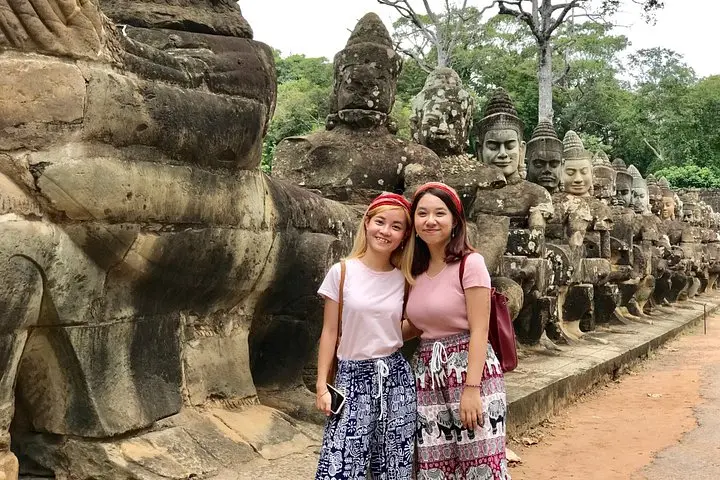
The two-day private tour threads through history: Angkor Wat’s 12th-century sandstone galleries, the enigmatic smiling faces of Bayon, and Ta Prohm’s roots-claimed corridors built under Jayavarman VII. Geologically, the temples sit on laterite foundations with sandstone lintels carved from ancient riverbed deposits—weathered but resilient. Culturally, these monuments remain living sites; monks and local vendors fold modern life into monumental spaces.
On day one expect broad avenues, terraced viewing platforms and the Terrace of the Elephants; day two starts before 5 a.m. for sunrise, then moves through Ta Prohm, Preah Khan and quieter island temples like Neak Pean. The rhythm is walking on uneven stone, occasional steps, frequent photo stops and shady breaks.
Practical guidance: buy your Angkor Pass in Siem Reap the morning you start, wear comfortable closed-toe shoes for uneven sandstone, and dress modestly (shoulders and knees covered) for active temples. Bring a refillable water bottle—operators typically supply cold water—and small local currency for snacks and tips. Plan for early starts to avoid heat and crowds; pay attention to guide directions around fragile carvings to preserve these sites for the next visitor.
Yes—an Angkor Pass (1-, 2- or 3-day) is required to enter the temple complex and is typically purchased in Siem Reap before your visit.
Pickup is usually between 4:30 and 5:00 a.m. to reach Angkor Wat for first light; confirm exact time with your operator the night before.
The itinerary is physically easy with walking on uneven ground; it’s generally suitable for families and older travelers who can manage steps and moderate walks.
Angkor Pass fees are not included by many operators and should be purchased separately at the official ticket office in Siem Reap.
Sightseeing Cambodia operates guided outdoor trips and adventures with an emphasis on safety, stewardship, and memorable experiences.

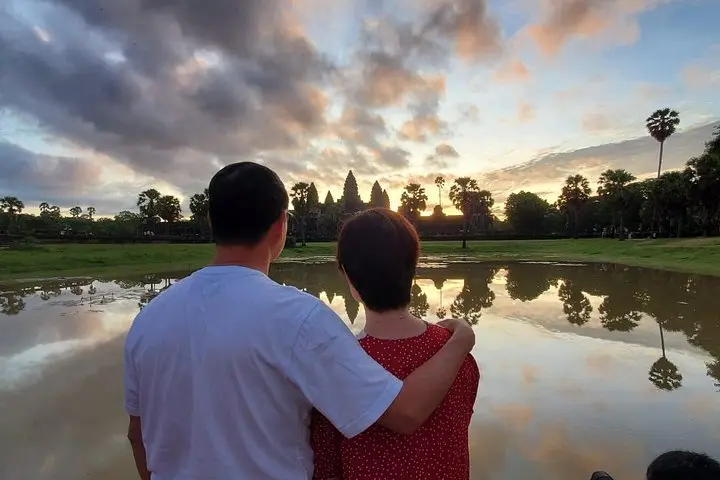

You step out before dawn, the air heavy with rice-field humidity and the silhouette of Angkor Wat carving a low, dark skyline against a pale sky. The guides move with practiced calm: a small lamp here, a whispered route there. By the time the sun edges up over the central towers, the reflection pools are glass, and the stones around you begin to warm.
You step out before dawn, the air heavy with rice-field humidity and the silhouette of Angkor Wat carving a low, dark skyline against a pale sky. The guides move with practiced calm: a small lamp here, a whispered route there. By the time the sun edges up over the central towers, the reflection pools are glass, and the stones around you begin to warm.
The two-day private tour threads through history: Angkor Wat’s 12th-century sandstone galleries, the enigmatic smiling faces of Bayon, and Ta Prohm’s roots-claimed corridors built under Jayavarman VII. Geologically, the temples sit on laterite foundations with sandstone lintels carved from ancient riverbed deposits—weathered but resilient. Culturally, these monuments remain living sites; monks and local vendors fold modern life into monumental spaces.
On day one expect broad avenues, terraced viewing platforms and the Terrace of the Elephants; day two starts before 5 a.m. for sunrise, then moves through Ta Prohm, Preah Khan and quieter island temples like Neak Pean. The rhythm is walking on uneven stone, occasional steps, frequent photo stops and shady breaks.
Practical guidance: buy your Angkor Pass in Siem Reap the morning you start, wear comfortable closed-toe shoes for uneven sandstone, and dress modestly (shoulders and knees covered) for active temples. Bring a refillable water bottle—operators typically supply cold water—and small local currency for snacks and tips. Plan for early starts to avoid heat and crowds; pay attention to guide directions around fragile carvings to preserve these sites for the next visitor.