THE ADVENTURE COLLECTIVE® · Independent discovery and booking for outdoor travel

A focused two-day private tour that pairs Angkor Wat’s iconic monuments with the raw, jungle-claimed ruins of Beng Mealea and the remote pyramidal temples of Koh Ker. Ideal for travelers who want both must-see highlights and off-the-beaten-path exploration.
A focused two-day private tour that pairs Angkor Wat’s iconic monuments with the raw, jungle-claimed ruins of Beng Mealea and the remote pyramidal temples of Koh Ker. Ideal for travelers who want both must-see highlights and off-the-beaten-path exploration.
Dawn light spills across a sandstone causeway as the first group moves toward Angkor Wat; the outline of towers cuts the humid air and the helicopter hum of cicadas rises from flooded fields. Over two days a private vehicle carries travelers between the big-name monuments and the quieter ruins swallowed by forest—each temple offering a different pace of discovery.
Verified experiences and guided adventures in the surrounding area.
Operated by Easy Angkor Trip · Siem Reap, Siem Reap Province
Dawn light spills across a sandstone causeway as the first group moves toward Angkor Wat; the outline of towers cuts the humid air and the helicopter hum of cicadas rises from flooded fields. Over two days a private vehicle carries travelers between the big-name monuments and the quieter ruins swallowed by forest—each temple offering a different pace of discovery.
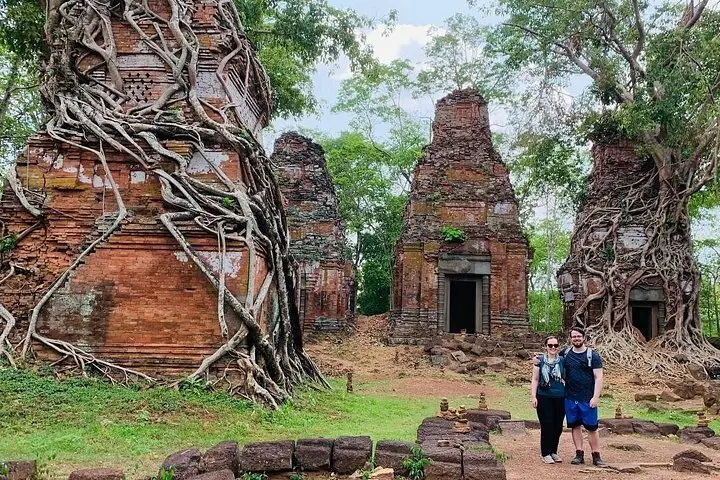
Angkor Wat and Angkor Thom are the high points of the Khmer Empire’s 9th–15th century dominance, where bas-reliefs and face towers reflect a blend of Hindu and Buddhist patronage. Ta Prohm and Beng Mealea feel less managed: roots and collapsed galleries create a mazeier, more tactile experience. Koh Ker stands apart—briefly a capital in the 10th century—its stepped Prasat Thom pyramidal tower and massive monolithic elements feel almost experimental compared with Angkor’s classic symmetry.
Expect long, hot days on uneven stone and packed-earth trails, punctuated by guided context from an English-speaking guide and air-conditioned transfers between sites. Entrance passes for Angkor Park are usually purchased separately at the park gate; confirm with your operator whether tickets are included. Bring sturdy shoes for scrambling across fallen masonry, sun protection, insect repellent, and at least 2 liters of water per person for each full day. Respect restricted areas and avoid climbing fragile carvings.
Timing matters: hit Angkor Wat at sunrise or early morning for cooler light and smaller crowds, then shift to peripheral sites like Beng Mealea and Koh Ker in the afternoon when the light softens. Modest dress is required at active temples—shoulders and knees covered—so have a lightweight shawl or long shorts available.
Entrance fees are often purchased separately at the park; confirm with your tour operator—this particular listing commonly excludes park passes.
Expect several hours of walking on uneven terrain and short climbs among ruins; most guests spend 4–6 hours exploring on the first day and a similar amount on day two.
The tour is private and can be paced, but uneven steps and heat can be challenging—consider reduced walking or vehicle support for those with limited mobility.
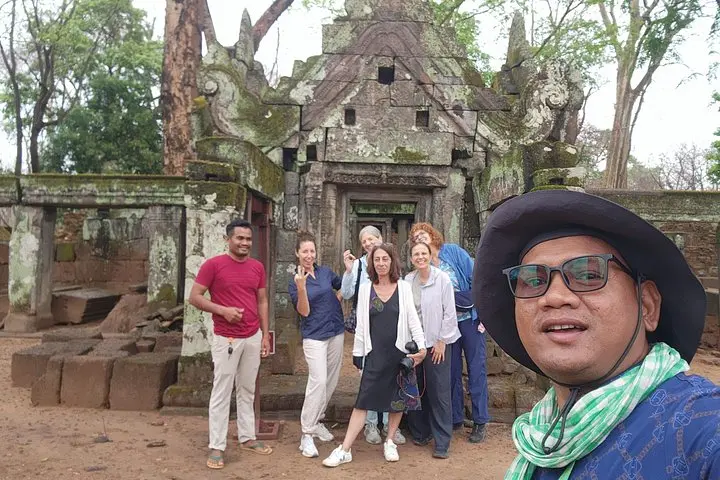
This product includes an English-speaking guide; inquire if you need another language or specialized historical interpretation.
Easy Angkor Trip operates guided outdoor trips and adventures with an emphasis on safety, stewardship, and memorable experiences.
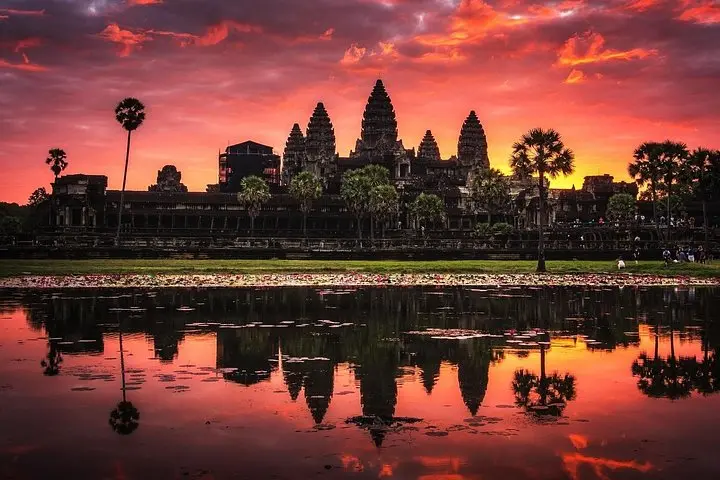
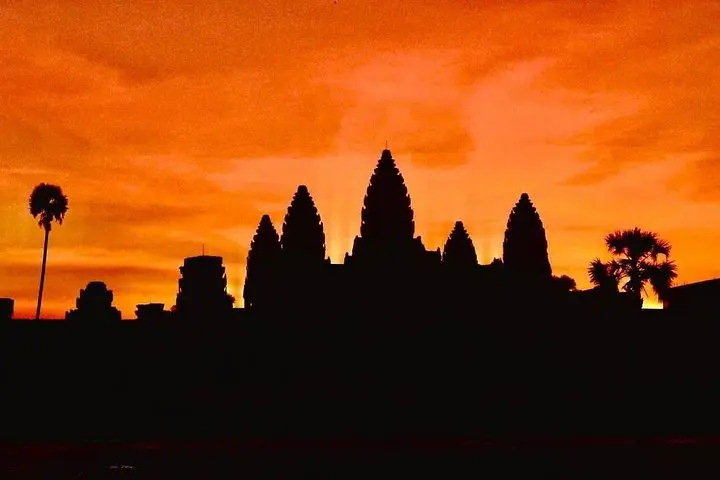
Dawn light spills across a sandstone causeway as the first group moves toward Angkor Wat; the outline of towers cuts the humid air and the helicopter hum of cicadas rises from flooded fields. Over two days a private vehicle carries travelers between the big-name monuments and the quieter ruins swallowed by forest—each temple offering a different pace of discovery.
Dawn light spills across a sandstone causeway as the first group moves toward Angkor Wat; the outline of towers cuts the humid air and the helicopter hum of cicadas rises from flooded fields. Over two days a private vehicle carries travelers between the big-name monuments and the quieter ruins swallowed by forest—each temple offering a different pace of discovery.
Angkor Wat and Angkor Thom are the high points of the Khmer Empire’s 9th–15th century dominance, where bas-reliefs and face towers reflect a blend of Hindu and Buddhist patronage. Ta Prohm and Beng Mealea feel less managed: roots and collapsed galleries create a mazeier, more tactile experience. Koh Ker stands apart—briefly a capital in the 10th century—its stepped Prasat Thom pyramidal tower and massive monolithic elements feel almost experimental compared with Angkor’s classic symmetry.
Expect long, hot days on uneven stone and packed-earth trails, punctuated by guided context from an English-speaking guide and air-conditioned transfers between sites. Entrance passes for Angkor Park are usually purchased separately at the park gate; confirm with your operator whether tickets are included. Bring sturdy shoes for scrambling across fallen masonry, sun protection, insect repellent, and at least 2 liters of water per person for each full day. Respect restricted areas and avoid climbing fragile carvings.
Timing matters: hit Angkor Wat at sunrise or early morning for cooler light and smaller crowds, then shift to peripheral sites like Beng Mealea and Koh Ker in the afternoon when the light softens. Modest dress is required at active temples—shoulders and knees covered—so have a lightweight shawl or long shorts available.