THE ADVENTURE COLLECTIVE® · Independent discovery and booking for outdoor travel

Travel from Fez through cedar forests and the Ziz Valley to Erg Chebbi for a 90-minute sunset camel trek and overnight Berber camp. Expect long scenic drives, dune hikes, music by the fire, and a sunrise camel return.
Travel from Fez through cedar forests and the Ziz Valley to Erg Chebbi for a 90-minute sunset camel trek and overnight Berber camp. Expect long scenic drives, dune hikes, music by the fire, and a sunrise camel return.
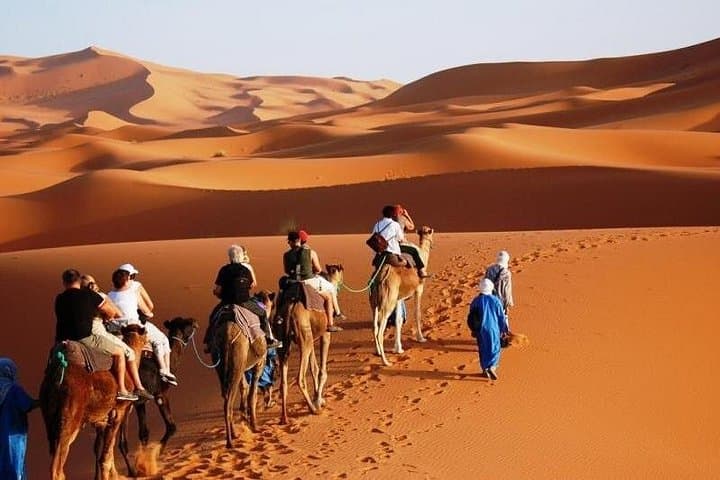
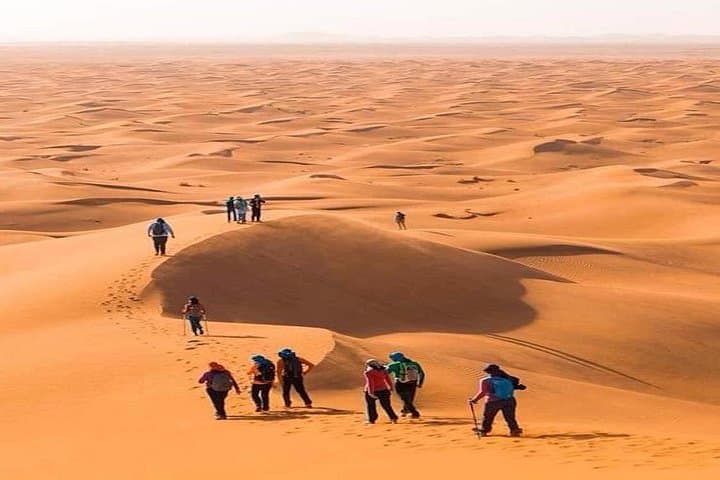
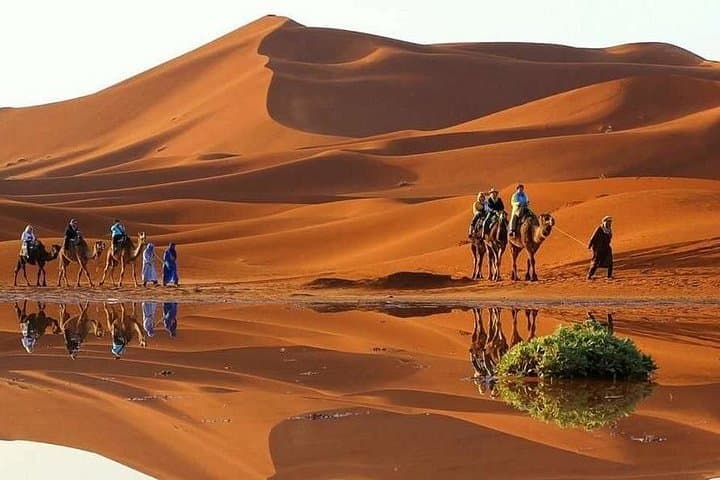
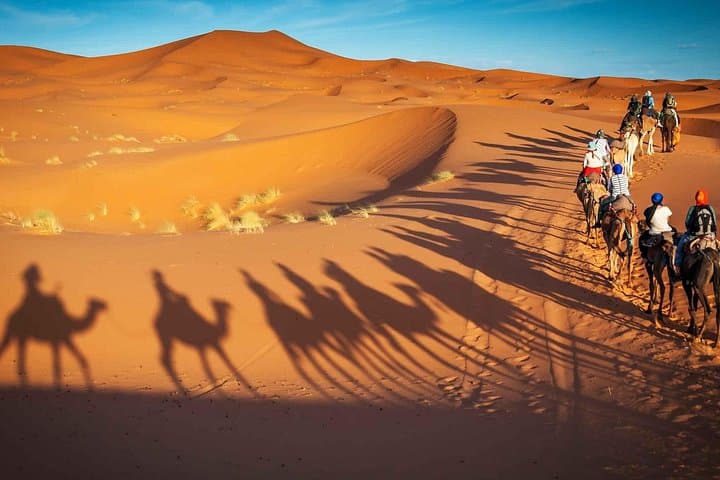
You climb into the vehicle at first light in Fez and the road becomes a moving landscape: cedar forests, a corridor of Atlas peaks, then the palm-scattered Ziz Valley giving way to the vast orange shoulders of Erg Chebbi. By late afternoon the dunes rise like living hills; camels descend from the auberge, patient and sure, to carry you across rippling sand toward a low-slung Berber camp.
Verified experiences and guided adventures in the surrounding area.
Operated by Fez Morocco Excursions · Merzouga, Drâa-Tafilalet
You climb into the vehicle at first light in Fez and the road becomes a moving landscape: cedar forests, a corridor of Atlas peaks, then the palm-scattered Ziz Valley giving way to the vast orange shoulders of Erg Chebbi. By late afternoon the dunes rise like living hills; camels descend from the auberge, patient and sure, to carry you across rippling sand toward a low-slung Berber camp.
This route threads colonial-era Ifrane and the cedar groves of Azrou, where Barbary macaques watch from pines, and follows old caravan arteries that once linked Saharan trade outposts. Geologically, Erg Chebbi is a wind-sculpted dunefield—dunes commonly reach 40–50 meters—and the contrast between Atlas stone and Saharan sand is immediate and sharp.
Culturally, the experience centers on small oasis towns and Berber hospitality: a communal dinner, tea by the fire, and Gnawa rhythms under a wide, star-heavy sky. Conservation-wise, the dunes are fragile; camps rely on transported water and limited infrastructure.
Practical guidance: expect long driving segments (plan for roughly 7–9 hours with stops on day one), a 90-minute sunset camel trek to camp, and a sunrise return by camel. Bring layered clothing for hot days and cool nights, sun protection, and sturdy shoes for walking on compact sand and rocky tracks. Hydrate well and carry a small daypack for essentials during treks. The tour is private and suitable for most fitness levels, though not recommended for those with serious cardiovascular issues. With a clear itinerary and an experienced driver-guide, this two-day loop delivers accessible desert immersion—sand, stars, music, and a tangible sense of the Sahara’s scale.
The typical sunset trek to the camp is about 90 minutes one-way across Erg Chebbi dunes; return in the morning is similar.
Yes—this private tour accommodates families and older travelers, but it’s not recommended for those with serious heart conditions; camel rides can be jostling.
Traditional Berber camps usually offer mattresses, shared or private tents, basic washrooms, dinner, tea and a fire—amenities vary by operator so confirm before booking.
Expect long transfers between Fez and Merzouga—roughly 7–9 hours of driving with stops; the tour includes scheduled sightseeing stops en route.
Fez Morocco Excursions operates guided outdoor trips and adventures with an emphasis on safety, stewardship, and memorable experiences.
You climb into the vehicle at first light in Fez and the road becomes a moving landscape: cedar forests, a corridor of Atlas peaks, then the palm-scattered Ziz Valley giving way to the vast orange shoulders of Erg Chebbi. By late afternoon the dunes rise like living hills; camels descend from the auberge, patient and sure, to carry you across rippling sand toward a low-slung Berber camp.
You climb into the vehicle at first light in Fez and the road becomes a moving landscape: cedar forests, a corridor of Atlas peaks, then the palm-scattered Ziz Valley giving way to the vast orange shoulders of Erg Chebbi. By late afternoon the dunes rise like living hills; camels descend from the auberge, patient and sure, to carry you across rippling sand toward a low-slung Berber camp.
This route threads colonial-era Ifrane and the cedar groves of Azrou, where Barbary macaques watch from pines, and follows old caravan arteries that once linked Saharan trade outposts. Geologically, Erg Chebbi is a wind-sculpted dunefield—dunes commonly reach 40–50 meters—and the contrast between Atlas stone and Saharan sand is immediate and sharp.
Culturally, the experience centers on small oasis towns and Berber hospitality: a communal dinner, tea by the fire, and Gnawa rhythms under a wide, star-heavy sky. Conservation-wise, the dunes are fragile; camps rely on transported water and limited infrastructure.
Practical guidance: expect long driving segments (plan for roughly 7–9 hours with stops on day one), a 90-minute sunset camel trek to camp, and a sunrise return by camel. Bring layered clothing for hot days and cool nights, sun protection, and sturdy shoes for walking on compact sand and rocky tracks. Hydrate well and carry a small daypack for essentials during treks. The tour is private and suitable for most fitness levels, though not recommended for those with serious cardiovascular issues. With a clear itinerary and an experienced driver-guide, this two-day loop delivers accessible desert immersion—sand, stars, music, and a tangible sense of the Sahara’s scale.