THE ADVENTURE COLLECTIVE® · Independent discovery and booking for outdoor travel

Experience two packed wildlife days from Tarangire’s baobab plains to the dramatic bowl of Ngorongoro Crater. This private safari pairs concentrated game drives with cultural context — think Maasai bomas, Olduvai Gorge history, and up-close elephant encounters.
Experience two packed wildlife days from Tarangire’s baobab plains to the dramatic bowl of Ngorongoro Crater. This private safari pairs concentrated game drives with cultural context — think Maasai bomas, Olduvai Gorge history, and up-close elephant encounters.
The morning light on the Serengeti rim feels like an invitation — hot air balloons drift above a patchwork of acacia and riverine forest as a pop-up roof 4x4 eases toward a low-slung herd. This two-day private safari moves from Tarangire’s elephant-rich plains to the sunken amphitheatre of Ngorongoro Crater, tracing landscapes that shaped East Africa’s natural and human history.
Verified experiences and guided adventures in the surrounding area.
Operated by Serengeti Safari Booking · Arusha, Arusha Region
The morning light on the Serengeti rim feels like an invitation — hot air balloons drift above a patchwork of acacia and riverine forest as a pop-up roof 4x4 eases toward a low-slung herd. This two-day private safari moves from Tarangire’s elephant-rich plains to the sunken amphitheatre of Ngorongoro Crater, tracing landscapes that shaped East Africa’s natural and human history.
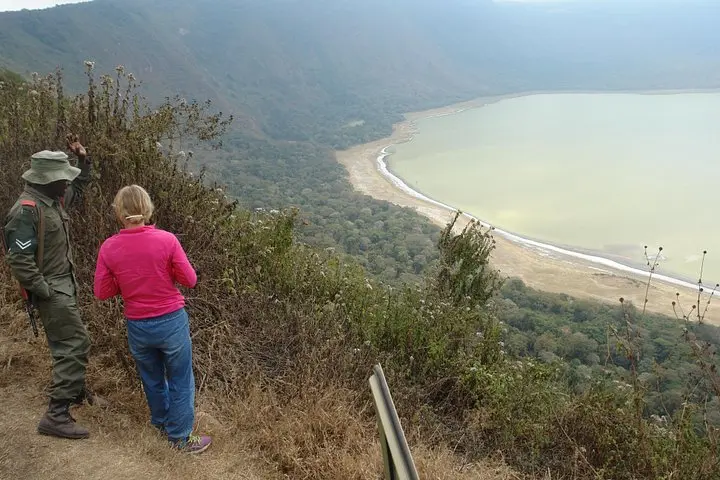
Tarangire sits roughly 118 km from Arusha and spreads over sparse, baobab-studded savanna where herds concentrate during the dry season. The park’s geology is rolling volcanic soil and eroded ridgelines, and game drives here often yield large elephant herds, fringe-eared oryx, and the long-necked gerenuk. From Tarangire you head to the Ngorongoro Conservation Area, where the crater — about 600 m deep and roughly 260 km² on the floor — holds one of East Africa’s densest assemblages of wildlife.
Historically the region is as layered as its soil: Olduvai Gorge nearby preserves early hominin sites studied by Mary and Louis Leakey, and Maasai bomas (homesteads) dot the highlands, maintaining pastoral traditions inside the conservation landscape.
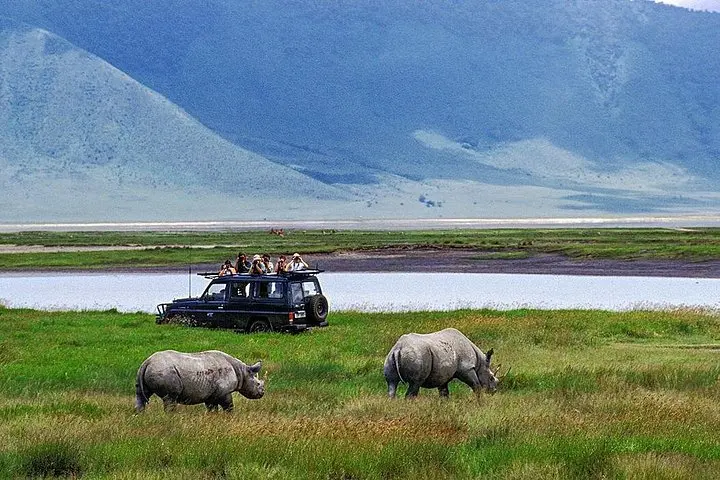
Practically, expect early starts (predawn pickups), long windows of game viewing, picnic lunches, and the ease of a private guide who handles permits and logistics. Vehicles have pop-up roofs for photography; bring binoculars, neutral clothing, sun protection, and a reusable water bottle. Morning game drives are best for predators and active animals; mid-afternoon light favors landscapes and birdlife. Respect vehicle boundaries, minimize engine noise, and follow your guide’s direction to keep wildlife relaxed and sightings frequent.
Approximately 2 hours (about 118 km), depending on traffic and road conditions; plan for an early departure.
Ngorongoro and Tarangire entry fees are listed as included in this tour’s inclusions, but confirm with your operator for the exact payment breakdown.
Guided short walks are sometimes offered in Tarangire; check the itinerary and your guide’s recommendations for safety and timing.
The tour notes accessibility options and infant seating but isn’t recommended for travelers with serious spinal or cardiovascular issues; discuss specific needs with the operator at booking.
Serengeti Safari Booking operates guided outdoor trips and adventures with an emphasis on safety, stewardship, and memorable experiences.
The morning light on the Serengeti rim feels like an invitation — hot air balloons drift above a patchwork of acacia and riverine forest as a pop-up roof 4x4 eases toward a low-slung herd. This two-day private safari moves from Tarangire’s elephant-rich plains to the sunken amphitheatre of Ngorongoro Crater, tracing landscapes that shaped East Africa’s natural and human history.
The morning light on the Serengeti rim feels like an invitation — hot air balloons drift above a patchwork of acacia and riverine forest as a pop-up roof 4x4 eases toward a low-slung herd. This two-day private safari moves from Tarangire’s elephant-rich plains to the sunken amphitheatre of Ngorongoro Crater, tracing landscapes that shaped East Africa’s natural and human history.
Tarangire sits roughly 118 km from Arusha and spreads over sparse, baobab-studded savanna where herds concentrate during the dry season. The park’s geology is rolling volcanic soil and eroded ridgelines, and game drives here often yield large elephant herds, fringe-eared oryx, and the long-necked gerenuk. From Tarangire you head to the Ngorongoro Conservation Area, where the crater — about 600 m deep and roughly 260 km² on the floor — holds one of East Africa’s densest assemblages of wildlife.
Historically the region is as layered as its soil: Olduvai Gorge nearby preserves early hominin sites studied by Mary and Louis Leakey, and Maasai bomas (homesteads) dot the highlands, maintaining pastoral traditions inside the conservation landscape.
Practically, expect early starts (predawn pickups), long windows of game viewing, picnic lunches, and the ease of a private guide who handles permits and logistics. Vehicles have pop-up roofs for photography; bring binoculars, neutral clothing, sun protection, and a reusable water bottle. Morning game drives are best for predators and active animals; mid-afternoon light favors landscapes and birdlife. Respect vehicle boundaries, minimize engine noise, and follow your guide’s direction to keep wildlife relaxed and sightings frequent.