THE ADVENTURE COLLECTIVE® · Independent discovery and booking for outdoor travel

Cross the High Atlas, explore Ait Ben Haddou and sleep under the stars in a Zagora Berber camp on this private 2‑day Sahara tour from Marrakech. Expect long drives, a sunset camel trek and a sunrise over wind-formed dunes.
Cross the High Atlas, explore Ait Ben Haddou and sleep under the stars in a Zagora Berber camp on this private 2‑day Sahara tour from Marrakech. Expect long drives, a sunset camel trek and a sunrise over wind-formed dunes.
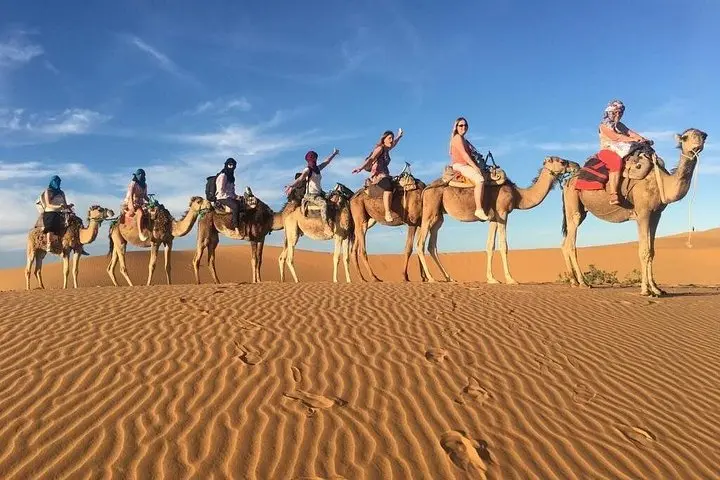
Departing Marrakech before dawn, the road climbs the High Atlas and opens onto sun-baked plains where the air thins and colors sharpen. The driver threads the Tizi n’Tichka pass, hairpin after hairpin, until red earth gives way to the palm-lined Draa Valley; by late afternoon the dunes of Zagora push at the horizon as camels wait like patient sentinels.
Verified experiences and guided adventures in the surrounding area.
Operated by Tilila Travel · Marrakech, Marrakesh-Safi
Departing Marrakech before dawn, the road climbs the High Atlas and opens onto sun-baked plains where the air thins and colors sharpen. The driver threads the Tizi n’Tichka pass, hairpin after hairpin, until red earth gives way to the palm-lined Draa Valley; by late afternoon the dunes of Zagora push at the horizon as camels wait like patient sentinels.
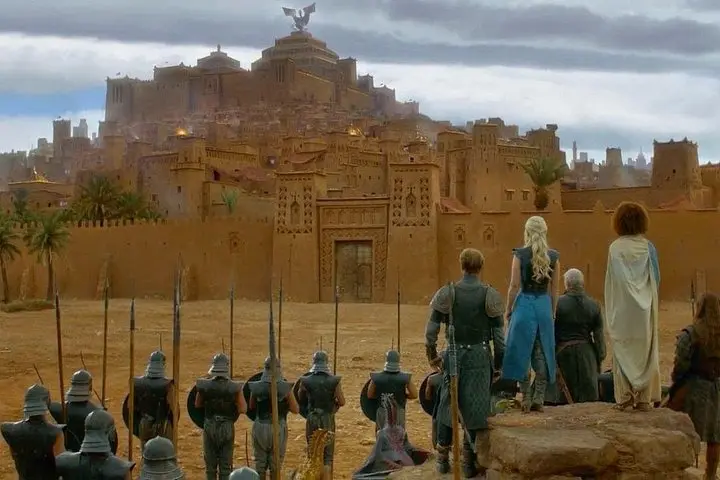
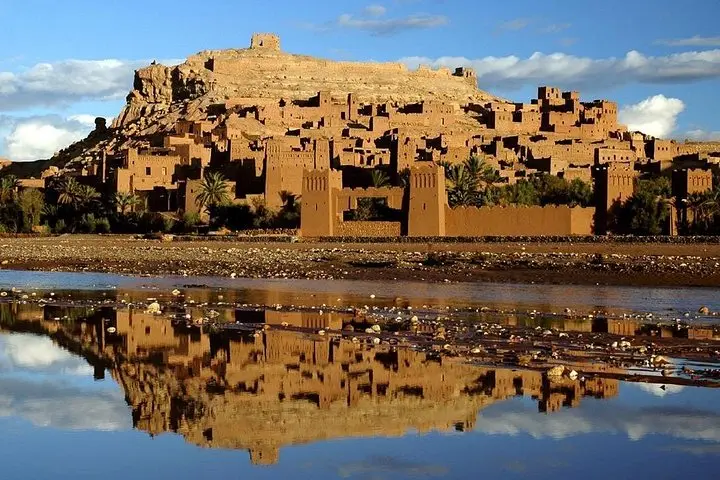
This route traces old trans-Saharan arteries: kasbahs and ksars of rammed earth, Ait Ben Haddou’s ochre walls and Ouarzazate’s film-sets hint at layers of Berber, Arab and colonial history. Geologically, the corridor transitions from folded Atlas limestone to alluvial plains and wind-sculpted sand—expect coarse gravel roads and soft sand underfoot where dunes collect like slow rivers.
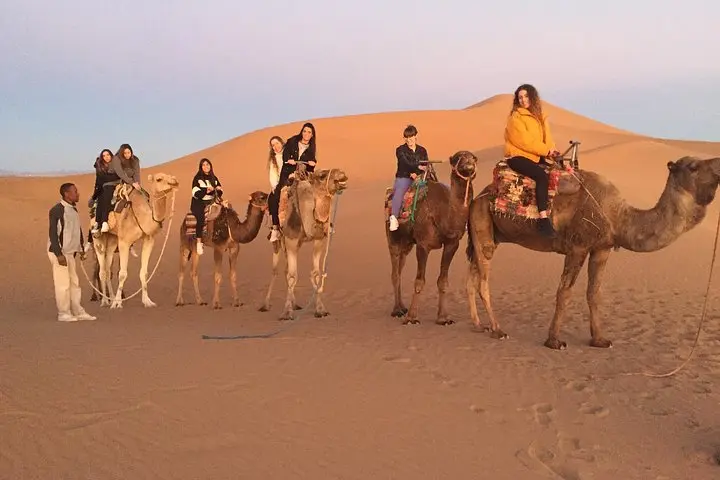
Culturally the trip centers on simple desert hospitality: a guided camel trek at sunset, a Berber tent camp, and shared meals cooked over coals. Sunrise over the dunes is the defining moment—light pours across ripples and the camp’s tea-smoke rises like a signal.
Practicalities: the tour departs ~07:00 from Marrakech and returns by evening on day two. Expect multiple hours in an air‑conditioned vehicle, short walks, a 45–90 minute camel ride at sunset and sunrise, and a night in a basic Berber camp with shared facilities. Pack breathable layers for hot days and cold nights, carry 2–3 liters of water, sun protection, and sturdy shoes for shifting sand and rocky stops. If you have limited mobility, recent spine or heart issues, or are pregnant, the camel legs and long drives make this trip unsuitable. Book with an eye on weather—wind can change dune conditions quickly—and arrive with a sense of patience; the desert dictates its own pace.
Typical camel treks at sunset and sunrise last 45–90 minutes; mounting is assisted and the pace is steady—those with severe back problems should avoid the camel legs.
Overnight is in shared or private tents depending on booking; expect basic bedding, communal toilets and a campfire dinner—comfort levels are rustic but clean.
Children can participate but the camel ride and long vehicle hours may be tiring; elderly travelers should assess mobility and tolerance for bumpy roads.
Carry Moroccan dirhams for small purchases and tipping; tipping guides and camp staff is customary—small, token amounts appreciated.
Tilila Travel operates guided outdoor trips and adventures with an emphasis on safety, stewardship, and memorable experiences.
Departing Marrakech before dawn, the road climbs the High Atlas and opens onto sun-baked plains where the air thins and colors sharpen. The driver threads the Tizi n’Tichka pass, hairpin after hairpin, until red earth gives way to the palm-lined Draa Valley; by late afternoon the dunes of Zagora push at the horizon as camels wait like patient sentinels.
Departing Marrakech before dawn, the road climbs the High Atlas and opens onto sun-baked plains where the air thins and colors sharpen. The driver threads the Tizi n’Tichka pass, hairpin after hairpin, until red earth gives way to the palm-lined Draa Valley; by late afternoon the dunes of Zagora push at the horizon as camels wait like patient sentinels.
This route traces old trans-Saharan arteries: kasbahs and ksars of rammed earth, Ait Ben Haddou’s ochre walls and Ouarzazate’s film-sets hint at layers of Berber, Arab and colonial history. Geologically, the corridor transitions from folded Atlas limestone to alluvial plains and wind-sculpted sand—expect coarse gravel roads and soft sand underfoot where dunes collect like slow rivers.
Culturally the trip centers on simple desert hospitality: a guided camel trek at sunset, a Berber tent camp, and shared meals cooked over coals. Sunrise over the dunes is the defining moment—light pours across ripples and the camp’s tea-smoke rises like a signal.
Practicalities: the tour departs ~07:00 from Marrakech and returns by evening on day two. Expect multiple hours in an air‑conditioned vehicle, short walks, a 45–90 minute camel ride at sunset and sunrise, and a night in a basic Berber camp with shared facilities. Pack breathable layers for hot days and cold nights, carry 2–3 liters of water, sun protection, and sturdy shoes for shifting sand and rocky stops. If you have limited mobility, recent spine or heart issues, or are pregnant, the camel legs and long drives make this trip unsuitable. Book with an eye on weather—wind can change dune conditions quickly—and arrive with a sense of patience; the desert dictates its own pace.