THE ADVENTURE COLLECTIVE® · Independent discovery and booking for outdoor travel

In two days you can move from Ulaanbaatar’s city streets to the ancient capital of Karakorum and the wind-sculpted sand of Elsen Tasarkhai. This private loop pairs Erdene‑Zuu monastery and a nomadic ger stay with short hikes and dune scrambling for a concentrated taste of Mongolia.
In two days you can move from Ulaanbaatar’s city streets to the ancient capital of Karakorum and the wind-sculpted sand of Elsen Tasarkhai. This private loop pairs Erdene‑Zuu monastery and a nomadic ger stay with short hikes and dune scrambling for a concentrated taste of Mongolia.
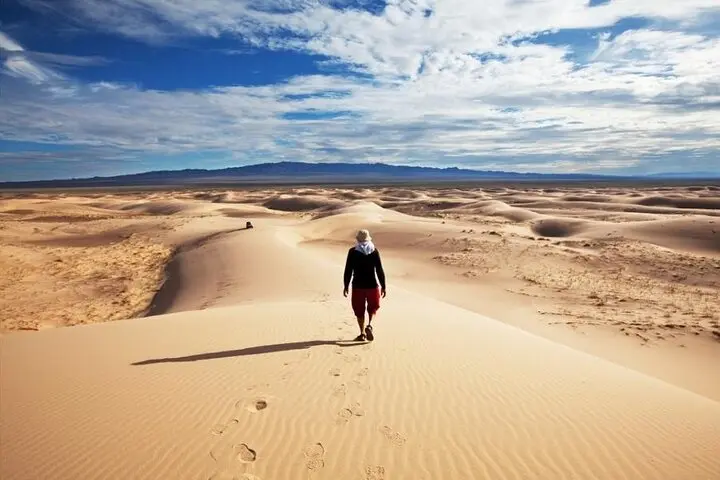
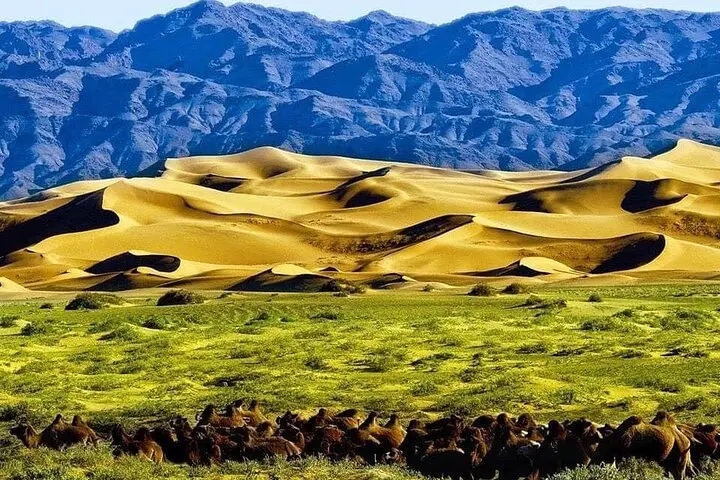
Morning light strips across the steppe as your vehicle leaves Ulaanbaatar, the capital receding while a ribbon of gravel and grassland unspools ahead. By midafternoon the silhouette of low hills and weathered stones announce Kharkhorin; the air here smells of dry grass and wood smoke. Erdene‑Zuu's stupas puncture the skyline, and the dunes of Elsen Tasarkhai wait the next day like a smaller, wilder cousin of the true Gobi—sand daring you to climb.
Verified experiences and guided adventures in the surrounding area.
Operated by MJ · Kharkhorin, Övörkhangai
Morning light strips across the steppe as your vehicle leaves Ulaanbaatar, the capital receding while a ribbon of gravel and grassland unspools ahead. By midafternoon the silhouette of low hills and weathered stones announce Kharkhorin; the air here smells of dry grass and wood smoke. Erdene‑Zuu's stupas puncture the skyline, and the dunes of Elsen Tasarkhai wait the next day like a smaller, wilder cousin of the true Gobi—sand daring you to climb.
This compact loop stitches Mongolian history and geology into two full days: 13th‑century Karakorum remains, Erdene‑Zuu monastery built from the stones of the old capital, and the Elsen Tasarkhai dunes formed where wind-sorted sand meets grassy meadow and temporary wetlands. Culturally the trip centers on nomadic hospitality—an overnight in a ger with a family, simple meals, and optional horse or camel rides that reveal daily life on the steppe.
Expect long but scenic drives (3–6 hours each leg), short walks around archaeological sites and dunes, and basic rural facilities. Roads turn to dirt; mobile reception is intermittent. Bring layered clothing for wide temperature swings, sun protection, and cash for meals outside included items. Photography rewards early morning and late afternoon light; mornings are best for monastery visits before tour buses arrive.
Practical rhythms: early pickup from UB, museum stops, family ger stay, then Elsen Tasarkhai sand dunes and return to the city. This itinerary suits travelers who want concentrated exposure to Mongolian landscapes and living history without extensive trekking—pack light, sleep with an open mind, and let the steppe set your pace.
Kharkhorin (Karakorum) is roughly 350–370 km from Ulaanbaatar and typically takes 5–6 hours by road depending on conditions.
Gers are basic but comfortable: a bed or mattress, blankets, and a wood stove in colder months; expect simple shared facilities.
Rides are commonly offered on this route but may be optional or arranged locally—confirm with the operator before booking.
Mobile reception is patchy outside towns, and ATMs are only in larger centers; bring cash and download maps/contacts in advance.
MJ operates guided outdoor trips and adventures with an emphasis on safety, stewardship, and memorable experiences.
Morning light strips across the steppe as your vehicle leaves Ulaanbaatar, the capital receding while a ribbon of gravel and grassland unspools ahead. By midafternoon the silhouette of low hills and weathered stones announce Kharkhorin; the air here smells of dry grass and wood smoke. Erdene‑Zuu's stupas puncture the skyline, and the dunes of Elsen Tasarkhai wait the next day like a smaller, wilder cousin of the true Gobi—sand daring you to climb.
Morning light strips across the steppe as your vehicle leaves Ulaanbaatar, the capital receding while a ribbon of gravel and grassland unspools ahead. By midafternoon the silhouette of low hills and weathered stones announce Kharkhorin; the air here smells of dry grass and wood smoke. Erdene‑Zuu's stupas puncture the skyline, and the dunes of Elsen Tasarkhai wait the next day like a smaller, wilder cousin of the true Gobi—sand daring you to climb.
This compact loop stitches Mongolian history and geology into two full days: 13th‑century Karakorum remains, Erdene‑Zuu monastery built from the stones of the old capital, and the Elsen Tasarkhai dunes formed where wind-sorted sand meets grassy meadow and temporary wetlands. Culturally the trip centers on nomadic hospitality—an overnight in a ger with a family, simple meals, and optional horse or camel rides that reveal daily life on the steppe.
Expect long but scenic drives (3–6 hours each leg), short walks around archaeological sites and dunes, and basic rural facilities. Roads turn to dirt; mobile reception is intermittent. Bring layered clothing for wide temperature swings, sun protection, and cash for meals outside included items. Photography rewards early morning and late afternoon light; mornings are best for monastery visits before tour buses arrive.
Practical rhythms: early pickup from UB, museum stops, family ger stay, then Elsen Tasarkhai sand dunes and return to the city. This itinerary suits travelers who want concentrated exposure to Mongolian landscapes and living history without extensive trekking—pack light, sleep with an open mind, and let the steppe set your pace.