THE ADVENTURE COLLECTIVE® · Independent discovery and booking for outdoor travel

See the Great Pyramid and Sphinx up close, then move indoors to the Grand Egyptian Museum to study artifacts like Tutankhamun’s treasures. This private two-day loop pairs desert scale with curated history—perfect for efficient travelers.
See the Great Pyramid and Sphinx up close, then move indoors to the Grand Egyptian Museum to study artifacts like Tutankhamun’s treasures. This private two-day loop pairs desert scale with curated history—perfect for efficient travelers.
Morning dust lifts off the plateau and the pyramids appear like stone ships cutting through a low desert light. On Day One you stand at the edge of the Giza necropolis where the Great Pyramid looms—its stepped silhouette demanding slow steps and steady breathing—while the Sphinx keeps a watchful, salt-worn face over the plain.
Verified experiences and guided adventures in the surrounding area.
Operated by Egipto Excursiones · Giza, Giza Governorate
Morning dust lifts off the plateau and the pyramids appear like stone ships cutting through a low desert light. On Day One you stand at the edge of the Giza necropolis where the Great Pyramid looms—its stepped silhouette demanding slow steps and steady breathing—while the Sphinx keeps a watchful, salt-worn face over the plain.
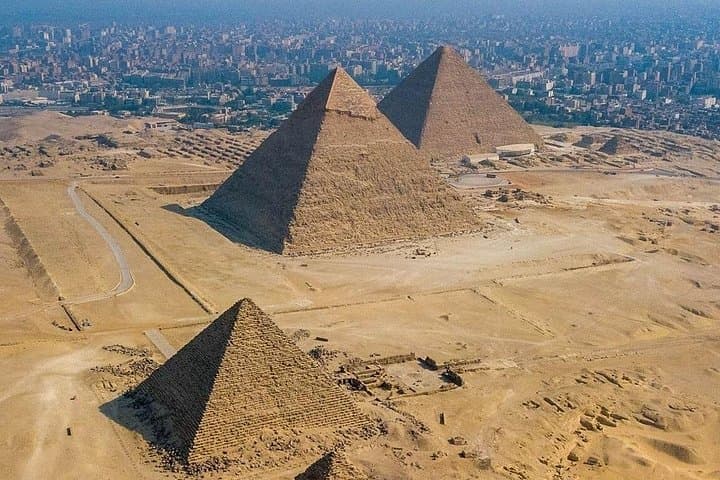
These monuments date to Egypt’s Fourth Dynasty (c. 2600–2500 BCE), built by organized labor and astronomical ambition. The plateau’s limestone and mortar layers record both human engineering and the weathering of millennia; sand and wind keep shaping edges while modern Cairo hums a few kilometers away. Day Two shifts indoors to the Grand Egyptian Museum, designed to curate more than 100,000 artifacts and the complete Tutankhamun collection, giving context to objects once buried in tombs and now reinterpreted for the public.
Expect easy walking punctuated by sun exposure and intermittent shaded stops; guides connect geology, funerary practice, and 19th–20th century archaeology to modern Egyptian life. Photographic rules vary—some exhibits restrict flash—so follow signage and your guide.
Practical notes: aim for early starts to beat the heat and crowds, carry a refillable water bottle, wear closed-toe shoes for uneven stone and short sand walks, and bring a lightweight layer for air-conditioned indoor galleries. Respect barriers at archaeological remains and tip guides who translate centuries into clear stories. This two-day loop pairs raw desert presence with curated museum narrative—one gives scale, the other fills in the details.
This tour description notes admissions are not included; confirm with your provider whether pyramid or museum tickets are part of your booking.
Private pickup is standard; provide your hotel and room details at booking so the guide can meet you at reception at the agreed time.
The itinerary is gentle with short walks, but it’s not recommended for those with serious spinal or cardiovascular issues; check provider restrictions for infants and mobility requirements.
Early morning or late afternoon visits avoid peak sun and heavy crowds; cooler months (late fall–early spring) are more comfortable for outdoor touring.
Egipto Excursiones operates guided outdoor trips and adventures with an emphasis on safety, stewardship, and memorable experiences.
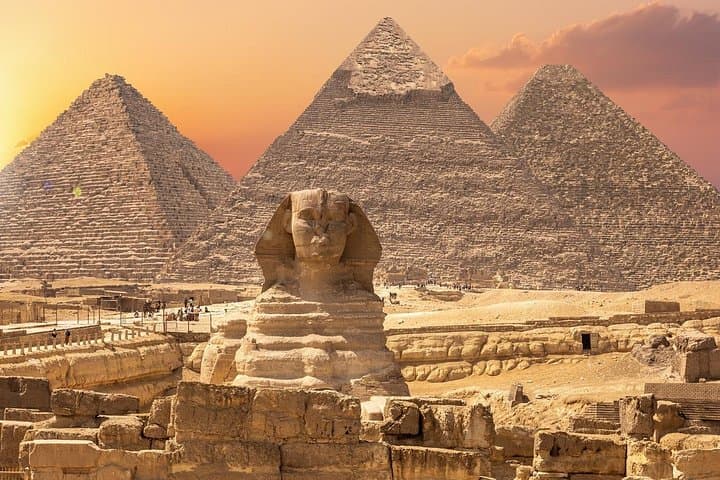
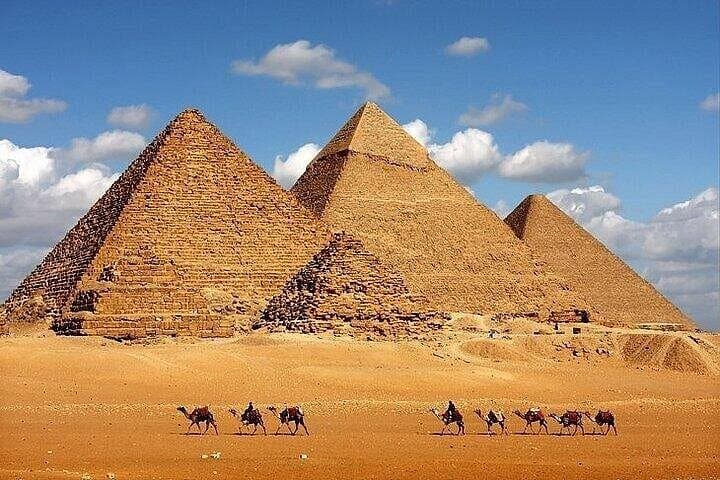
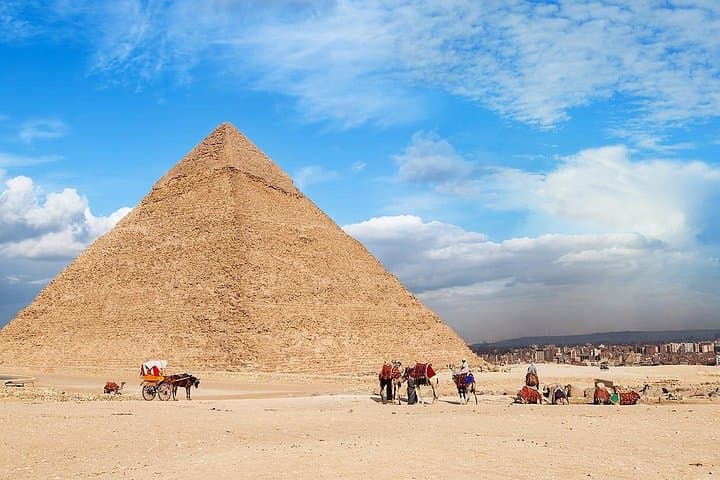
Morning dust lifts off the plateau and the pyramids appear like stone ships cutting through a low desert light. On Day One you stand at the edge of the Giza necropolis where the Great Pyramid looms—its stepped silhouette demanding slow steps and steady breathing—while the Sphinx keeps a watchful, salt-worn face over the plain.
Morning dust lifts off the plateau and the pyramids appear like stone ships cutting through a low desert light. On Day One you stand at the edge of the Giza necropolis where the Great Pyramid looms—its stepped silhouette demanding slow steps and steady breathing—while the Sphinx keeps a watchful, salt-worn face over the plain.
These monuments date to Egypt’s Fourth Dynasty (c. 2600–2500 BCE), built by organized labor and astronomical ambition. The plateau’s limestone and mortar layers record both human engineering and the weathering of millennia; sand and wind keep shaping edges while modern Cairo hums a few kilometers away. Day Two shifts indoors to the Grand Egyptian Museum, designed to curate more than 100,000 artifacts and the complete Tutankhamun collection, giving context to objects once buried in tombs and now reinterpreted for the public.
Expect easy walking punctuated by sun exposure and intermittent shaded stops; guides connect geology, funerary practice, and 19th–20th century archaeology to modern Egyptian life. Photographic rules vary—some exhibits restrict flash—so follow signage and your guide.
Practical notes: aim for early starts to beat the heat and crowds, carry a refillable water bottle, wear closed-toe shoes for uneven stone and short sand walks, and bring a lightweight layer for air-conditioned indoor galleries. Respect barriers at archaeological remains and tip guides who translate centuries into clear stories. This two-day loop pairs raw desert presence with curated museum narrative—one gives scale, the other fills in the details.