THE ADVENTURE COLLECTIVE® · Independent discovery and booking for outdoor travel

Head west from Cairo for an overnight into Egypt’s otherworldly White Desert. This private 2-day tour combines Bahariya Oasis culture, volcanic black hills, crystal outcrops and a night camping under a sky that refuses to be ignored.
Head west from Cairo for an overnight into Egypt’s otherworldly White Desert. This private 2-day tour combines Bahariya Oasis culture, volcanic black hills, crystal outcrops and a night camping under a sky that refuses to be ignored.
Late-afternoon light fractures across chalk pillars as your 4x4 slows into a field of wind-sculpted mushrooms — this is Egypt’s White Desert, where stone seems to breathe and dunes dare you to keep walking.
Verified experiences and guided adventures in the surrounding area.
Operated by GuideLouxor · Bahariya Oasis, Giza
Late-afternoon light fractures across chalk pillars as your 4x4 slows into a field of wind-sculpted mushrooms — this is Egypt’s White Desert, where stone seems to breathe and dunes dare you to keep walking.
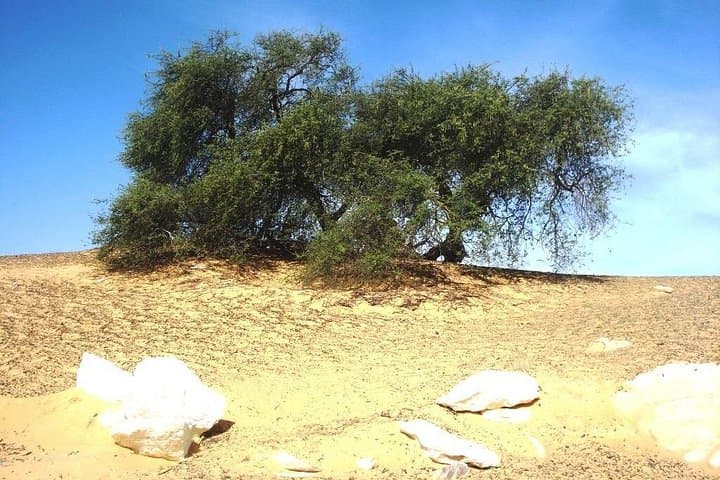
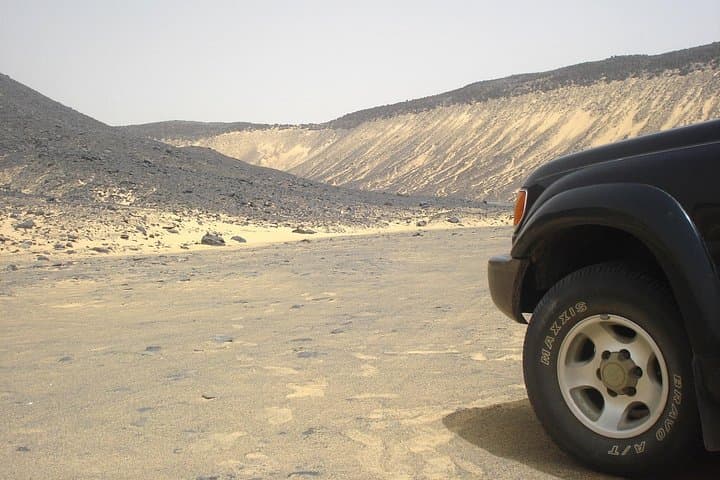
The route from Cairo crosses Bahariya Oasis, a palm-ringed settlement that has been a desert stop for millennia. Geologically the area records sea beds, volcanic outcrops and wind-carved chalk: the Black Desert’s dolerite hills, the Crystal Mountain’s translucent quartz, and the surreal white chalk formations that give the park its name. Culturally, the oases dotted between Cairo and the White Desert have supported Bedouin and farming communities who still collect dates, tend wells and lead desert safaris.
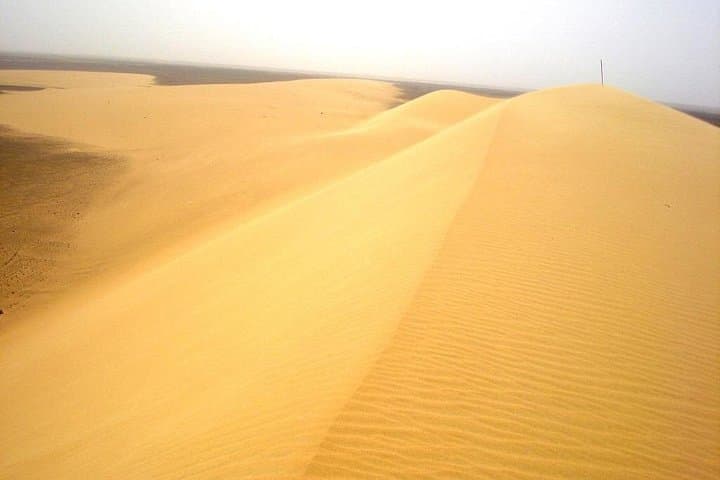
Expect evenings that flip from sun-baked to sharply cold; nights under the stars are part of the draw, with a simple campfire barbecue and basic tents provided. Days are mostly vehicle transfers punctuated by short walks among dunes, rock plates and small valleys like Agabat where cliff faces meet sand.
Practical guidance: pack layers, sun protection and at least 3 liters of water per person for daytime excursions. Night camps are rustic—bring a warm sleeping layer even in warmer months. Timing your travel for sunrise or sunset yields the best light for photos and cooler exploration windows. Respect protected zones, avoid climbing fragile formations and follow guides’ directions; they know which tracks minimize disturbance. This trip balances effortless desert spectacle with straightforward, low-impact camping for adventurous travelers wanting a close, honest encounter with Egypt’s wild interior.
Yes — the tour provides tents, sleeping bags and basic blankets; bring personal liners for hygiene or extra warmth if you are sensitive to cold.
Expect about a 4–5 hour private drive to Bahariya Oasis, followed by 1–2 hours in 4x4 to reach prime White Desert sites depending on stops.
The trip is advertised as suitable for all fitness levels; however, rough desert tracks and basic camping may be challenging for very young children or those with mobility limitations.
Signal is intermittent in the desert and often absent near protected areas; plan for limited connectivity and bring offline maps or instructions from your guide.
GuideLouxor operates guided outdoor trips and adventures with an emphasis on safety, stewardship, and memorable experiences.
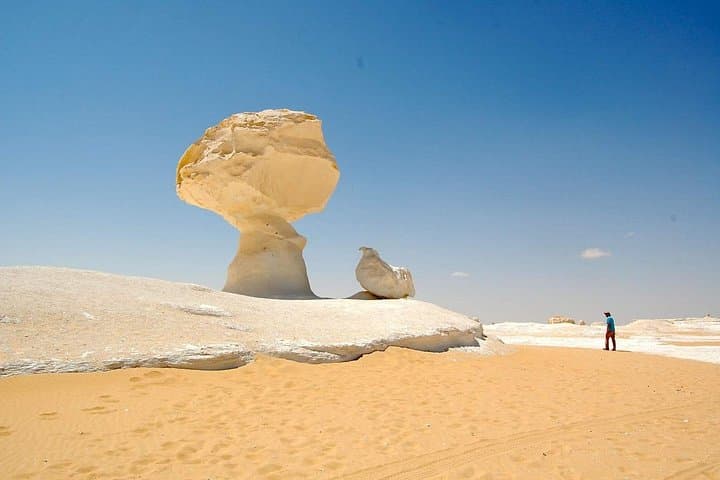
Late-afternoon light fractures across chalk pillars as your 4x4 slows into a field of wind-sculpted mushrooms — this is Egypt’s White Desert, where stone seems to breathe and dunes dare you to keep walking.
Late-afternoon light fractures across chalk pillars as your 4x4 slows into a field of wind-sculpted mushrooms — this is Egypt’s White Desert, where stone seems to breathe and dunes dare you to keep walking.
The route from Cairo crosses Bahariya Oasis, a palm-ringed settlement that has been a desert stop for millennia. Geologically the area records sea beds, volcanic outcrops and wind-carved chalk: the Black Desert’s dolerite hills, the Crystal Mountain’s translucent quartz, and the surreal white chalk formations that give the park its name. Culturally, the oases dotted between Cairo and the White Desert have supported Bedouin and farming communities who still collect dates, tend wells and lead desert safaris.
Expect evenings that flip from sun-baked to sharply cold; nights under the stars are part of the draw, with a simple campfire barbecue and basic tents provided. Days are mostly vehicle transfers punctuated by short walks among dunes, rock plates and small valleys like Agabat where cliff faces meet sand.
Practical guidance: pack layers, sun protection and at least 3 liters of water per person for daytime excursions. Night camps are rustic—bring a warm sleeping layer even in warmer months. Timing your travel for sunrise or sunset yields the best light for photos and cooler exploration windows. Respect protected zones, avoid climbing fragile formations and follow guides’ directions; they know which tracks minimize disturbance. This trip balances effortless desert spectacle with straightforward, low-impact camping for adventurous travelers wanting a close, honest encounter with Egypt’s wild interior.