THE ADVENTURE COLLECTIVE® · Independent discovery and booking for outdoor travel

Cross the High Atlas, explore the UNESCO ksar of Ait Ben Haddou, then ride a camel into Zagora for a night in nomadic tents. This two-day safari blends cinematic history with desert sky and practical, low-effort adventure.
Cross the High Atlas, explore the UNESCO ksar of Ait Ben Haddou, then ride a camel into Zagora for a night in nomadic tents. This two-day safari blends cinematic history with desert sky and practical, low-effort adventure.
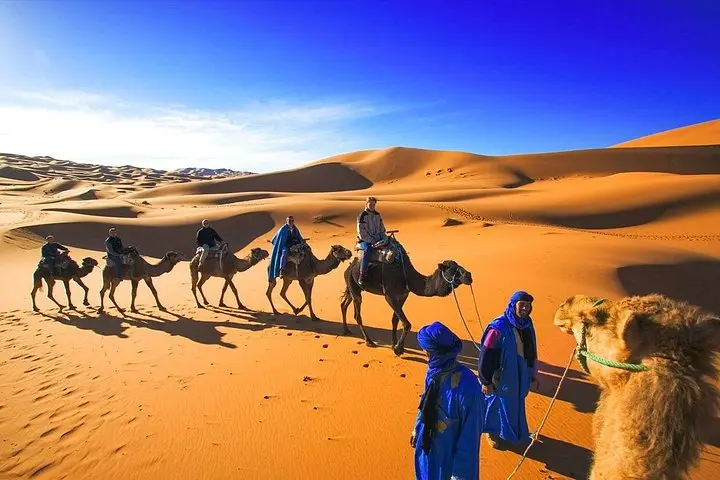
The late-afternoon road out of Marrakech tightens around hairpin turns, Atlas stone pressing close as the sun drops behind the Tizi n’Tichka pass. Wind carries a dry warmth that seems to guide you toward open sand; by sunset a camel caravan edges into view and the desert starts to breathe—slow, wide, and unhurried.
Verified experiences and guided adventures in the surrounding area.
Operated by Sahara Sights Tours · Ait Ben Haddou, Ouarzazate Province
The late-afternoon road out of Marrakech tightens around hairpin turns, Atlas stone pressing close as the sun drops behind the Tizi n’Tichka pass. Wind carries a dry warmth that seems to guide you toward open sand; by sunset a camel caravan edges into view and the desert starts to breathe—slow, wide, and unhurried.
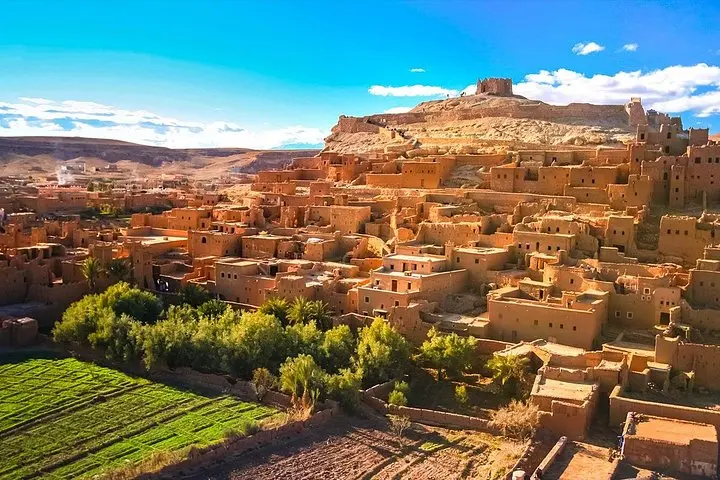
This two-day loop links two very different pieces of Moroccan history: the earthen fortifications of Ait Ben Haddou, an old caravan ksar built along trans-Saharan trade routes, and the palm-lined Draa Valley that funnels into Zagora’s sands. Geologically, you move from high Atlas schist and folded foothills down to wind-sculpted dunes and alluvial plains where ancient irrigation feeds the palms. Culturally you’ll meet Berber-influenced villages, taste mint tea by kasbah walls, and watch storytellers perform at a tented camp beneath a vast sky.
Expect long drives in an air-conditioned vehicle, a guided walk through Ait Ben Haddou’s narrow lanes, a short camel trek timed for sunset, and an overnight in traditional nomadic-style tents with shared facilities. Sunrise in the camp is quiet—bring layers for cold mornings and sun protection for daytime. Hydrate during drives, wear sturdy closed shoes for ksar paths and dune edges, and be ready for uneven footing when climbing kasbah terraces.
Practical planning: pickups typically start from Marrakech at 8:00 AM, the itinerary covers roughly 48 hours, and the trip suits travelers comfortable with basic camping conditions. Respect local customs in villages, carry cash for small purchases and tips, and pack out what you bring into the dunes.
Most departures are from Marrakech with hotel pickup; the loop returns to Marrakech at the end of day two.
Camps provide traditional tents with bedding, a communal dining area and basic toilets; amenities vary so check if you need private facilities.
Camel treks for this tour are short—timed for sunset—and suitable for beginners, though mounting and dismounting require some mobility.
Dinner on night one and breakfast on day two are typically included; check the itinerary for any additional meal details.
Sahara Sights Tours operates guided outdoor trips and adventures with an emphasis on safety, stewardship, and memorable experiences.
The late-afternoon road out of Marrakech tightens around hairpin turns, Atlas stone pressing close as the sun drops behind the Tizi n’Tichka pass. Wind carries a dry warmth that seems to guide you toward open sand; by sunset a camel caravan edges into view and the desert starts to breathe—slow, wide, and unhurried.
The late-afternoon road out of Marrakech tightens around hairpin turns, Atlas stone pressing close as the sun drops behind the Tizi n’Tichka pass. Wind carries a dry warmth that seems to guide you toward open sand; by sunset a camel caravan edges into view and the desert starts to breathe—slow, wide, and unhurried.
This two-day loop links two very different pieces of Moroccan history: the earthen fortifications of Ait Ben Haddou, an old caravan ksar built along trans-Saharan trade routes, and the palm-lined Draa Valley that funnels into Zagora’s sands. Geologically, you move from high Atlas schist and folded foothills down to wind-sculpted dunes and alluvial plains where ancient irrigation feeds the palms. Culturally you’ll meet Berber-influenced villages, taste mint tea by kasbah walls, and watch storytellers perform at a tented camp beneath a vast sky.
Expect long drives in an air-conditioned vehicle, a guided walk through Ait Ben Haddou’s narrow lanes, a short camel trek timed for sunset, and an overnight in traditional nomadic-style tents with shared facilities. Sunrise in the camp is quiet—bring layers for cold mornings and sun protection for daytime. Hydrate during drives, wear sturdy closed shoes for ksar paths and dune edges, and be ready for uneven footing when climbing kasbah terraces.
Practical planning: pickups typically start from Marrakech at 8:00 AM, the itinerary covers roughly 48 hours, and the trip suits travelers comfortable with basic camping conditions. Respect local customs in villages, carry cash for small purchases and tips, and pack out what you bring into the dunes.