THE ADVENTURE COLLECTIVE® · Independent discovery and booking for outdoor travel

A compact, two-day introduction to nomadic desert life starting from M’Hamid El Ghizlane. Walk with camel caravans, sleep in traditional kheima tents, and cross dunes where trade routes once met the sand.
A compact, two-day introduction to nomadic desert life starting from M’Hamid El Ghizlane. Walk with camel caravans, sleep in traditional kheima tents, and cross dunes where trade routes once met the sand.
Morning light slips across the edge of the Sahara and the village of M’Hamid El Ghizlane dissolves into a march of low dunes and salt-hardened plains. On this two-day trek travelers leave dusty tracks behind, following camel caravans and local guides into sand that shifts like a living map — dunes daring you to read their contours.
Verified experiences and guided adventures in the surrounding area.
Operated by L'oiseau du désert · M'Hamid El Ghizlane, Drâa-Tafilalet
Morning light slips across the edge of the Sahara and the village of M’Hamid El Ghizlane dissolves into a march of low dunes and salt-hardened plains. On this two-day trek travelers leave dusty tracks behind, following camel caravans and local guides into sand that shifts like a living map — dunes daring you to read their contours.
The route traces paths used by nomads and trading caravans that once linked Timbuktu to the Atlantic. Geologically the area is a transition zone where ancient riverbeds and wind-sculpted dunes meet the quaternary sands of the Empty Quarter; rockier plains give way to crescent-shaped erg dunes and saline flats that collect seasonal rains. Culturally the trek moves through living nomad culture — kheima tents, evening tea rituals, and fireside stories — offering a hands-on introduction to pastoral life and caravan logistics.
Expect paced hiking and walking alongside dromedaries, bivouac nights in traditional kheima or under open sky, and meals cooked over wood fires. Terrain is varied: packed plain, soft sand, and occasional rocky approaches; elevation changes are gentle but footing can be demanding in loose sand. Guides manage route-finding and camp setup; travelers should carry a daypack, water, and sun protection.
Practical tips: start early to avoid midday heat, wear sturdy boots with gaiters for sand, drink frequently (minimum 3–4 liters per day in summer), and be prepared for cold desert nights. The experience balances easy navigation with the physical demands of walking in soft sand — it’s an immersive, low-impact way to learn nomadic rhythms while sleeping under a broad, starry vault.
Walking is steady but not technical; soft sand slows pace — expect moderate exertion and several hours of walking each day.
Nights are in traditional kheima tents or under the stars; basic bedding is provided but bring a warm sleeping bag in cooler months.
Yes — the itinerary includes breakfast, lunch and dinner, often with evening meals cooked over a wood fire and simple midday packed lunches.
No prior desert experience is required, but good mobility and comfort with multi-hour walks in hot, dry conditions are important.
L'oiseau du désert operates guided outdoor trips and adventures with an emphasis on safety, stewardship, and memorable experiences.
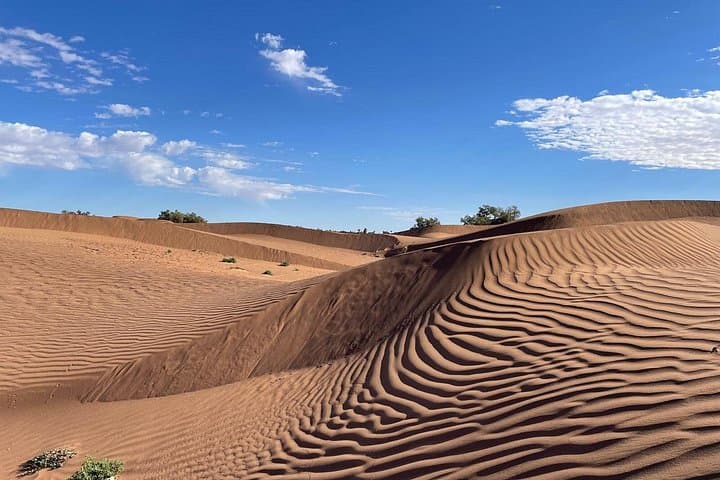


Morning light slips across the edge of the Sahara and the village of M’Hamid El Ghizlane dissolves into a march of low dunes and salt-hardened plains. On this two-day trek travelers leave dusty tracks behind, following camel caravans and local guides into sand that shifts like a living map — dunes daring you to read their contours.
Morning light slips across the edge of the Sahara and the village of M’Hamid El Ghizlane dissolves into a march of low dunes and salt-hardened plains. On this two-day trek travelers leave dusty tracks behind, following camel caravans and local guides into sand that shifts like a living map — dunes daring you to read their contours.
The route traces paths used by nomads and trading caravans that once linked Timbuktu to the Atlantic. Geologically the area is a transition zone where ancient riverbeds and wind-sculpted dunes meet the quaternary sands of the Empty Quarter; rockier plains give way to crescent-shaped erg dunes and saline flats that collect seasonal rains. Culturally the trek moves through living nomad culture — kheima tents, evening tea rituals, and fireside stories — offering a hands-on introduction to pastoral life and caravan logistics.
Expect paced hiking and walking alongside dromedaries, bivouac nights in traditional kheima or under open sky, and meals cooked over wood fires. Terrain is varied: packed plain, soft sand, and occasional rocky approaches; elevation changes are gentle but footing can be demanding in loose sand. Guides manage route-finding and camp setup; travelers should carry a daypack, water, and sun protection.
Practical tips: start early to avoid midday heat, wear sturdy boots with gaiters for sand, drink frequently (minimum 3–4 liters per day in summer), and be prepared for cold desert nights. The experience balances easy navigation with the physical demands of walking in soft sand — it’s an immersive, low-impact way to learn nomadic rhythms while sleeping under a broad, starry vault.