THE ADVENTURE COLLECTIVE® · Independent discovery and booking for outdoor travel

Walk two days through Muong Hoa Valley from Sapa, meeting Black Hmong, Giay and Red Dzao communities, sleeping in Sapa town and trekking terraces that reveal rice-cultivation life. Practical, culture-forward hiking through Lao Chai, Ta Van, Y Linh Ho and Cat Cat.
Walk two days through Muong Hoa Valley from Sapa, meeting Black Hmong, Giay and Red Dzao communities, sleeping in Sapa town and trekking terraces that reveal rice-cultivation life. Practical, culture-forward hiking through Lao Chai, Ta Van, Y Linh Ho and Cat Cat.
Morning mist lifts off the terraced slopes as you step from Sapa’s narrow streets onto a trail that threads the Muong Hoa Valley. The river below pushes steady, carving a route through rice paddies while villagers in traditional dress move between fields; the mountains keep a steady watch. Over two days you hike through Y Linh Ho, Lao Chai, Ta Van and Cat Cat—paths that shift from riverside flats to stepped terraces and bamboo-fringed switchbacks.
Verified experiences and guided adventures in the surrounding area.
Operated by Old Quarter Travel · Sapa, Lao Cai
Morning mist lifts off the terraced slopes as you step from Sapa’s narrow streets onto a trail that threads the Muong Hoa Valley. The river below pushes steady, carving a route through rice paddies while villagers in traditional dress move between fields; the mountains keep a steady watch. Over two days you hike through Y Linh Ho, Lao Chai, Ta Van and Cat Cat—paths that shift from riverside flats to stepped terraces and bamboo-fringed switchbacks.
This region carries layers of history: French colonial hill-station architecture still dots Sapa town, while ethnic groups—Black Hmong, Giay and Red Dzao—preserve farming techniques and textile traditions that predate modern tourism. Geologically, the valley is an upland carve of Cretaceous and Tertiary formations with soils shaped by centuries of terrace agriculture; those terraces are both cultural landscape and erosion-control system.
Expect close cultural contact: homestay and village visits focus on rice cultivation stages and daily life rather than performance. Trails are predominantly packed dirt and stone with short steep pitches; river crossings are bridged or shallow. Night two returns you to a 3-star hotel in Sapa town for a warm meal and market-side exploration.
Practical edge: start early to avoid afternoon rain, carry layered waterproofs, and budget time for photo stops and slow descents. Respect local etiquette when photographing people and buy handicrafts directly from families when possible—your presence fuels the valley’s living economy.
Each day includes 3–4 hours of walking on mixed terrain with some steep sections; trails are suitable for moderately fit travelers comfortable with uneven footing.
Sapa town has reliable Wi‑Fi and mobile coverage; reception along valley trails is intermittent—expect limited service in villages.
Yes—the tour includes a guide who knows local routes, interprets cultures, and coordinates village visits; self-guiding is not recommended for first-time visitors.
Lunches, one dinner, breakfasts and a 3‑star hotel in Sapa are included as described; bring cash for additional snacks or souvenirs.
Old Quarter Travel operates guided outdoor trips and adventures with an emphasis on safety, stewardship, and memorable experiences.
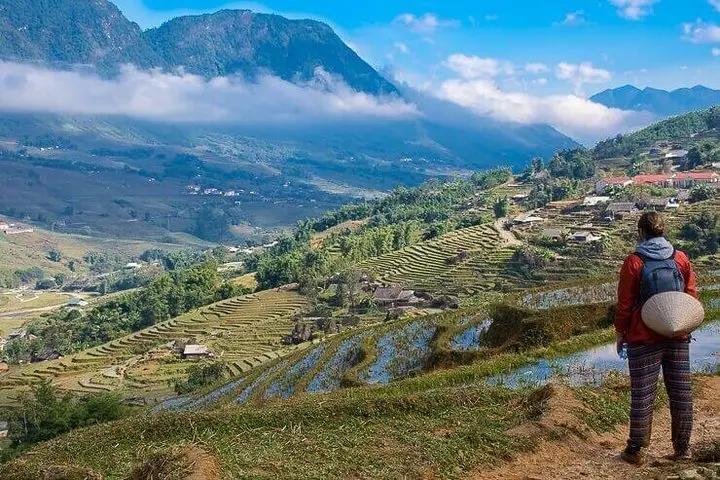
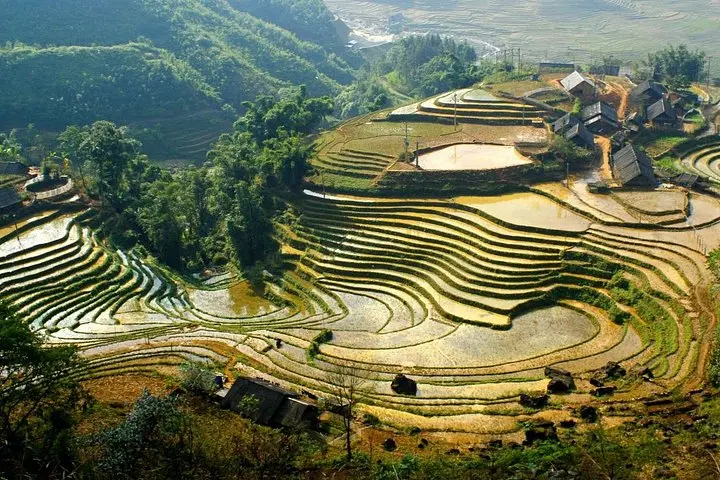
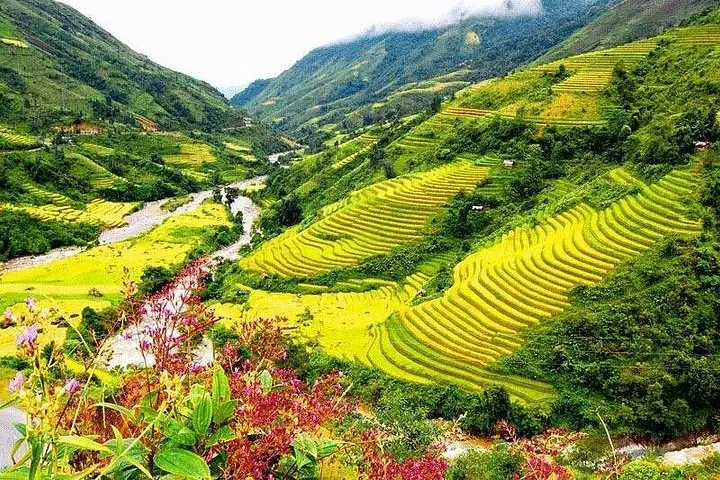
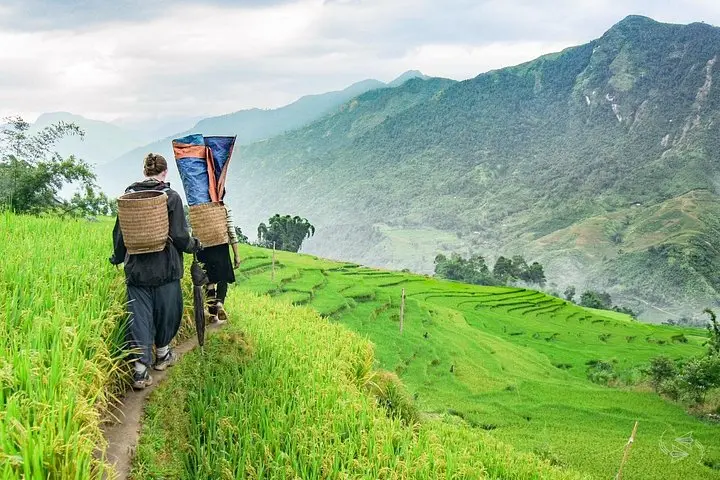
Morning mist lifts off the terraced slopes as you step from Sapa’s narrow streets onto a trail that threads the Muong Hoa Valley. The river below pushes steady, carving a route through rice paddies while villagers in traditional dress move between fields; the mountains keep a steady watch. Over two days you hike through Y Linh Ho, Lao Chai, Ta Van and Cat Cat—paths that shift from riverside flats to stepped terraces and bamboo-fringed switchbacks.
Morning mist lifts off the terraced slopes as you step from Sapa’s narrow streets onto a trail that threads the Muong Hoa Valley. The river below pushes steady, carving a route through rice paddies while villagers in traditional dress move between fields; the mountains keep a steady watch. Over two days you hike through Y Linh Ho, Lao Chai, Ta Van and Cat Cat—paths that shift from riverside flats to stepped terraces and bamboo-fringed switchbacks.
This region carries layers of history: French colonial hill-station architecture still dots Sapa town, while ethnic groups—Black Hmong, Giay and Red Dzao—preserve farming techniques and textile traditions that predate modern tourism. Geologically, the valley is an upland carve of Cretaceous and Tertiary formations with soils shaped by centuries of terrace agriculture; those terraces are both cultural landscape and erosion-control system.
Expect close cultural contact: homestay and village visits focus on rice cultivation stages and daily life rather than performance. Trails are predominantly packed dirt and stone with short steep pitches; river crossings are bridged or shallow. Night two returns you to a 3-star hotel in Sapa town for a warm meal and market-side exploration.
Practical edge: start early to avoid afternoon rain, carry layered waterproofs, and budget time for photo stops and slow descents. Respect local etiquette when photographing people and buy handicrafts directly from families when possible—your presence fuels the valley’s living economy.