THE ADVENTURE COLLECTIVE® · Independent discovery and booking for outdoor travel

A compact 48‑hour journey from Fes to the Erg Chebbi dunes, this shared trip pairs long scenic driving with a camel trek, sand‑boarding and a night in a Berber camp. Expect dramatic light at sunset and sunrise, simple desert comforts, and a deep shift in landscape over the course of a day.
A compact 48‑hour journey from Fes to the Erg Chebbi dunes, this shared trip pairs long scenic driving with a camel trek, sand‑boarding and a night in a Berber camp. Expect dramatic light at sunset and sunrise, simple desert comforts, and a deep shift in landscape over the course of a day.
The minibus peels out of Fes at first light and the landscape changes like chapters: tiled medina, cedar-scarred hills, then a widening valley that funnels toward sand. By late afternoon the road gives way to ochre ridgelines and, finally, the serried humps of Erg Chebbi rising from the plain. Camels kneel, the guide checks saddles, and a single hour of slow swaying delivers you onto a crescent of dunes where the sun drops molten copper behind distant ridges.
Verified experiences and guided adventures in the surrounding area.
Operated by Quiet Merzouga Desert- Day Tours · Merzouga, Drâa-Tafilalet
The minibus peels out of Fes at first light and the landscape changes like chapters: tiled medina, cedar-scarred hills, then a widening valley that funnels toward sand. By late afternoon the road gives way to ochre ridgelines and, finally, the serried humps of Erg Chebbi rising from the plain. Camels kneel, the guide checks saddles, and a single hour of slow swaying delivers you onto a crescent of dunes where the sun drops molten copper behind distant ridges.
This route follows old caravan corridors that linked the Middle Atlas and the Sahara; geology shifts from limestone ranges and cedar forests around Ifrane to alluvial Ziz Valley and wind-sculpted dunes of Merzouga. Local life still orients around dates, goats and seasonal trade — stop at Rissani or Erfoud to see ksar architecture and palm groves that mark centuries of desert irrigation.
Expect long driving stretches: roughly 470 km one-way across mountain passes that can reach near 1,800 m before descending to the Sahara. Terrain at the camp is soft, loose sand; camel treks and sand-boarding are short but physically active. Plan for temperature swings — hot days, cold desert nights — and limited services in the dunes.
Practical tips: pack layered clothing, a wide-brim hat or shemagh, a durable water bottle, and footwear that keeps sand out. Bring small local currency for tips and market stops. Timing your travel to arrive before sunset gives the best light for dunes and for the Berber music that carries across the camp as night—and the stars—take over.
Pickup and drop-off are at your Fes accommodation or an accessible city point; exact pickup time is confirmed locally (the itinerary typically starts around 8:00 a.m.).
You stay in a private tent with an individual bathroom and shower; facilities are basic but private and cleaned by camp staff.
No technical skill is required—camel rides are slow and guided, but mounting and dismounting require some flexibility; staff assist you.
Dinner at the camp and breakfast the next morning are included; bring snacks and extra water for the long drive and optional stops.
Quiet Merzouga Desert- Day Tours operates guided outdoor trips and adventures with an emphasis on safety, stewardship, and memorable experiences.
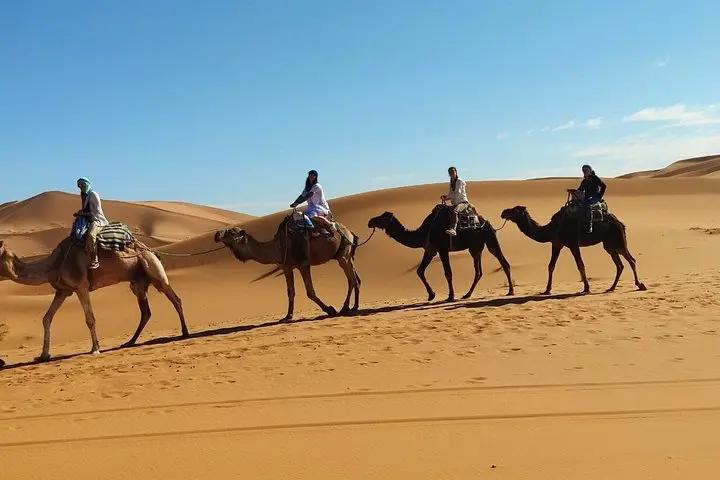
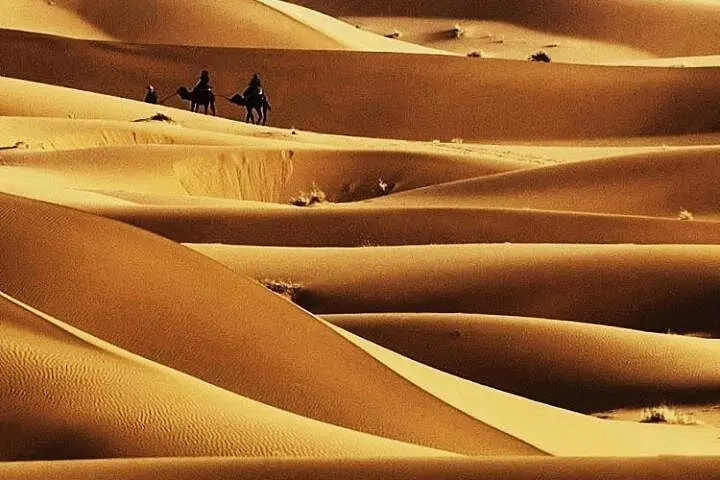
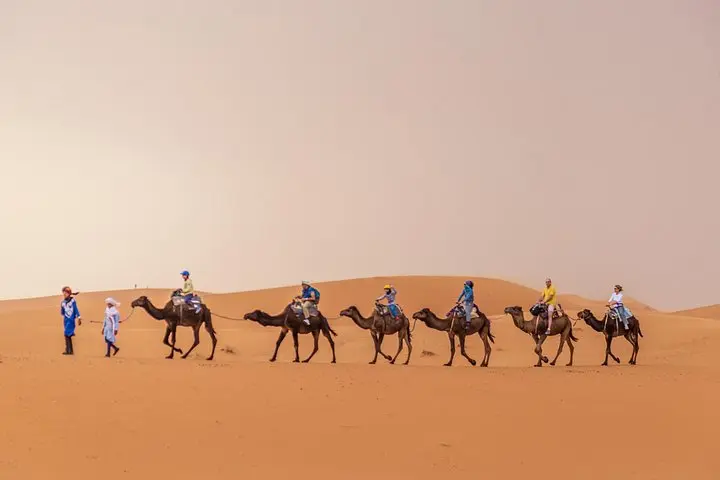
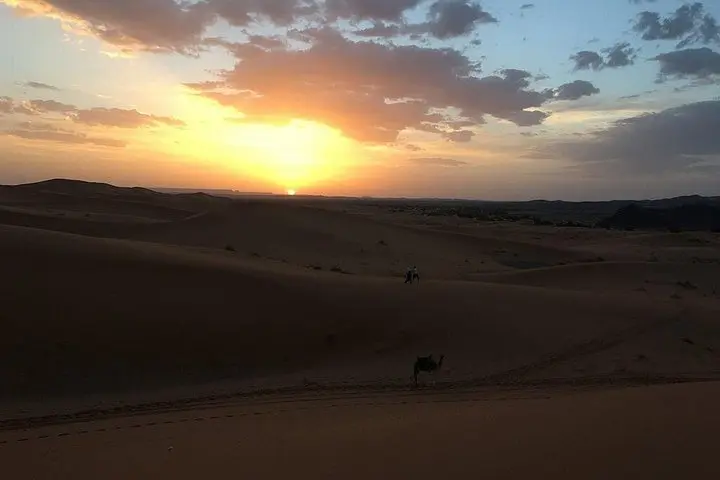
The minibus peels out of Fes at first light and the landscape changes like chapters: tiled medina, cedar-scarred hills, then a widening valley that funnels toward sand. By late afternoon the road gives way to ochre ridgelines and, finally, the serried humps of Erg Chebbi rising from the plain. Camels kneel, the guide checks saddles, and a single hour of slow swaying delivers you onto a crescent of dunes where the sun drops molten copper behind distant ridges.
The minibus peels out of Fes at first light and the landscape changes like chapters: tiled medina, cedar-scarred hills, then a widening valley that funnels toward sand. By late afternoon the road gives way to ochre ridgelines and, finally, the serried humps of Erg Chebbi rising from the plain. Camels kneel, the guide checks saddles, and a single hour of slow swaying delivers you onto a crescent of dunes where the sun drops molten copper behind distant ridges.
This route follows old caravan corridors that linked the Middle Atlas and the Sahara; geology shifts from limestone ranges and cedar forests around Ifrane to alluvial Ziz Valley and wind-sculpted dunes of Merzouga. Local life still orients around dates, goats and seasonal trade — stop at Rissani or Erfoud to see ksar architecture and palm groves that mark centuries of desert irrigation.
Expect long driving stretches: roughly 470 km one-way across mountain passes that can reach near 1,800 m before descending to the Sahara. Terrain at the camp is soft, loose sand; camel treks and sand-boarding are short but physically active. Plan for temperature swings — hot days, cold desert nights — and limited services in the dunes.
Practical tips: pack layered clothing, a wide-brim hat or shemagh, a durable water bottle, and footwear that keeps sand out. Bring small local currency for tips and market stops. Timing your travel to arrive before sunset gives the best light for dunes and for the Berber music that carries across the camp as night—and the stars—take over.