THE ADVENTURE COLLECTIVE® · Independent discovery and booking for outdoor travel

A compact, private two-day tour that pairs Minneriya’s elephant-rich safaris with Sigiriya’s rock fortress and a hands-on village visit. Ideal for travelers who want wildlife, history, and rural Sri Lankan life in one itinerary.
A compact, private two-day tour that pairs Minneriya’s elephant-rich safaris with Sigiriya’s rock fortress and a hands-on village visit. Ideal for travelers who want wildlife, history, and rural Sri Lankan life in one itinerary.
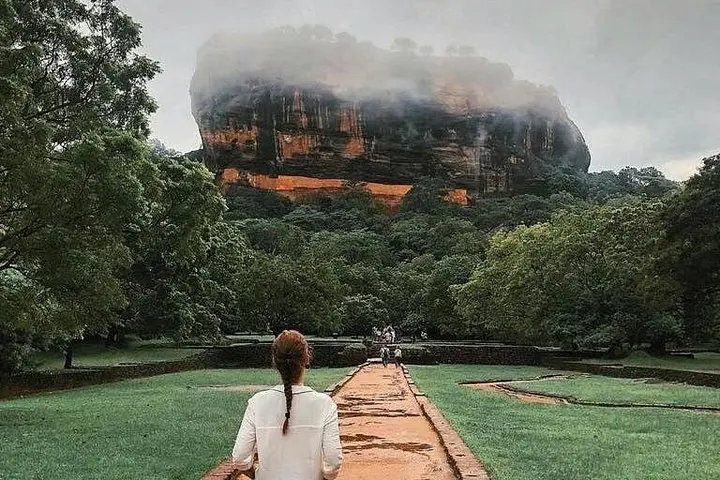
You step out of the air-conditioned van into a wash of heat and the low rumble of insects — the plain seems to breathe. Beyond the scrub, a sheer slab of rock rises from the flatland: Sigiriya’s red-brown face catches the sun and dares you to climb. Over two days this private tour stitches together Sri Lanka’s most compelling contrasts — elephant-studded grasslands, a rock fortress carved into the sky, cave temples painted with gold, and a rural village where rice paddies and bullock carts still set the tempo.
Verified experiences and guided adventures in the surrounding area.
Operated by Asni Tours & Travel (M) Sdn Bhd · Sigiriya, Central Province
You step out of the air-conditioned van into a wash of heat and the low rumble of insects — the plain seems to breathe. Beyond the scrub, a sheer slab of rock rises from the flatland: Sigiriya’s red-brown face catches the sun and dares you to climb. Over two days this private tour stitches together Sri Lanka’s most compelling contrasts — elephant-studded grasslands, a rock fortress carved into the sky, cave temples painted with gold, and a rural village where rice paddies and bullock carts still set the tempo.
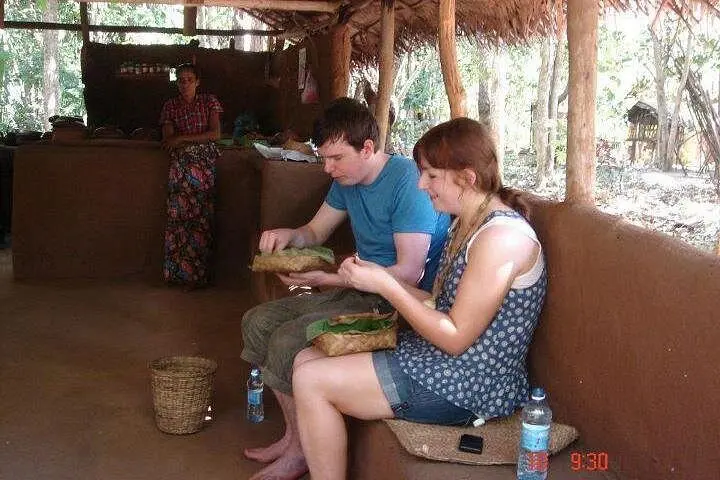
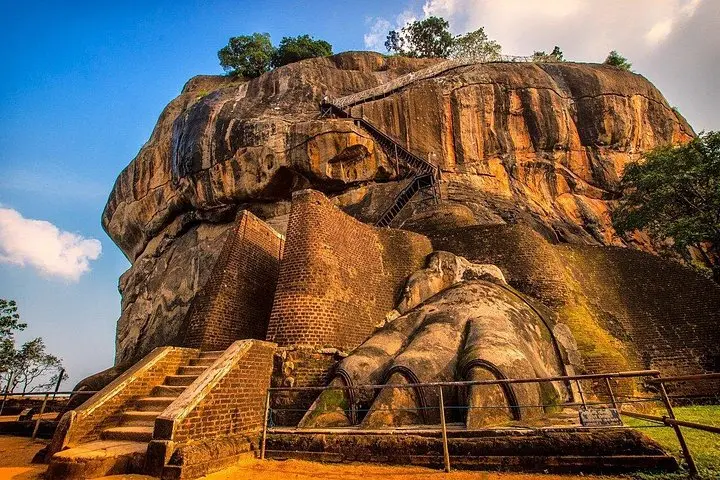
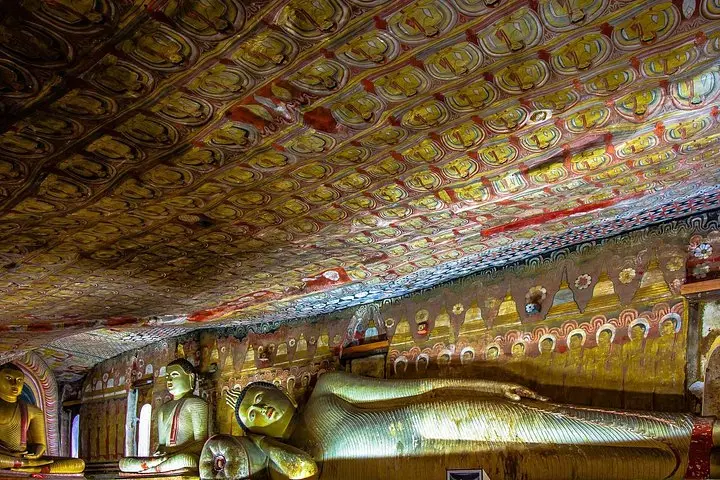
The itinerary is practical and paced. Day one heads into Minneriya National Park, where herds congregate around the ancient Minneriya wewa (reservoir) when water retreats. It’s not a gentle wildlife scene; elephants dominate the plain — some families move with deliberation, others challenge the waterline in sudden surges. After the safari you’ll switch registers and visit Sigiriya, a nearly 200-meter monolith crowned centuries ago by a royal citadel. The climb to the summit follows a sequence of terraces, fresco galleries and iron stairways, ending with panoramas that explain why the site became both fortress and court. Day two mixes cultural immersion — Dambulla’s rock temples, painted and pillared, where Buddha images span two millennia — with a hands-on village experience: a bullock cart ride, a catamaran glide across a reservoir, lunch prepared in a farmer’s home and a climb to a tree house lookout.
Geology and history meet here: Sigiriya is a hardened magma plug resisting erosion, transformed by King Kasyapa in the 5th century into an urban center of gardens, moats and waterworks. Dambulla’s caves preserve continuous religious art from pre-Christian eras to late medieval kings. Meanwhile, the region’s seasonal rhythms — a patchwork of wet and dry spells — control animal movements and village work.
Practical guidance: travel light but prepared. Take sturdy shoes for rock and temple climbs, sun protection for open plains, and a zoom lens for wildlife. Early morning or late afternoon safaris yield the best animal activity and cooler light for photos; Sigiriya is busiest mid-morning, so aim to arrive early. Respect temple rules — cover shoulders and knees, remove shoes, and keep quiet inside the shrines. Cash is useful for small purchases in villages and tips for guides.
This private, two-day loop is ideal for travelers who want wildlife without long drives, cultural depth without group crowds, and a village visit that moves beyond a photo stop. Nature and history here are not passive backdrops; they have direction and demand attention. Follow the route and you’ll leave with images of elephants in the shallows, frescoed cavern shadows and a view from a rock that still feels like a lookout over a kingdom.
The drive is roughly 4–5 hours each way depending on traffic; pickups are arranged from Colombo hotels early in the morning.
The dry months and the traditional ‘gathering’ season (roughly July–October) concentrate elephants at water sources, improving sightings.
Yes — the itinerary notes it’s family-friendly, but small children should be supervised at lookouts and around wildlife; infant meals may not be included.
National Park fees are listed as included, but bring extra cash for optional tips and small purchases in villages.
Conservative clothing that covers shoulders and knees; you will remove shoes before entering the caves.
This is a private tour—pickups and minor itinerary adjustments can usually be arranged by contacting the local operator in advance.
Asni Tours & Travel (M) Sdn Bhd operates guided outdoor trips and adventures with an emphasis on safety, stewardship, and memorable experiences.
You step out of the air-conditioned van into a wash of heat and the low rumble of insects — the plain seems to breathe. Beyond the scrub, a sheer slab of rock rises from the flatland: Sigiriya’s red-brown face catches the sun and dares you to climb. Over two days this private tour stitches together Sri Lanka’s most compelling contrasts — elephant-studded grasslands, a rock fortress carved into the sky, cave temples painted with gold, and a rural village where rice paddies and bullock carts still set the tempo.
You step out of the air-conditioned van into a wash of heat and the low rumble of insects — the plain seems to breathe. Beyond the scrub, a sheer slab of rock rises from the flatland: Sigiriya’s red-brown face catches the sun and dares you to climb. Over two days this private tour stitches together Sri Lanka’s most compelling contrasts — elephant-studded grasslands, a rock fortress carved into the sky, cave temples painted with gold, and a rural village where rice paddies and bullock carts still set the tempo.
The itinerary is practical and paced. Day one heads into Minneriya National Park, where herds congregate around the ancient Minneriya wewa (reservoir) when water retreats. It’s not a gentle wildlife scene; elephants dominate the plain — some families move with deliberation, others challenge the waterline in sudden surges. After the safari you’ll switch registers and visit Sigiriya, a nearly 200-meter monolith crowned centuries ago by a royal citadel. The climb to the summit follows a sequence of terraces, fresco galleries and iron stairways, ending with panoramas that explain why the site became both fortress and court. Day two mixes cultural immersion — Dambulla’s rock temples, painted and pillared, where Buddha images span two millennia — with a hands-on village experience: a bullock cart ride, a catamaran glide across a reservoir, lunch prepared in a farmer’s home and a climb to a tree house lookout.
Geology and history meet here: Sigiriya is a hardened magma plug resisting erosion, transformed by King Kasyapa in the 5th century into an urban center of gardens, moats and waterworks. Dambulla’s caves preserve continuous religious art from pre-Christian eras to late medieval kings. Meanwhile, the region’s seasonal rhythms — a patchwork of wet and dry spells — control animal movements and village work.
Practical guidance: travel light but prepared. Take sturdy shoes for rock and temple climbs, sun protection for open plains, and a zoom lens for wildlife. Early morning or late afternoon safaris yield the best animal activity and cooler light for photos; Sigiriya is busiest mid-morning, so aim to arrive early. Respect temple rules — cover shoulders and knees, remove shoes, and keep quiet inside the shrines. Cash is useful for small purchases in villages and tips for guides.
This private, two-day loop is ideal for travelers who want wildlife without long drives, cultural depth without group crowds, and a village visit that moves beyond a photo stop. Nature and history here are not passive backdrops; they have direction and demand attention. Follow the route and you’ll leave with images of elephants in the shallows, frescoed cavern shadows and a view from a rock that still feels like a lookout over a kingdom.