THE ADVENTURE COLLECTIVE® · Independent discovery and booking for outdoor travel

A compact two-day sweep from Reykjavík along Iceland’s South Coast, ending at the ice-scattered Jökulsárlón lagoon and an on-glacier hike. Expect waterfalls, black sand, and a hands-on encounter with glacier ice.
A compact two-day sweep from Reykjavík along Iceland’s South Coast, ending at the ice-scattered Jökulsárlón lagoon and an on-glacier hike. Expect waterfalls, black sand, and a hands-on encounter with glacier ice.
The bus eases out of Reykjavík before dawn and the coastline starts to rearrange itself — low lava fields give way to waterfalls that throw silver curtains from the cliffs. By late afternoon you’re standing behind Seljalandsfoss as rain from the fall dares you to stay dry; the path wraps the cascade and the spray writes your name across the air.
Verified experiences and guided adventures in the surrounding area.
Operated by Guide to Iceland · Jökulsárlón, Suðurland
The bus eases out of Reykjavík before dawn and the coastline starts to rearrange itself — low lava fields give way to waterfalls that throw silver curtains from the cliffs. By late afternoon you’re standing behind Seljalandsfoss as rain from the fall dares you to stay dry; the path wraps the cascade and the spray writes your name across the air.
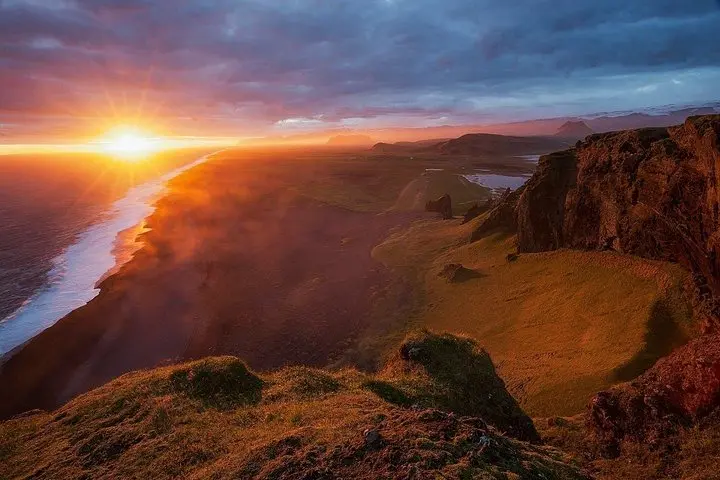
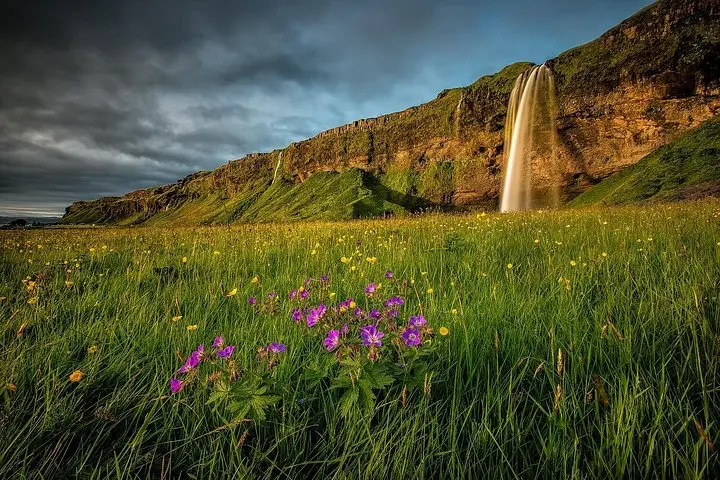
This two-day loop along Iceland’s South Coast stitches together raw geology and cinematic light. On day one the itinerary strings iconic stops: Seljalandsfoss (≈60 m drop) and Skógafoss (≈62 m), where a staircase climbs beside the torrent for a panorama of mist and basalt. The black-sand sweep of Reynisfjara meets the Atlantic with a violent, wind-scoured voice; Reynisdrangar’s basalt sea stacks rise like stolid sentries off Vík, and Diamond Beach lays out stranded icebergs that glitter like cut stones at the waterline.
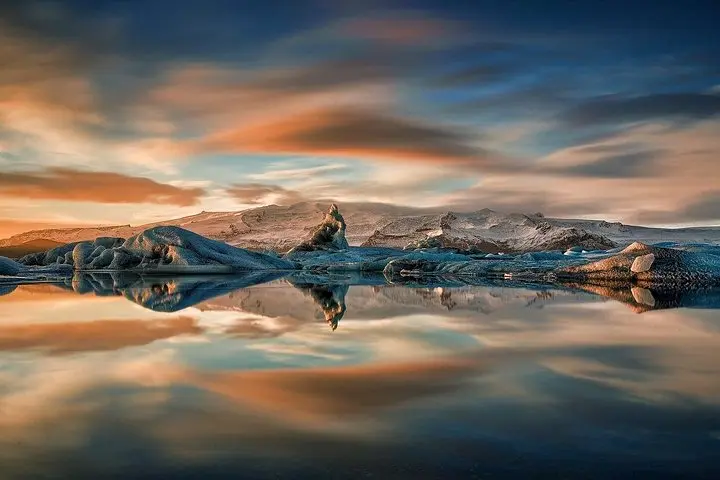
The second day turns glacier-blue: a guided glacier hike and an exploration of the Jökulsárlón lagoon. Jökulsárlón sits at sea level where the Breiðamerkurjökull tongue calves icebergs that bob and grind, then drift toward the ocean. The ice is layered history — ash streaks from past eruptions, compressed snow, and clear blue ice pressed by time; the glacier itself pushes forward in a slow, audible negotiation with gravity.
Geology is the real guide here: lava flows buried by ice, volcanoes that rearrange drainage patterns, and constant coastal erosion that keeps each vista shifting. Culturally, the South Coast is a place of working farms, sagas and modern hospitality — the overnight is a modest three-star stay with breakfast, positioned to maximize evening light and make the early start for day two painless.
Practicalities live close to the surface. Expect long but comfortable minibus transfers (two days, roughly 48 hours door-to-door). Walking at waterfalls is short and paved; Reynisfjara’s beach is flat but can be stormy — sneaker traction matters. The glacier trek is a guided, moderate effort: plan for 2–4 km on ice with small elevation changes and about 3 hours on crampons; guides supply technical equipment but you should bring robust boots and warm layers. Boat excursions on Jökulsárlón run May–October — otherwise you watch the ice from shore and Diamond Beach.
Timing matters: summer brings near-midnight light and boat access; late autumn and winter offer ice caves and northern lights but shorter windows and colder temperatures. Hydrate, layer for wind and wet, and give yourself buffer time for weather-related delays — flights the evening you return are not recommended. In exchange you’ll get a compact education in Iceland’s elemental forces: waterfalls that reshape cliffs nightly, beaches that eat and give back ice, and a glacier that refuses to stand still.
Yes — guides typically provide technical gear (crampons, helmets, harness) for the glacier hike; bring compatible boots and gloves.
No — zodiac/boat tours operate seasonally, generally May through October; outside of that you view the lagoon from shore and Diamond Beach.
Short walks at the waterfalls and beach are under 1 km each; the glacier hike is roughly 2–4 km on ice and takes about 3 hours with breaks.
The trip is described as suitable for most fitness levels, but those with serious mobility issues or spinal problems should check with the supplier in advance.
Aurora sightings are possible in winter but never guaranteed; clear, dark skies away from town give the best chance.
Pack lightly in a daypack for the tour; larger luggage can sometimes be stored by your Reykjavík accommodation or arranged for a small fee with the operator.
Guide to Iceland operates guided outdoor trips and adventures with an emphasis on safety, stewardship, and memorable experiences.
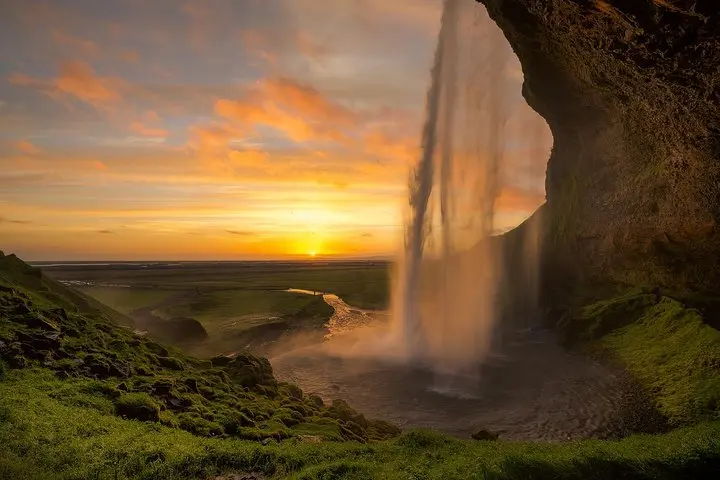
The bus eases out of Reykjavík before dawn and the coastline starts to rearrange itself — low lava fields give way to waterfalls that throw silver curtains from the cliffs. By late afternoon you’re standing behind Seljalandsfoss as rain from the fall dares you to stay dry; the path wraps the cascade and the spray writes your name across the air.
The bus eases out of Reykjavík before dawn and the coastline starts to rearrange itself — low lava fields give way to waterfalls that throw silver curtains from the cliffs. By late afternoon you’re standing behind Seljalandsfoss as rain from the fall dares you to stay dry; the path wraps the cascade and the spray writes your name across the air.
This two-day loop along Iceland’s South Coast stitches together raw geology and cinematic light. On day one the itinerary strings iconic stops: Seljalandsfoss (≈60 m drop) and Skógafoss (≈62 m), where a staircase climbs beside the torrent for a panorama of mist and basalt. The black-sand sweep of Reynisfjara meets the Atlantic with a violent, wind-scoured voice; Reynisdrangar’s basalt sea stacks rise like stolid sentries off Vík, and Diamond Beach lays out stranded icebergs that glitter like cut stones at the waterline.
The second day turns glacier-blue: a guided glacier hike and an exploration of the Jökulsárlón lagoon. Jökulsárlón sits at sea level where the Breiðamerkurjökull tongue calves icebergs that bob and grind, then drift toward the ocean. The ice is layered history — ash streaks from past eruptions, compressed snow, and clear blue ice pressed by time; the glacier itself pushes forward in a slow, audible negotiation with gravity.
Geology is the real guide here: lava flows buried by ice, volcanoes that rearrange drainage patterns, and constant coastal erosion that keeps each vista shifting. Culturally, the South Coast is a place of working farms, sagas and modern hospitality — the overnight is a modest three-star stay with breakfast, positioned to maximize evening light and make the early start for day two painless.
Practicalities live close to the surface. Expect long but comfortable minibus transfers (two days, roughly 48 hours door-to-door). Walking at waterfalls is short and paved; Reynisfjara’s beach is flat but can be stormy — sneaker traction matters. The glacier trek is a guided, moderate effort: plan for 2–4 km on ice with small elevation changes and about 3 hours on crampons; guides supply technical equipment but you should bring robust boots and warm layers. Boat excursions on Jökulsárlón run May–October — otherwise you watch the ice from shore and Diamond Beach.
Timing matters: summer brings near-midnight light and boat access; late autumn and winter offer ice caves and northern lights but shorter windows and colder temperatures. Hydrate, layer for wind and wet, and give yourself buffer time for weather-related delays — flights the evening you return are not recommended. In exchange you’ll get a compact education in Iceland’s elemental forces: waterfalls that reshape cliffs nightly, beaches that eat and give back ice, and a glacier that refuses to stand still.