THE ADVENTURE COLLECTIVE® · Independent discovery and booking for outdoor travel

A compact 48‑hour safari from Arusha that pairs Tarangire’s baobab-dotted plains and elephant herds with Lake Manyara’s soda lake, flamingos, and tree-climbing lions. Ideal for travelers wanting concentrated wildlife viewing with an overnight lodge stay.
A compact 48‑hour safari from Arusha that pairs Tarangire’s baobab-dotted plains and elephant herds with Lake Manyara’s soda lake, flamingos, and tree-climbing lions. Ideal for travelers wanting concentrated wildlife viewing with an overnight lodge stay.
You step out of the vehicle and the plain exhales: heat rising off red earth, baobabs shading lanes where elephants move with deliberate curiosity. On this 48‑hour loop from Arusha, Tarangire’s open savanna confronts you with big herds and wide skies, then Lake Manyara answers with a ring of acacia, soda-flats, and lions that take to the branches like reluctant climbers.
Verified experiences and guided adventures in the surrounding area.
Operated by Beach & Safari · Arusha, Arusha Region
You step out of the vehicle and the plain exhales: heat rising off red earth, baobabs shading lanes where elephants move with deliberate curiosity. On this 48‑hour loop from Arusha, Tarangire’s open savanna confronts you with big herds and wide skies, then Lake Manyara answers with a ring of acacia, soda-flats, and lions that take to the branches like reluctant climbers.
Tarangire is known for its dense elephant population and ancient baobabs—trees that record drought years in their ribs—while Lake Manyara sits on the Rift escarpment where groundwater and volcanic soils create a shallow, life-rich basin. The region is Maasai country: expect to see grazing cattle, traditional homesteads, and small markets in towns like Mto wa Mbu where local crafts and produce are part of daily rhythm.
Practically: the trip runs as guided game drives, with most hours spent in a 4x4 on uneven tracks, followed by one comfortable overnight at Africa Safari Lake Manyara beside the lake. Wildlife encounters are best at dawn and late afternoon when animals are active and light is favorable for photography. Roads can be dusty and bumpy; the season alters visibility—dry months concentrate game around waterholes, wet months open up migratory paths and flamingo displays.
Bring binoculars, sun protection, a light waterproof layer, and a good camera battery rotation. Stay on tracks, keep windows partly closed around grazing wildlife, and follow your guide’s lead—parks operate on strict driving rules to minimize disturbance. Two days give you a compact portrait of northern Tanzania—raw, immediate, and surprisingly intimate.
You travel in a private 4x4 vehicle with a driver-guide who handles park permits, tracks, and transfers between Arusha, Tarangire, and Lake Manyara.
Park fees and full board at Africa Safari Lake Manyara are included; minor local taxes or levies may be payable on arrival as listed in your booking details.
Both parks are productive: Tarangire is excellent for elephants and large herds, and Lake Manyara is known for its tree-climbing lions—sightings are common but never guaranteed.
Infants must sit on laps; the tour is not recommended for pregnant travelers or those with significant spinal/cardiovascular issues—check provider guidance before booking.
Beach & Safari operates guided outdoor trips and adventures with an emphasis on safety, stewardship, and memorable experiences.
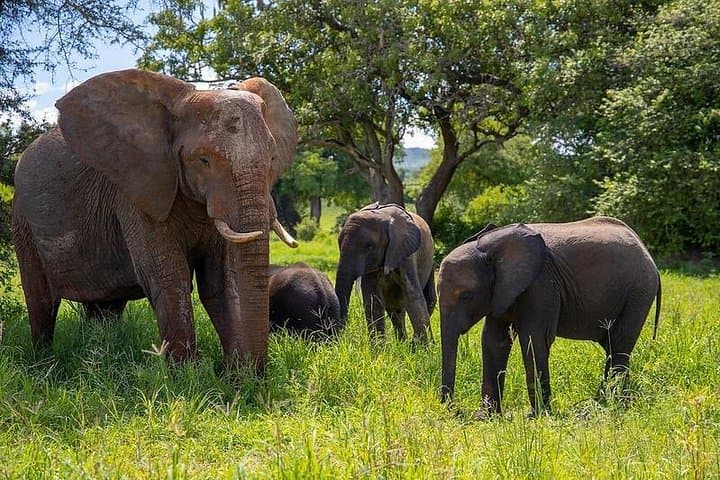


You step out of the vehicle and the plain exhales: heat rising off red earth, baobabs shading lanes where elephants move with deliberate curiosity. On this 48‑hour loop from Arusha, Tarangire’s open savanna confronts you with big herds and wide skies, then Lake Manyara answers with a ring of acacia, soda-flats, and lions that take to the branches like reluctant climbers.
You step out of the vehicle and the plain exhales: heat rising off red earth, baobabs shading lanes where elephants move with deliberate curiosity. On this 48‑hour loop from Arusha, Tarangire’s open savanna confronts you with big herds and wide skies, then Lake Manyara answers with a ring of acacia, soda-flats, and lions that take to the branches like reluctant climbers.
Tarangire is known for its dense elephant population and ancient baobabs—trees that record drought years in their ribs—while Lake Manyara sits on the Rift escarpment where groundwater and volcanic soils create a shallow, life-rich basin. The region is Maasai country: expect to see grazing cattle, traditional homesteads, and small markets in towns like Mto wa Mbu where local crafts and produce are part of daily rhythm.
Practically: the trip runs as guided game drives, with most hours spent in a 4x4 on uneven tracks, followed by one comfortable overnight at Africa Safari Lake Manyara beside the lake. Wildlife encounters are best at dawn and late afternoon when animals are active and light is favorable for photography. Roads can be dusty and bumpy; the season alters visibility—dry months concentrate game around waterholes, wet months open up migratory paths and flamingo displays.
Bring binoculars, sun protection, a light waterproof layer, and a good camera battery rotation. Stay on tracks, keep windows partly closed around grazing wildlife, and follow your guide’s lead—parks operate on strict driving rules to minimize disturbance. Two days give you a compact portrait of northern Tanzania—raw, immediate, and surprisingly intimate.