THE ADVENTURE COLLECTIVE® · Independent discovery and booking for outdoor travel

A fast-paced two-day safari that pairs Tarangire’s baobab-scattered plains with the dramatic bowl of Ngorongoro Crater. Ideal for travelers who want concentrated wildlife viewing — big five, prolific birds and Maasai culture — on a short northern circuit itinerary.
A fast-paced two-day safari that pairs Tarangire’s baobab-scattered plains with the dramatic bowl of Ngorongoro Crater. Ideal for travelers who want concentrated wildlife viewing — big five, prolific birds and Maasai culture — on a short northern circuit itinerary.
You arrive before dawn at a rutted gate; the air is dry and fragrant with dust and acacia smoke. The vehicle eases into a landscape that shifts from riverine woodland to a broad volcanic bowl — Tarangire’s baobabs give way to the cathedral walls of Ngorongoro. In two concentrated days you’ll trade the intimacy of riverine game drives for the sweep of the world’s largest intact caldera.
Verified experiences and guided adventures in the surrounding area.
Operated by Rupia Adventure · Arusha, Arusha Region
You arrive before dawn at a rutted gate; the air is dry and fragrant with dust and acacia smoke. The vehicle eases into a landscape that shifts from riverine woodland to a broad volcanic bowl — Tarangire’s baobabs give way to the cathedral walls of Ngorongoro. In two concentrated days you’ll trade the intimacy of riverine game drives for the sweep of the world’s largest intact caldera.
Tarangire has long been the northern circuit’s underrated game reserve, shaped by seasonal floods and the Tarangire River that concentrates wildlife in the dry months. Ngorongoro, a collapsed volcano, offers a rare ecological mosaic: fertile crater floor, montane grasslands and Maasai grazing lands on its rim. Both places carry human history — Maasai pastoralists moving stock across crater highlands and colonial-era conservation decisions that created today’s protected areas.
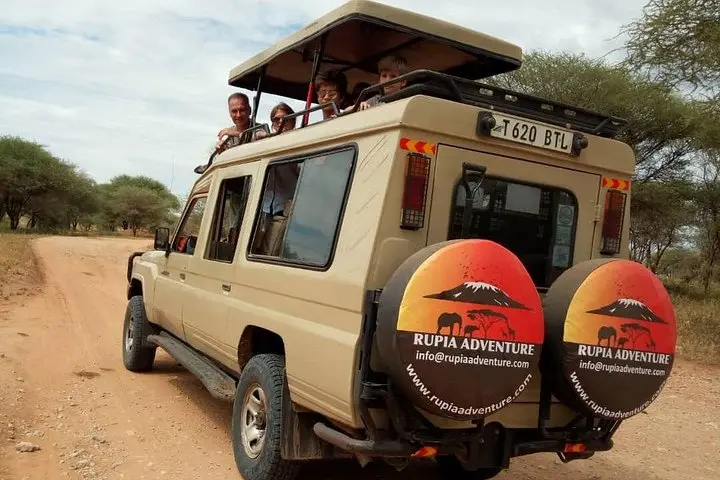
Expect focused game drives from open-roof vehicles, binoculars glued to a rotating horizon. Tarangire delivers prolific dry-season birdlife and charismatic herds; Ngorongoro stacks density — black rhino, lion prides, tuskers and grazing wildebeest in a single panoramic bowl.
Practical guidance: start early to catch predators at first light and avoid midday heat; wear neutral-colored layers and a brimmed hat; keep cameras ready with zoom lenses and a spare battery. Roads inside the crater can be uneven — a degree of vehicle motion is normal. The trip includes private transport, meals and park fees; bring cash for tips and small purchases and carry malaria prophylaxis and travel insurance. Two days is compact; travel light, prioritize sightings, and let the guide set the pace.
Yes — itinerary notes and inclusions list park admissions and all fees and taxes as included in the package.
The itinerary includes one night at a tented camp near Tarangire; the second day concludes with return travel to Arusha.
The dry season (June–October) concentrates animals around water sources and offers the clearest viewing conditions and best birding in Tarangire.
Malaria prophylaxis is recommended for northern Tanzania; check with a travel health clinic for vaccinations and personalized medical advice.
Rupia Adventure operates guided outdoor trips and adventures with an emphasis on safety, stewardship, and memorable experiences.

You arrive before dawn at a rutted gate; the air is dry and fragrant with dust and acacia smoke. The vehicle eases into a landscape that shifts from riverine woodland to a broad volcanic bowl — Tarangire’s baobabs give way to the cathedral walls of Ngorongoro. In two concentrated days you’ll trade the intimacy of riverine game drives for the sweep of the world’s largest intact caldera.
You arrive before dawn at a rutted gate; the air is dry and fragrant with dust and acacia smoke. The vehicle eases into a landscape that shifts from riverine woodland to a broad volcanic bowl — Tarangire’s baobabs give way to the cathedral walls of Ngorongoro. In two concentrated days you’ll trade the intimacy of riverine game drives for the sweep of the world’s largest intact caldera.
Tarangire has long been the northern circuit’s underrated game reserve, shaped by seasonal floods and the Tarangire River that concentrates wildlife in the dry months. Ngorongoro, a collapsed volcano, offers a rare ecological mosaic: fertile crater floor, montane grasslands and Maasai grazing lands on its rim. Both places carry human history — Maasai pastoralists moving stock across crater highlands and colonial-era conservation decisions that created today’s protected areas.
Expect focused game drives from open-roof vehicles, binoculars glued to a rotating horizon. Tarangire delivers prolific dry-season birdlife and charismatic herds; Ngorongoro stacks density — black rhino, lion prides, tuskers and grazing wildebeest in a single panoramic bowl.
Practical guidance: start early to catch predators at first light and avoid midday heat; wear neutral-colored layers and a brimmed hat; keep cameras ready with zoom lenses and a spare battery. Roads inside the crater can be uneven — a degree of vehicle motion is normal. The trip includes private transport, meals and park fees; bring cash for tips and small purchases and carry malaria prophylaxis and travel insurance. Two days is compact; travel light, prioritize sightings, and let the guide set the pace.