THE ADVENTURE COLLECTIVE® · Independent discovery and booking for outdoor travel

Two days, one night and front-row seats to some of Tanzania’s most concentrated wildlife viewing: Tarangire’s baobabs and Ngorongoro’s crater floor. This group-joining safari from Arusha pairs early-morning game drives with practical logistics for first-time safari goers.
Two days, one night and front-row seats to some of Tanzania’s most concentrated wildlife viewing: Tarangire’s baobabs and Ngorongoro’s crater floor. This group-joining safari from Arusha pairs early-morning game drives with practical logistics for first-time safari goers.
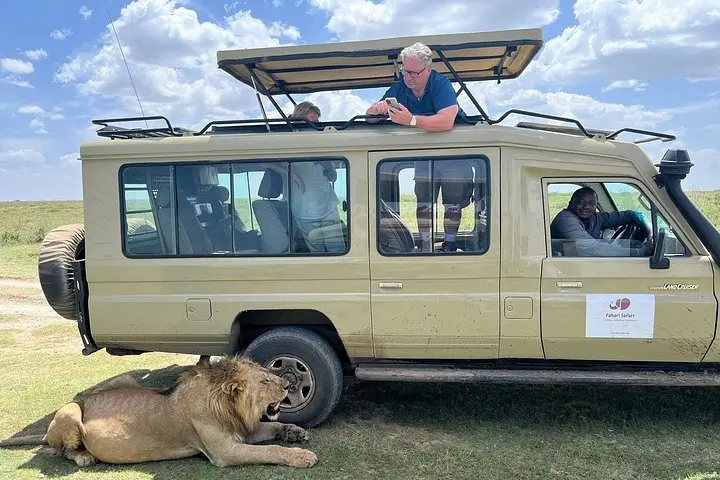
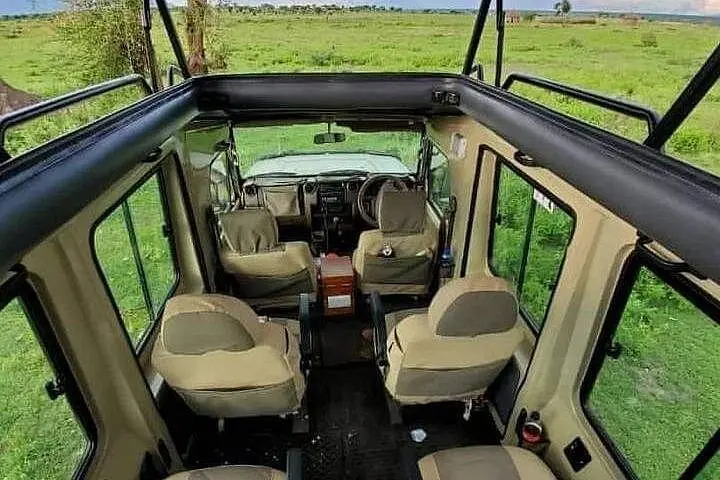
The Land Cruiser bumps along a red-dust track as dawn pours over baobabs and the Tarangire River draws the park’s herds like a slow current. You step out into a sky that lightens fast; elephants move deliberate and patient, and the guide points without hurry — this is safari rhythm: watch, wait, and let the landscape reveal itself.
Verified experiences and guided adventures in the surrounding area.
Operated by Fahari Safaris · Arusha, Arusha Region
The Land Cruiser bumps along a red-dust track as dawn pours over baobabs and the Tarangire River draws the park’s herds like a slow current. You step out into a sky that lightens fast; elephants move deliberate and patient, and the guide points without hurry — this is safari rhythm: watch, wait, and let the landscape reveal itself.
Tarangire National Park, Tanzania’s third largest, is defined by its river and giant baobab scaffolding; it hosts some of East Africa’s densest elephant concentrations. By day two you descend into Ngorongoro Crater, the world’s largest intact volcanic caldera — a 260 sq km floor sunk more than 2,000 feet — where lakes, forest patches and grasslands compress big-cat, rhino and buffalo interactions into close quarters.
The region is Maasai country; pastoralists graze outer slopes and cultural exchanges have shaped conservation policy here for decades. Geologically, the crater is an ancient volcano whose collapsed bowl now supports a self-contained ecosystem. Expect long drives on unpaved roads, early starts (descent often around 6:30 a.m.) and game-rich but weather-dependent viewing.
Practicalities: pack layers for cool mornings on the crater rim, bring binoculars and at least 2 liters of water per day, and keep cameras ready for sudden action around hippo pools. Overnight is at a rustic campsite or lodge (Kizumba or Panorama noted), and you’ll return to Arusha after roughly a 4-hour drive post-crater. Respect park rules — stay on tracks, follow your guide, and carry cash or card for park entry if not included. This two-day loop compresses iconic northern Tanzania into intense, accessible wildlife encounters.
The itinerary includes game drives, two lunches, dinner and breakfast, drinking water (approx. 2L per person per day), park fees as listed, and overnight at the noted campsite or lodge.
Expect roughly 2–4 hours between Arusha and Tarangire, and a 4-hour drive after exiting Ngorongoro back to Arusha, depending on road conditions.
Infants may ride in strollers and must sit on laps; the tour is not recommended for pregnant travelers and those with spinal injuries due to long drives and bumpy roads.
Vaccinations like yellow fever (if required by itinerary entry points) and malaria prophylaxis are recommended—consult your travel clinic well before departure.
Fahari Safaris operates guided outdoor trips and adventures with an emphasis on safety, stewardship, and memorable experiences.
The Land Cruiser bumps along a red-dust track as dawn pours over baobabs and the Tarangire River draws the park’s herds like a slow current. You step out into a sky that lightens fast; elephants move deliberate and patient, and the guide points without hurry — this is safari rhythm: watch, wait, and let the landscape reveal itself.
The Land Cruiser bumps along a red-dust track as dawn pours over baobabs and the Tarangire River draws the park’s herds like a slow current. You step out into a sky that lightens fast; elephants move deliberate and patient, and the guide points without hurry — this is safari rhythm: watch, wait, and let the landscape reveal itself.
Tarangire National Park, Tanzania’s third largest, is defined by its river and giant baobab scaffolding; it hosts some of East Africa’s densest elephant concentrations. By day two you descend into Ngorongoro Crater, the world’s largest intact volcanic caldera — a 260 sq km floor sunk more than 2,000 feet — where lakes, forest patches and grasslands compress big-cat, rhino and buffalo interactions into close quarters.
The region is Maasai country; pastoralists graze outer slopes and cultural exchanges have shaped conservation policy here for decades. Geologically, the crater is an ancient volcano whose collapsed bowl now supports a self-contained ecosystem. Expect long drives on unpaved roads, early starts (descent often around 6:30 a.m.) and game-rich but weather-dependent viewing.
Practicalities: pack layers for cool mornings on the crater rim, bring binoculars and at least 2 liters of water per day, and keep cameras ready for sudden action around hippo pools. Overnight is at a rustic campsite or lodge (Kizumba or Panorama noted), and you’ll return to Arusha after roughly a 4-hour drive post-crater. Respect park rules — stay on tracks, follow your guide, and carry cash or card for park entry if not included. This two-day loop compresses iconic northern Tanzania into intense, accessible wildlife encounters.