THE ADVENTURE COLLECTIVE® · Independent discovery and booking for outdoor travel

Escape Ulaanbaatar for two days of granite tors, a towering Chinggis Khan statue and a night in a traditional ger. This practical guide covers what to expect, how to prepare, and the cultural highlights of Terelj National Park.
Escape Ulaanbaatar for two days of granite tors, a towering Chinggis Khan statue and a night in a traditional ger. This practical guide covers what to expect, how to prepare, and the cultural highlights of Terelj National Park.
You crest the low ridge and the plain opens: wind combs through grass, granite tors rise like stacked boulders, and a stainless‑steel horseman glints on the horizon.
Verified experiences and guided adventures in the surrounding area.
Operated by Mongolian Tour Guide · Ulaanbaatar, Töv Province
You crest the low ridge and the plain opens: wind combs through grass, granite tors rise like stacked boulders, and a stainless‑steel horseman glints on the horizon.
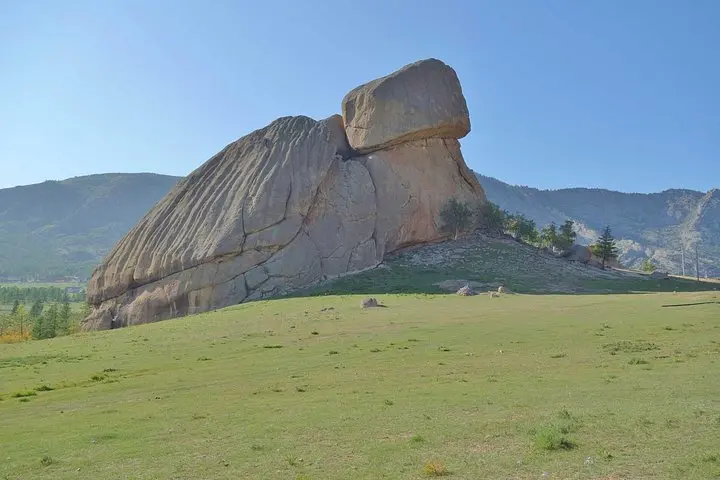
This two‑day loop leaves Ulaanbaatar and moves quickly from city noise into Terelj National Park’s sculpted granite landscape and the Chinggis Khan Statue complex at Tsonjin Boldog. The park’s rounded cliffs and freestanding tors are the slow work of frost, rain and time; feldspar and quartz in the granite crack and peel, producing the turtle‑like rocks visitors photograph. Between rock gardens are open valleys where nomadic families keep horses, goats and yaks and where a small Buddhist temple conserves local practice.
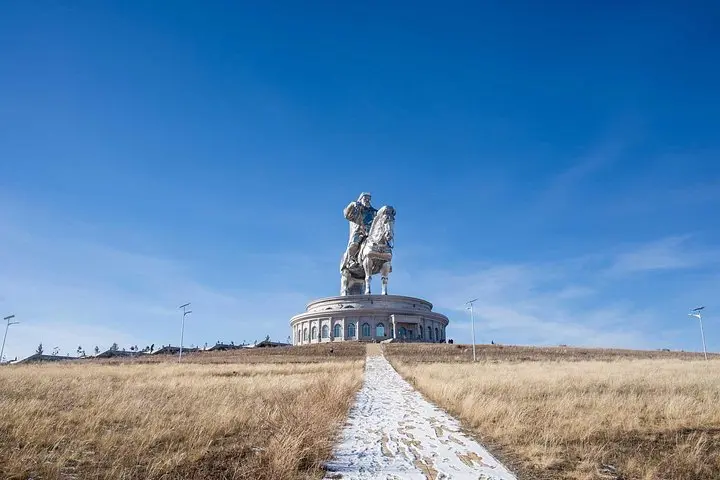
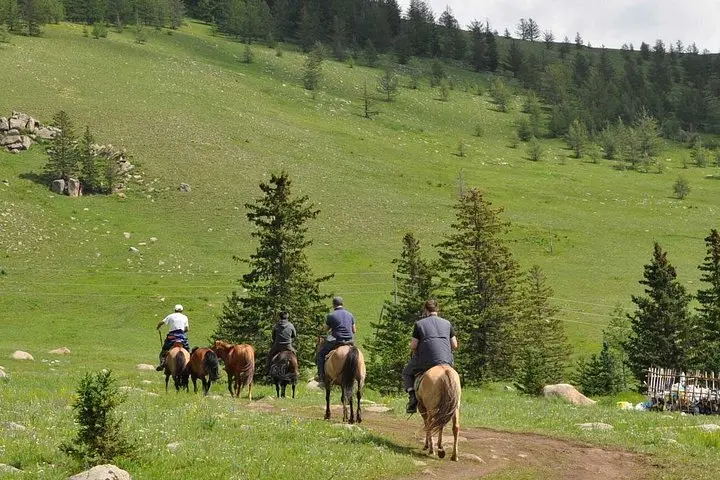
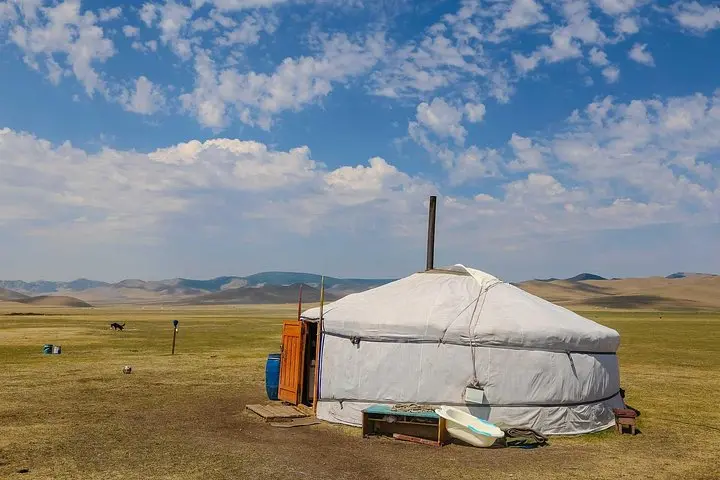
Daytime activities mix short hikes on uneven trails, photo stops at iconic tors, a supervised short horse ride and a visit with a nomadic family inside a ger (yurt) — an opportunity to learn about dairy traditions and felt crafts. The Chinggis Khan statue — roughly 40 meters tall — crowns its plinth and includes a museum about Mongolia’s unifier; local guides recount the legend of the golden whip found at Tsonjin Boldog.
Practical guidance: the drive from Ulaanbaatar is about 65–70 km and takes 1.5–2 hours each way on paved and gravel roads. Trails are rocky and can be steep in sections; sturdy shoes and layered clothing are recommended. Bring cash for small purchases, respect private family areas, and time visits for morning light or late afternoon to avoid mid‑day heat and to get the best photos.
Terelj is about 65–70 km east of Ulaanbaatar; expect 1.5–2 hours each way depending on traffic and road conditions.
No — rides provided are short and supervised; guides match horses to skill level, but advise wearing long pants and sturdy shoes.
Overnight lodging is typically in a traditional ger (yurt) or a tourist camp with basic facilities; expect communal dining and rustic comfort.
You can approach and photograph the statue; a museum at the complex provides historical exhibits and there is an elevator option to a viewing platform inside the statue.
Mongolian Tour Guide operates guided outdoor trips and adventures with an emphasis on safety, stewardship, and memorable experiences.
You crest the low ridge and the plain opens: wind combs through grass, granite tors rise like stacked boulders, and a stainless‑steel horseman glints on the horizon.
You crest the low ridge and the plain opens: wind combs through grass, granite tors rise like stacked boulders, and a stainless‑steel horseman glints on the horizon.
This two‑day loop leaves Ulaanbaatar and moves quickly from city noise into Terelj National Park’s sculpted granite landscape and the Chinggis Khan Statue complex at Tsonjin Boldog. The park’s rounded cliffs and freestanding tors are the slow work of frost, rain and time; feldspar and quartz in the granite crack and peel, producing the turtle‑like rocks visitors photograph. Between rock gardens are open valleys where nomadic families keep horses, goats and yaks and where a small Buddhist temple conserves local practice.
Daytime activities mix short hikes on uneven trails, photo stops at iconic tors, a supervised short horse ride and a visit with a nomadic family inside a ger (yurt) — an opportunity to learn about dairy traditions and felt crafts. The Chinggis Khan statue — roughly 40 meters tall — crowns its plinth and includes a museum about Mongolia’s unifier; local guides recount the legend of the golden whip found at Tsonjin Boldog.
Practical guidance: the drive from Ulaanbaatar is about 65–70 km and takes 1.5–2 hours each way on paved and gravel roads. Trails are rocky and can be steep in sections; sturdy shoes and layered clothing are recommended. Bring cash for small purchases, respect private family areas, and time visits for morning light or late afternoon to avoid mid‑day heat and to get the best photos.