THE ADVENTURE COLLECTIVE® · Independent discovery and booking for outdoor travel

A brisk two-day circuit from Marrakech to the dunes of Erg Tinfou, this overnight tour pairs Atlas passes and Ait Ben Haddou with a sunset camel ride and night under the stars in a Berber-style bivouac. Ideal for travelers who want an accessible Sahara experience without committing to a multi-day expedition.
A brisk two-day circuit from Marrakech to the dunes of Erg Tinfou, this overnight tour pairs Atlas passes and Ait Ben Haddou with a sunset camel ride and night under the stars in a Berber-style bivouac. Ideal for travelers who want an accessible Sahara experience without committing to a multi-day expedition.
The sun drops behind an endless ridge of ochre dunes and the last light pencils the silhouette of a lone camel—this is Erg Tinfou at dusk. You arrive by road from the High Atlas, cross the Draa Valley where palms stripe the landscape, then meet the sand that seems to move with its own slow breath.
Verified experiences and guided adventures in the surrounding area.
Operated by Morocco Sahara Desert Travel · Zagora, Drâa-Tafilalet
The sun drops behind an endless ridge of ochre dunes and the last light pencils the silhouette of a lone camel—this is Erg Tinfou at dusk. You arrive by road from the High Atlas, cross the Draa Valley where palms stripe the landscape, then meet the sand that seems to move with its own slow breath.
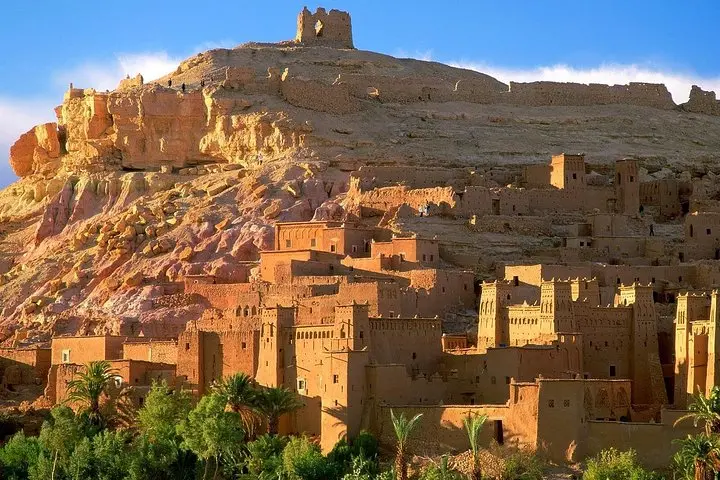
The route stitches together layers of history: the fortified ksar of Ait Ben Hadou (a UNESCO caravan outpost turned film set), the mud walls of Taourirt in Ouarzazate, and the age-old trade corridors that funneled salt and dates from the Sahara north. Geologically, the region is wind-sculpted—loose dunes over a bed of compacted sand and stone—so footing and microclimates change in minutes.
Culture here is Berber and Saharan: expect simple bivouac hospitality, drum-led evenings, and tea rituals that mark sunset. Guides typically offer camel rides to reach a camp and explain local life in English, French or Spanish.
Practical guidance: pack layers for cold desert nights, sun protection for daytime crossings, and sturdy footwear for rocky approach tracks and sand. Hydrate often—water is limited outside major towns—and allow travel time: drives from Marrakech take most of a day with stops at Atlas viewpoints, Ait Ben Hadou and Ouarzazate.
Plan for minimal facilities at the bivouac, respect local customs and leave no trace on fragile dune edges. For travelers who want a compact Sahara experience with cultural highlights en route, this two-day loop delivers desert night skies, close-up sand travel, and a snapshot of southern Morocco’s layered landscape.
Camel rides to the camp typically last 30–60 minutes depending on dune location and sunset timing; guides help you mount and dismount.
Facilities are basic—many camps provide simple latrines; expect limited plumbing and bring hand sanitizer and toilet paper.
Infants are allowed but must sit on an adult’s lap during vehicle transport; child suitability depends on comfort with long drives and camel travel.
Yes—most operators offer vegetarian options if requested at booking; advise your guide in advance for special diets.
Morocco Sahara Desert Travel operates guided outdoor trips and adventures with an emphasis on safety, stewardship, and memorable experiences.
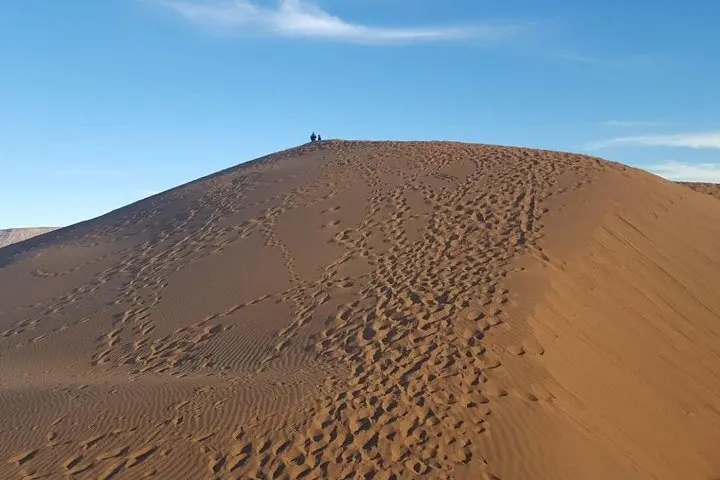
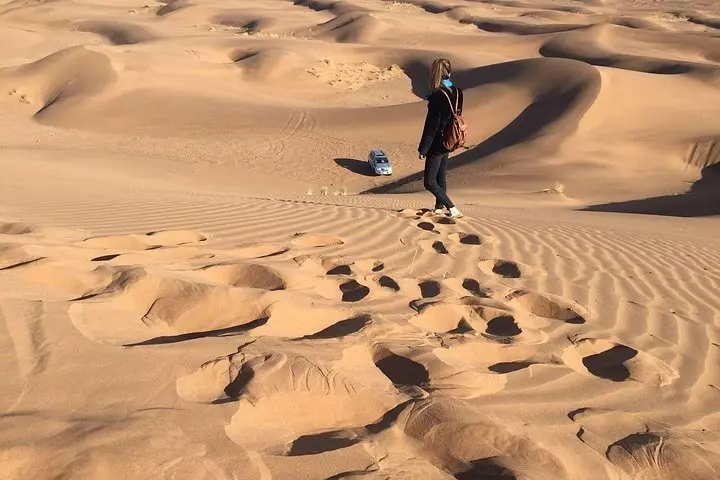
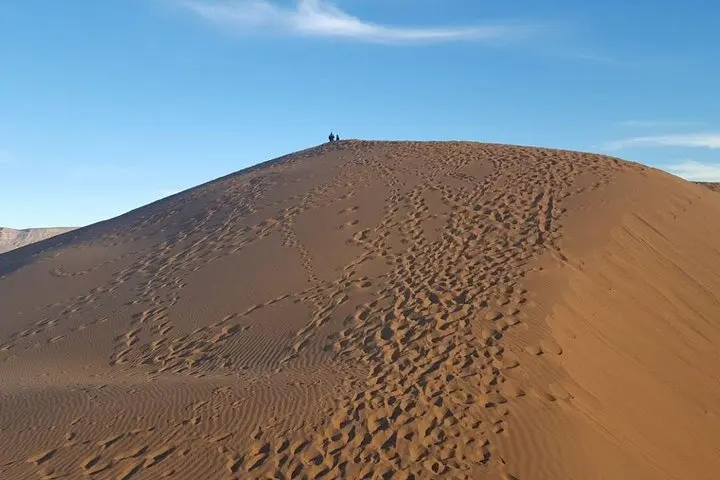
The sun drops behind an endless ridge of ochre dunes and the last light pencils the silhouette of a lone camel—this is Erg Tinfou at dusk. You arrive by road from the High Atlas, cross the Draa Valley where palms stripe the landscape, then meet the sand that seems to move with its own slow breath.
The sun drops behind an endless ridge of ochre dunes and the last light pencils the silhouette of a lone camel—this is Erg Tinfou at dusk. You arrive by road from the High Atlas, cross the Draa Valley where palms stripe the landscape, then meet the sand that seems to move with its own slow breath.
The route stitches together layers of history: the fortified ksar of Ait Ben Hadou (a UNESCO caravan outpost turned film set), the mud walls of Taourirt in Ouarzazate, and the age-old trade corridors that funneled salt and dates from the Sahara north. Geologically, the region is wind-sculpted—loose dunes over a bed of compacted sand and stone—so footing and microclimates change in minutes.
Culture here is Berber and Saharan: expect simple bivouac hospitality, drum-led evenings, and tea rituals that mark sunset. Guides typically offer camel rides to reach a camp and explain local life in English, French or Spanish.
Practical guidance: pack layers for cold desert nights, sun protection for daytime crossings, and sturdy footwear for rocky approach tracks and sand. Hydrate often—water is limited outside major towns—and allow travel time: drives from Marrakech take most of a day with stops at Atlas viewpoints, Ait Ben Hadou and Ouarzazate.
Plan for minimal facilities at the bivouac, respect local customs and leave no trace on fragile dune edges. For travelers who want a compact Sahara experience with cultural highlights en route, this two-day loop delivers desert night skies, close-up sand travel, and a snapshot of southern Morocco’s layered landscape.