THE ADVENTURE COLLECTIVE® · Independent discovery and booking for outdoor travel

A compact two-day ascent of Jebel Toubkal from Marrakech, combining a full-day approach to the Neltner Refuge with an early summit push. Expect steep trails, mule-supported logistics, and warm Berber hospitality on the high Atlas.
A compact two-day ascent of Jebel Toubkal from Marrakech, combining a full-day approach to the Neltner Refuge with an early summit push. Expect steep trails, mule-supported logistics, and warm Berber hospitality on the high Atlas.
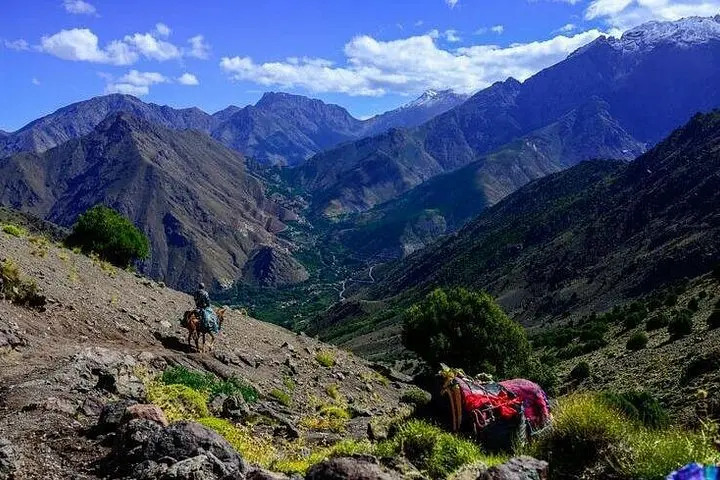
You leave Marrakech behind as the city’s heat thins and the road climbs into a mosaic of terraced fields and ochre villages. By Imlil the air sharpens; the paths begin to rise and the Atlas lays out like a living map of stone and scree. On the first day the trail threads through walnut groves and steep gullies, the ridge above daring you onward toward the Neltner Refuge.
Verified experiences and guided adventures in the surrounding area.
Operated by Atlas mountains tours · Imlil, Marrakech-Safi
You leave Marrakech behind as the city’s heat thins and the road climbs into a mosaic of terraced fields and ochre villages. By Imlil the air sharpens; the paths begin to rise and the Atlas lays out like a living map of stone and scree. On the first day the trail threads through walnut groves and steep gullies, the ridge above daring you onward toward the Neltner Refuge.
Toubkal (Jebel Toubkal), at roughly 4,167 m, is the highest peak in the Maghreb. Geologically the massif is folded volcanic rock and schist carved by glacial action during the last Ice Age, leaving steep cols and broad summit shoulders. Culturally the route crosses Berber villages where communal hospitality remains central — expect simple stew, strong mint tea, and nights in the refuge with mule-supported gear.
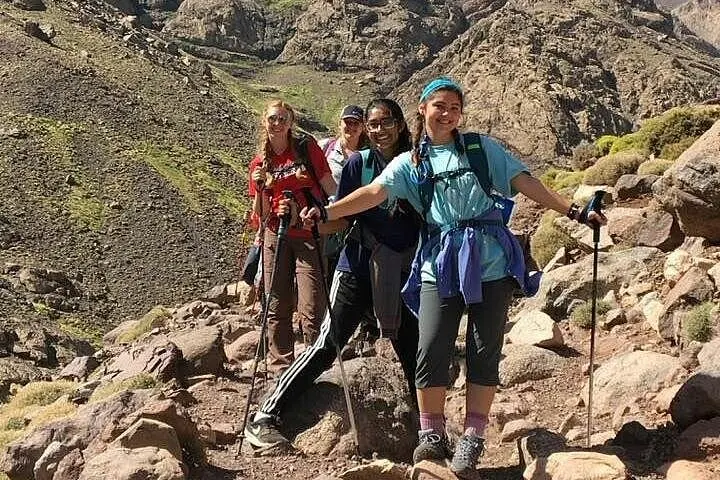
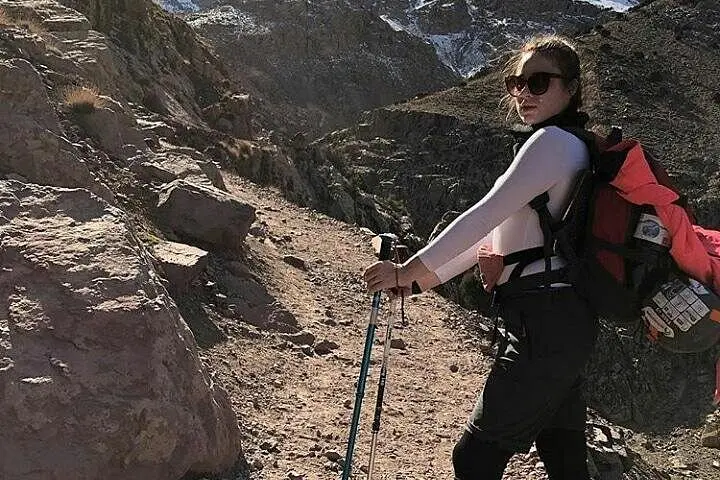
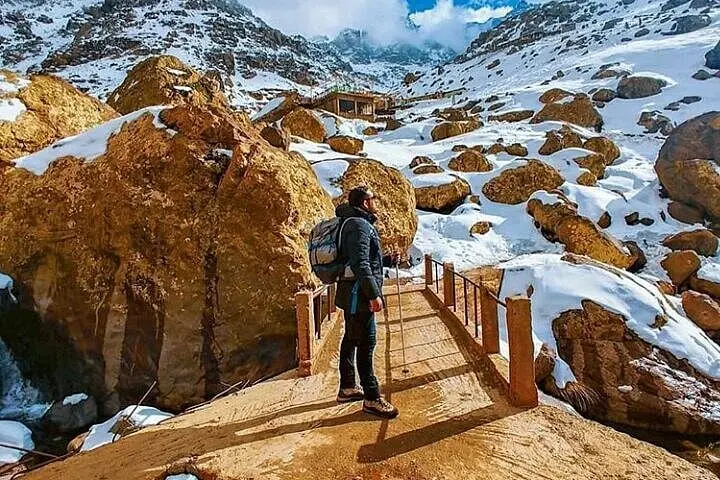
The two-day itinerary is compact: a 5–6 hour, 1,500 m gain approach to the refuge, then an early-morning summit push with about 1,000 m more ascent and a long descent to Imlil. Terrain varies from well-worn mule tracks to loose scree and short steep pitches where poles and careful foot placement matter. Weather can flip quickly; mornings can be calm while afternoons bring wind or snow on higher slopes.
Practical notes: acclimatize in Marrakech or Imlil if possible, carry layers, and plan for early starts to avoid afternoon instability. Hydrate and eat frequently — altitude dulls appetite but not exertion. With a guided team and basic fitness, the climb is achievable and deeply rewarding: the summit view opens across the Atlas toward distant Sahara shadows and Atlantic light.
Expect a long day: about 8 hours round-trip from the refuge with 1,000 m of ascent; pace yourself and start early.
No technical gear is required for the standard route in summer and shoulder seasons; crampons or an ice axe may be advised in winter or heavy snow.
Yes — mules are commonly used to carry luggage to the Neltner Refuge and are included in many guided packages.
Signal is intermittent above Imlil; expect limited coverage near the refuge and on higher slopes.
Atlas mountains tours operates guided outdoor trips and adventures with an emphasis on safety, stewardship, and memorable experiences.
You leave Marrakech behind as the city’s heat thins and the road climbs into a mosaic of terraced fields and ochre villages. By Imlil the air sharpens; the paths begin to rise and the Atlas lays out like a living map of stone and scree. On the first day the trail threads through walnut groves and steep gullies, the ridge above daring you onward toward the Neltner Refuge.
You leave Marrakech behind as the city’s heat thins and the road climbs into a mosaic of terraced fields and ochre villages. By Imlil the air sharpens; the paths begin to rise and the Atlas lays out like a living map of stone and scree. On the first day the trail threads through walnut groves and steep gullies, the ridge above daring you onward toward the Neltner Refuge.
Toubkal (Jebel Toubkal), at roughly 4,167 m, is the highest peak in the Maghreb. Geologically the massif is folded volcanic rock and schist carved by glacial action during the last Ice Age, leaving steep cols and broad summit shoulders. Culturally the route crosses Berber villages where communal hospitality remains central — expect simple stew, strong mint tea, and nights in the refuge with mule-supported gear.
The two-day itinerary is compact: a 5–6 hour, 1,500 m gain approach to the refuge, then an early-morning summit push with about 1,000 m more ascent and a long descent to Imlil. Terrain varies from well-worn mule tracks to loose scree and short steep pitches where poles and careful foot placement matter. Weather can flip quickly; mornings can be calm while afternoons bring wind or snow on higher slopes.
Practical notes: acclimatize in Marrakech or Imlil if possible, carry layers, and plan for early starts to avoid afternoon instability. Hydrate and eat frequently — altitude dulls appetite but not exertion. With a guided team and basic fitness, the climb is achievable and deeply rewarding: the summit view opens across the Atlas toward distant Sahara shadows and Atlantic light.