THE ADVENTURE COLLECTIVE® · Independent discovery and booking for outdoor travel

Leave Marrakech for a compact desert journey across the High Atlas to Zagora: Ait Ben Haddou, Draa palm groves, a private camp night under desert skies, and sunrise over sand. Perfect for travelers who want a concentrated taste of southern Morocco without a long itinerary.
Leave Marrakech for a compact desert journey across the High Atlas to Zagora: Ait Ben Haddou, Draa palm groves, a private camp night under desert skies, and sunrise over sand. Perfect for travelers who want a concentrated taste of southern Morocco without a long itinerary.
A morning departure from Marrakech feels like leaving one climate for another: the High Atlas rises, air sharpening as the road climbs to the Tizi n’Tichka pass and the city’s bustle thins to stone and scrub.
Verified experiences and guided adventures in the surrounding area.
Operated by Desertbrise Travel · Zagora, Drâa-Tafilalet
A morning departure from Marrakech feels like leaving one climate for another: the High Atlas rises, air sharpening as the road climbs to the Tizi n’Tichka pass and the city’s bustle thins to stone and scrub.
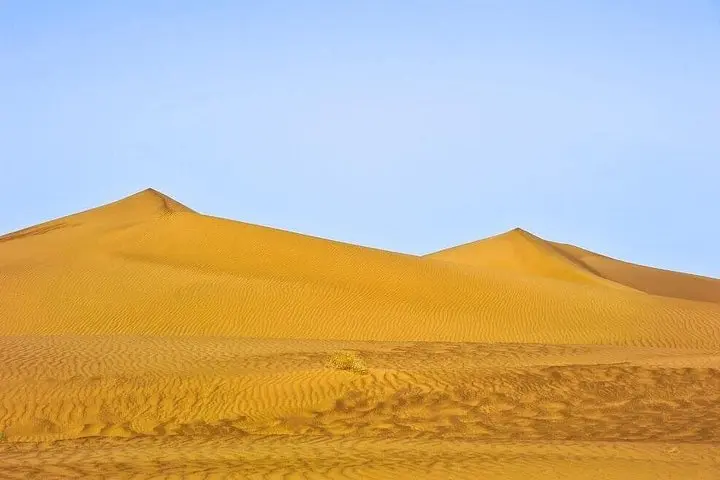
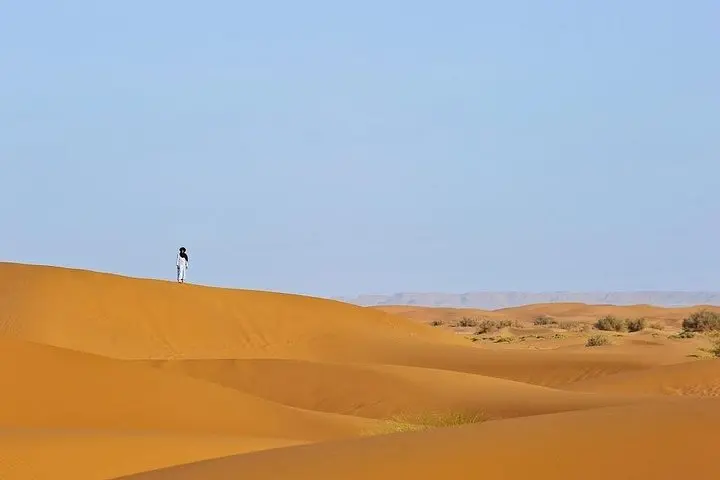
You descend through terraced valleys and Berber villages that cling to slopes, then push south toward Ouarzazate and the palm-lined Draa Valley. The kasbah of Ait Ben Haddou appears in earthen tones, its towers holding stories of caravan trade. Crossing small passes and off-road tracks, the landscape shifts from rocky foothills to ochre desert, where dunes and flat gravel plains assert a quiet, patient presence.
This short private tour traces centuries of movement: salt caravans and traders routed through the Draa corridor, leaving behind ksars and libraries like the Quranic collection at Tamegroute. Geologically, the region is shaped by uplifted sedimentary layers of the High Atlas and alluvial deposits from ancient rivers; wind sculpts dunes while the Draa River supports narrow, cultivated oases.
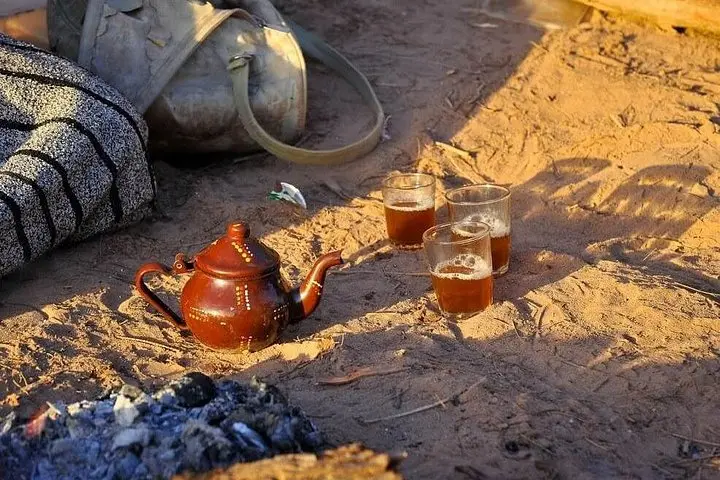
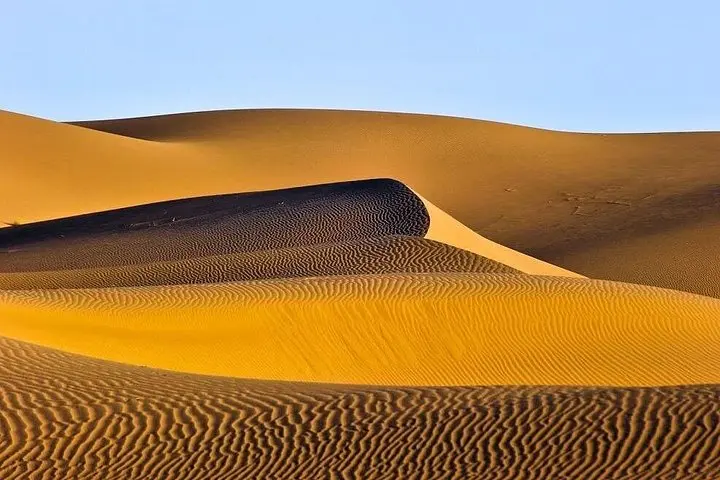
Culture here is practical and hospitable—tea offered in roadside homes, pottery in Tamgroute, and camp life that centers on shared food and fire. Nights in a private camp with shower and toilet put you close to desert skies; sunrise paints the sand in hard, moving relief.
Practical guidance: expect long but scenic driving, minimal technical challenge, and short guided walks. Bring layered clothing for cold nights, sun protection for long daytime exposure, 2–3 liters of water per person per day, and comfortable shoes for uneven surfaces. Plan for early starts to catch sunrise and use local guides who know safe routes across shifting terrain.
Pickup is arranged from hotels or riads in Marrakech; confirm your exact address and preferred time when booking.
The tour includes a private camp night with private toilet and shower facilities; bedding is provided and tents are usually comfortable double or single setups.
The provider lists the tour as suitable for all fitness levels and wheelchair accessible for transportation and surfaces, but check specific mobility needs in advance.
Yes—meals are included; inform the operator of allergies or dietary restrictions at booking so they can prepare appropriate options.
Desertbrise Travel operates guided outdoor trips and adventures with an emphasis on safety, stewardship, and memorable experiences.
A morning departure from Marrakech feels like leaving one climate for another: the High Atlas rises, air sharpening as the road climbs to the Tizi n’Tichka pass and the city’s bustle thins to stone and scrub.
A morning departure from Marrakech feels like leaving one climate for another: the High Atlas rises, air sharpening as the road climbs to the Tizi n’Tichka pass and the city’s bustle thins to stone and scrub.
You descend through terraced valleys and Berber villages that cling to slopes, then push south toward Ouarzazate and the palm-lined Draa Valley. The kasbah of Ait Ben Haddou appears in earthen tones, its towers holding stories of caravan trade. Crossing small passes and off-road tracks, the landscape shifts from rocky foothills to ochre desert, where dunes and flat gravel plains assert a quiet, patient presence.
This short private tour traces centuries of movement: salt caravans and traders routed through the Draa corridor, leaving behind ksars and libraries like the Quranic collection at Tamegroute. Geologically, the region is shaped by uplifted sedimentary layers of the High Atlas and alluvial deposits from ancient rivers; wind sculpts dunes while the Draa River supports narrow, cultivated oases.
Culture here is practical and hospitable—tea offered in roadside homes, pottery in Tamgroute, and camp life that centers on shared food and fire. Nights in a private camp with shower and toilet put you close to desert skies; sunrise paints the sand in hard, moving relief.
Practical guidance: expect long but scenic driving, minimal technical challenge, and short guided walks. Bring layered clothing for cold nights, sun protection for long daytime exposure, 2–3 liters of water per person per day, and comfortable shoes for uneven surfaces. Plan for early starts to catch sunrise and use local guides who know safe routes across shifting terrain.