THE ADVENTURE COLLECTIVE® · Independent discovery and booking for outdoor travel

A compressed two-day journey from Agadir across the Tizi-n-Tichka pass to the Draa Valley and Zagora. Expect dramatic mountain roads, lush palm oases, and an overnight desert camp under expansive night skies.
A compressed two-day journey from Agadir across the Tizi-n-Tichka pass to the Draa Valley and Zagora. Expect dramatic mountain roads, lush palm oases, and an overnight desert camp under expansive night skies.
Morning light strips color from the High Atlas as your minivan climbs Tizi-n-Tichka and the road unwinds like a promise toward desert heat.
Verified experiences and guided adventures in the surrounding area.
Operated by Ibrahim Marokko Tours · Zagora, Drâa-Tafilalet
Morning light strips color from the High Atlas as your minivan climbs Tizi-n-Tichka and the road unwinds like a promise toward desert heat.
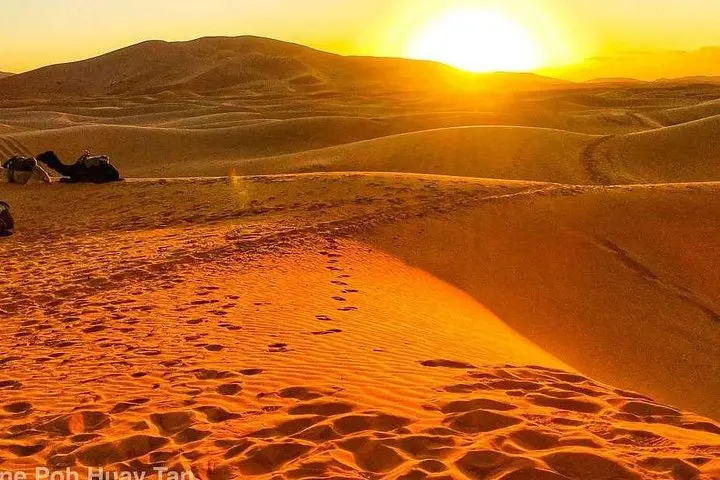
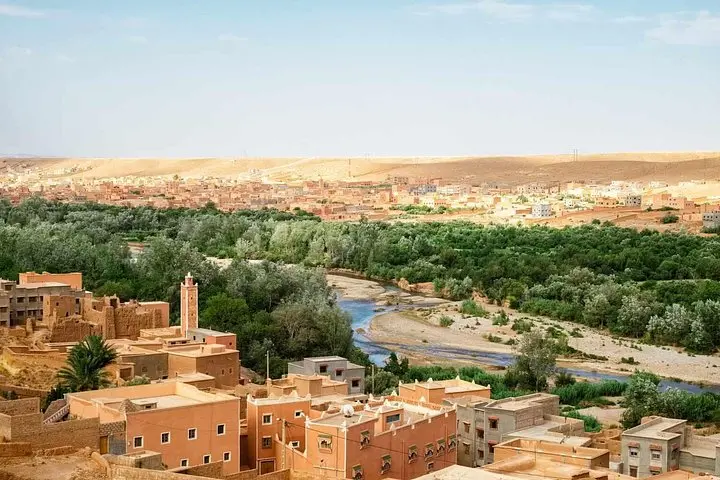
By midday, rock turns to ochre and the Draa River appears as a ribbon of green, palm groves huddling around ancient kasbahs. On this condensed two-day route from Agadir, you trade coastal air for wide horizons: stony hammada gives way to sandy ridges outside Zagora, and in camp the night sky seems to press close, stars tracking slow across the black.
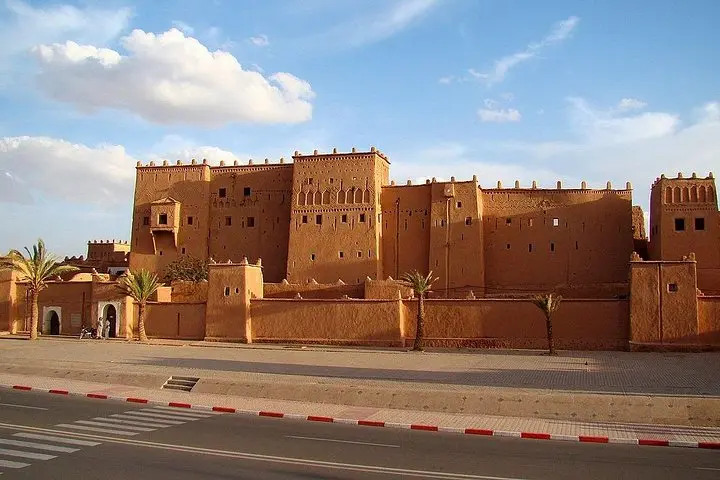
This corridor has been a caravan route for centuries—salt, saffron and dates moved through the Draa valley, leaving behind fortified kasbahs and mud-brick architecture. Geologically, the High Atlas is young and folded, its passes carved by uplift and episodic rivers; downstream the Draa’s alluvial plain supports narrow, irrigated oases that feel improbably lush against the desert.
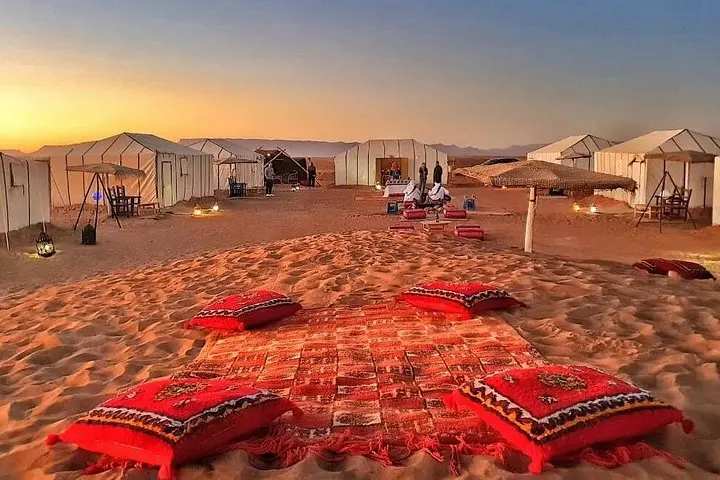
Expect long scenic drives with short walks through souks and palm groves, a night in a desert camp with basic facilities, and options for camel rides. Cultural interactions are straightforward: small Berber towns and saffron farms (Taliouine) welcome visitors but operate on local rhythms.
Practical guidance: start early to cross the pass in cooler light, carry ample water and sun protection, and layer for chilly desert nights (temps can drop sharply). Bring cash for remote purchases and tip drivers and guides directly. This two-day overview grants a concentrated taste of southern Morocco—history, geology and campfire company—without demanding technical skills, but it rewards preparation and respect for fragile oasis environments.
Expect roughly 6–8 hours of driving across diverse terrain each way depending on stops; the route crosses the Tizi-n-Tichka pass (approx. 2,260 m).
Camps are basic desert camps with sleeping mats or simple beds, communal dining and shared toilets; electricity is limited—check with the operator for specifics.
The tour is marketed as suitable for all fitness levels, but it involves long car travel and some uneven walking; not recommended for travelers with serious spinal or cardiovascular conditions, infants should use available specialized seats.
No special permits are required for this route; check routine travel vaccinations and travel insurance recommendations before departure.
Ibrahim Marokko Tours operates guided outdoor trips and adventures with an emphasis on safety, stewardship, and memorable experiences.
Morning light strips color from the High Atlas as your minivan climbs Tizi-n-Tichka and the road unwinds like a promise toward desert heat.
Morning light strips color from the High Atlas as your minivan climbs Tizi-n-Tichka and the road unwinds like a promise toward desert heat.
By midday, rock turns to ochre and the Draa River appears as a ribbon of green, palm groves huddling around ancient kasbahs. On this condensed two-day route from Agadir, you trade coastal air for wide horizons: stony hammada gives way to sandy ridges outside Zagora, and in camp the night sky seems to press close, stars tracking slow across the black.
This corridor has been a caravan route for centuries—salt, saffron and dates moved through the Draa valley, leaving behind fortified kasbahs and mud-brick architecture. Geologically, the High Atlas is young and folded, its passes carved by uplift and episodic rivers; downstream the Draa’s alluvial plain supports narrow, irrigated oases that feel improbably lush against the desert.
Expect long scenic drives with short walks through souks and palm groves, a night in a desert camp with basic facilities, and options for camel rides. Cultural interactions are straightforward: small Berber towns and saffron farms (Taliouine) welcome visitors but operate on local rhythms.
Practical guidance: start early to cross the pass in cooler light, carry ample water and sun protection, and layer for chilly desert nights (temps can drop sharply). Bring cash for remote purchases and tip drivers and guides directly. This two-day overview grants a concentrated taste of southern Morocco—history, geology and campfire company—without demanding technical skills, but it rewards preparation and respect for fragile oasis environments.