THE ADVENTURE COLLECTIVE® · Independent discovery and booking for outdoor travel

A compact two-day circuit from Agadir to Zagora that pairs long scenic drives with an overnight Berber bivouac. Visit Taroudant, Aït Ben Haddou and Ouarzazate while sleeping beneath desert stars.
A compact two-day circuit from Agadir to Zagora that pairs long scenic drives with an overnight Berber bivouac. Visit Taroudant, Aït Ben Haddou and Ouarzazate while sleeping beneath desert stars.
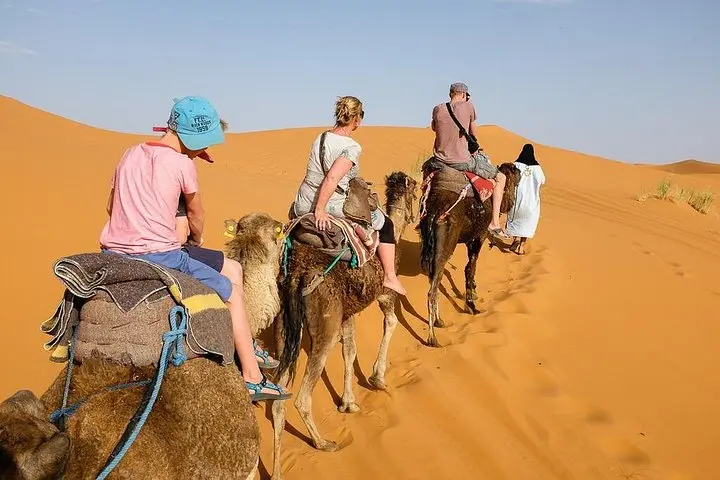
You arrive on a long ribbon of asphalt that gives way to ochre plains, the vehicle windows framing palms, kasbah walls and the first sandy ribs of the desert. By sunset the dunes outside Zagora glow; wind-touched ridges seem to shift under the sky while the camp’s lanterns pulse like steady heartbeats. The ride itself is part of the adventure — a traveling cross-section of southern Morocco from Agadir’s Atlantic flats into the foothills of the High Atlas and the deep, red light of the Drâa Valley.
Verified experiences and guided adventures in the surrounding area.
Operated by MarrakechAttraction.com · Zagora, Drâa-Tafilalet
You arrive on a long ribbon of asphalt that gives way to ochre plains, the vehicle windows framing palms, kasbah walls and the first sandy ribs of the desert. By sunset the dunes outside Zagora glow; wind-touched ridges seem to shift under the sky while the camp’s lanterns pulse like steady heartbeats. The ride itself is part of the adventure — a traveling cross-section of southern Morocco from Agadir’s Atlantic flats into the foothills of the High Atlas and the deep, red light of the Drâa Valley.
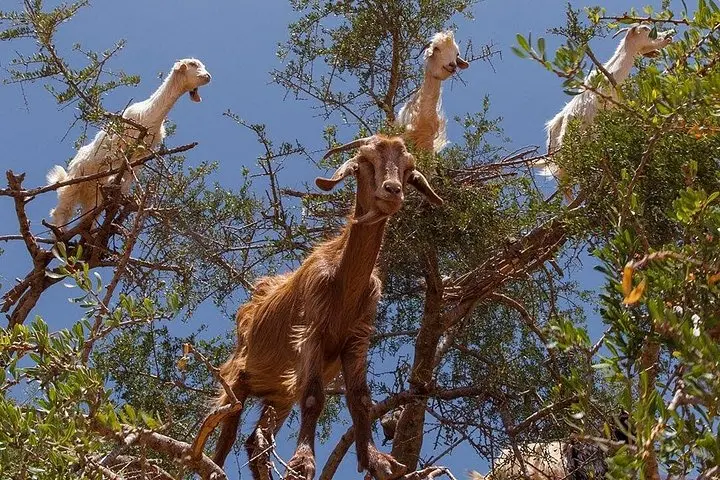
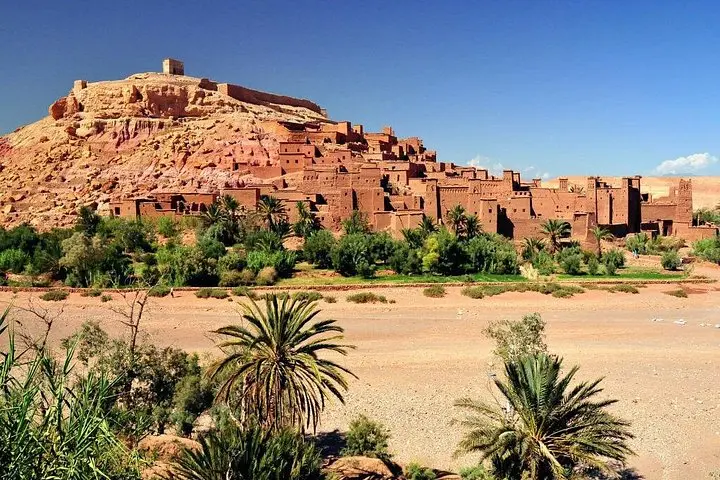
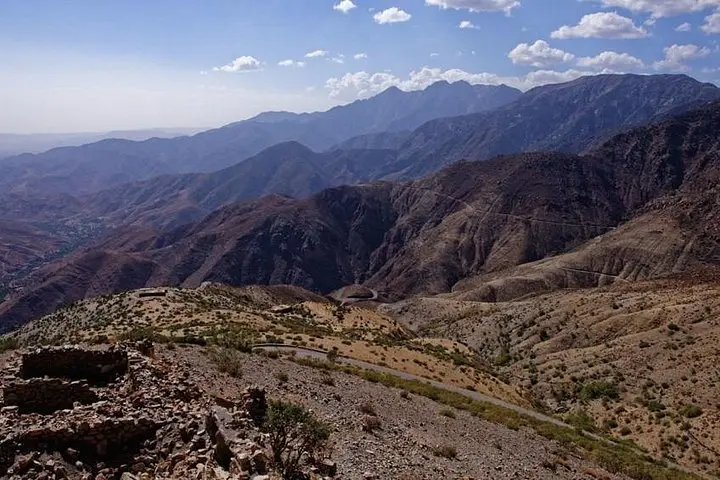
The route threads historical layers: Taroudant’s red ramparts and markets recall Saadian-era trade, Taznakht’s woven carpets preserve Amazigh patterns passed down generations, and Aït Ben Haddou stands as a mud-brick archive of caravan routes and film history. Geologically the journey moves from coastal sedimentary plains up over Atlas foothills (road passes commonly crest above 1,000 m) and down into wind-sculpted Saharan basins where sand, sun and ancient irrigation (khettaras) shape oases like Tiout.
Expect long driving segments (plan for 6–8 hours of road time spread over two days), short cultural strolls and a single overnight in a traditional Berber tent under clear desert skies. Pack sun protection, layers for cold nights, and modest clothing for village and kasbah visits. Time photography for late afternoon and pre-dawn when light sculpts dunes and kasbahs. Hydrate proactively; the desert’s dry air and long drives make electrolyte balance and frequent breaks essential. This is an accessible immersion into southern Morocco’s landscapes and living traditions — low technical demand, high sensory payoff.
Expect roughly 6–8 hours of total driving spread over the itinerary depending on stops and traffic; the tour schedules breaks at key villages and viewpoints.
You stay one night in a traditional Berber tent (bivouac) in a desert camp with shared facilities; bedding and a simple dinner and breakfast are provided.
The tour is listed as physically easy and vehicles are modern and air-conditioned, but discuss specific mobility needs with the operator for transfers and tent access.
Visa requirements depend on your nationality — check Moroccan entry rules before travel and ensure your passport has sufficient validity.
MarrakechAttraction.com operates guided outdoor trips and adventures with an emphasis on safety, stewardship, and memorable experiences.
You arrive on a long ribbon of asphalt that gives way to ochre plains, the vehicle windows framing palms, kasbah walls and the first sandy ribs of the desert. By sunset the dunes outside Zagora glow; wind-touched ridges seem to shift under the sky while the camp’s lanterns pulse like steady heartbeats. The ride itself is part of the adventure — a traveling cross-section of southern Morocco from Agadir’s Atlantic flats into the foothills of the High Atlas and the deep, red light of the Drâa Valley.
You arrive on a long ribbon of asphalt that gives way to ochre plains, the vehicle windows framing palms, kasbah walls and the first sandy ribs of the desert. By sunset the dunes outside Zagora glow; wind-touched ridges seem to shift under the sky while the camp’s lanterns pulse like steady heartbeats. The ride itself is part of the adventure — a traveling cross-section of southern Morocco from Agadir’s Atlantic flats into the foothills of the High Atlas and the deep, red light of the Drâa Valley.
The route threads historical layers: Taroudant’s red ramparts and markets recall Saadian-era trade, Taznakht’s woven carpets preserve Amazigh patterns passed down generations, and Aït Ben Haddou stands as a mud-brick archive of caravan routes and film history. Geologically the journey moves from coastal sedimentary plains up over Atlas foothills (road passes commonly crest above 1,000 m) and down into wind-sculpted Saharan basins where sand, sun and ancient irrigation (khettaras) shape oases like Tiout.
Expect long driving segments (plan for 6–8 hours of road time spread over two days), short cultural strolls and a single overnight in a traditional Berber tent under clear desert skies. Pack sun protection, layers for cold nights, and modest clothing for village and kasbah visits. Time photography for late afternoon and pre-dawn when light sculpts dunes and kasbahs. Hydrate proactively; the desert’s dry air and long drives make electrolyte balance and frequent breaks essential. This is an accessible immersion into southern Morocco’s landscapes and living traditions — low technical demand, high sensory payoff.