THE ADVENTURE COLLECTIVE® · Independent discovery and booking for outdoor travel

A compact 2-day escape from Marrakech that threads the High Atlas, UNESCO-listed Aït Ben Haddou, the green Draa Valley and an overnight camp in the Zagora dunes. Ideal for travelers short on time who still want an authentic desert night and sunset camel trek.
A compact 2-day escape from Marrakech that threads the High Atlas, UNESCO-listed Aït Ben Haddou, the green Draa Valley and an overnight camp in the Zagora dunes. Ideal for travelers short on time who still want an authentic desert night and sunset camel trek.
You crest Tizi n’Tichka at 2,260 meters as the road unspools beneath the High Atlas — red rock folds, Berber villages clinging to slopes, and a sudden, clear view toward the low desert. Over the next 48 hours the landscape changes from alpine passes to palm-lined riverbeds, ending under a wide Saharan sky where dunes push their edges into the night.
Verified experiences and guided adventures in the surrounding area.
Operated by Sahara cruiser · Zagora, Drâa-Tafilalet
You crest Tizi n’Tichka at 2,260 meters as the road unspools beneath the High Atlas — red rock folds, Berber villages clinging to slopes, and a sudden, clear view toward the low desert. Over the next 48 hours the landscape changes from alpine passes to palm-lined riverbeds, ending under a wide Saharan sky where dunes push their edges into the night.
The route follows a long caravan corridor: Aït Ben Haddou, a UNESCO-listed ksar of mud‑brick towers, stands where traders once paused between Marrakech and the Sahara. Geologically the region shifts from folded metamorphic peaks to alluvial plains and wind-sculpted dunes; the Draa Valley, Morocco’s longest river system, brings a surprising green ribbon through dry country. Local culture is visible in roadside argan and date groves, in kasbah architecture, and in the hospitality of small towns between Ouarzazate and Zagora.
Practically, expect two days of driving with stops for photos and short walks, a camel ride into the dunes at sunset, and one night in a desert camp (basic, typically shared tents with dinner and breakfast). Bring layers for cold desert nights, sun protection for daytime, and comfortable shoes for uneven ground. Hydration matters — water is provided but carry a refillable bottle. Timing your camera for golden-hour over the dunes will reward you; allow extra time at Aït Ben Haddou to explore the lanes and viewpoints.
This itinerary packs classic Moroccan highlights into a short window: dramatic passes, film‑set kasbahs, a palm‑lined river corridor, and an authentic night under the stars in Zagora’s dunes.
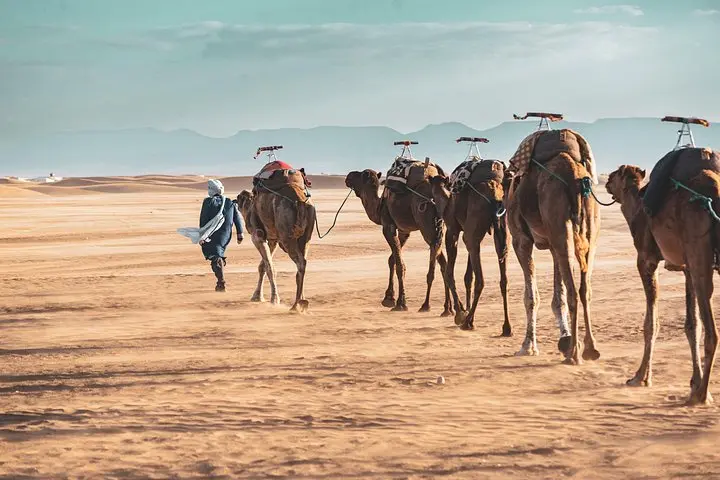
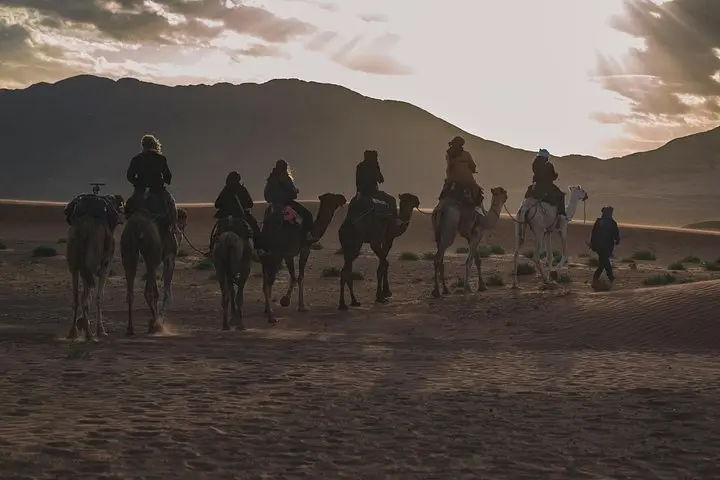
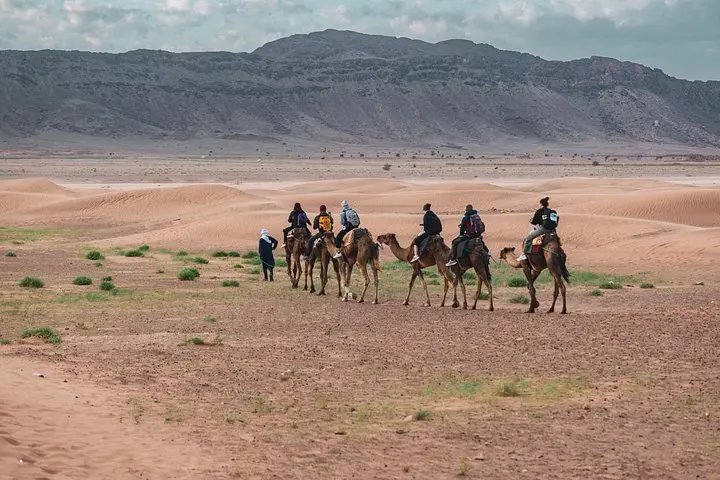
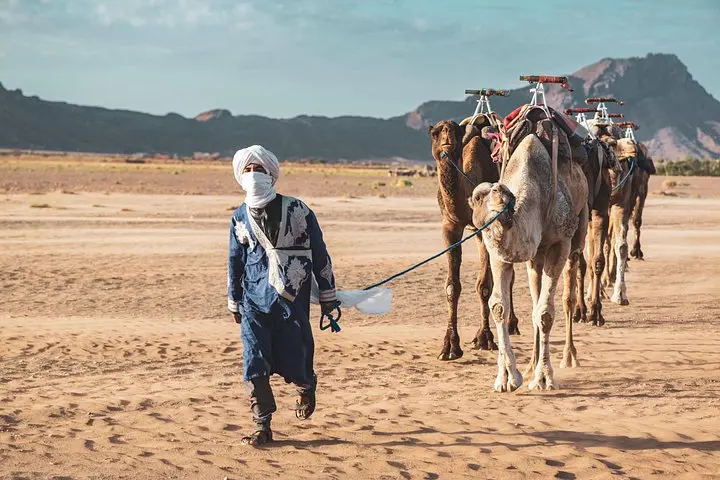
Camel rides on this itinerary are typically short — about 30–60 minutes — timed to reach a dune viewpoint for sunset; longer rides are sometimes available for an extra fee.
Overnight camps are basic to comfortable: shared tents or simple private tents with bedding, communal dinner and morning tea; facilities vary by camp operator.
Children can join but infants often must sit on laps during transit; camel rides and long drives may be tiring for very young kids — check age restrictions with the operator.
This itinerary includes guided stops at Aït Ben Haddou; however, specific monument admission fees may not be included — confirm with the operator before booking.
Sahara cruiser operates guided outdoor trips and adventures with an emphasis on safety, stewardship, and memorable experiences.
You crest Tizi n’Tichka at 2,260 meters as the road unspools beneath the High Atlas — red rock folds, Berber villages clinging to slopes, and a sudden, clear view toward the low desert. Over the next 48 hours the landscape changes from alpine passes to palm-lined riverbeds, ending under a wide Saharan sky where dunes push their edges into the night.
You crest Tizi n’Tichka at 2,260 meters as the road unspools beneath the High Atlas — red rock folds, Berber villages clinging to slopes, and a sudden, clear view toward the low desert. Over the next 48 hours the landscape changes from alpine passes to palm-lined riverbeds, ending under a wide Saharan sky where dunes push their edges into the night.
The route follows a long caravan corridor: Aït Ben Haddou, a UNESCO-listed ksar of mud‑brick towers, stands where traders once paused between Marrakech and the Sahara. Geologically the region shifts from folded metamorphic peaks to alluvial plains and wind-sculpted dunes; the Draa Valley, Morocco’s longest river system, brings a surprising green ribbon through dry country. Local culture is visible in roadside argan and date groves, in kasbah architecture, and in the hospitality of small towns between Ouarzazate and Zagora.
Practically, expect two days of driving with stops for photos and short walks, a camel ride into the dunes at sunset, and one night in a desert camp (basic, typically shared tents with dinner and breakfast). Bring layers for cold desert nights, sun protection for daytime, and comfortable shoes for uneven ground. Hydration matters — water is provided but carry a refillable bottle. Timing your camera for golden-hour over the dunes will reward you; allow extra time at Aït Ben Haddou to explore the lanes and viewpoints.
This itinerary packs classic Moroccan highlights into a short window: dramatic passes, film‑set kasbahs, a palm‑lined river corridor, and an authentic night under the stars in Zagora’s dunes.