THE ADVENTURE COLLECTIVE® · Independent discovery and booking for outdoor travel

Cross the High Atlas from Marrakech into the Draa Valley on a compact 2-day circuit that mixes Ait Ben Haddou, Todra and Dades gorges, and an overnight in a Berber desert camp with camel rides and tagine under the stars. Practical and scenic, this loop is a fast, vivid taste of southern Morocco.
Cross the High Atlas from Marrakech into the Draa Valley on a compact 2-day circuit that mixes Ait Ben Haddou, Todra and Dades gorges, and an overnight in a Berber desert camp with camel rides and tagine under the stars. Practical and scenic, this loop is a fast, vivid taste of southern Morocco.
Dawn lifts off the red roofs of Marrakech as a minibus snakes over the High Atlas, climbing the Tizi n’Tichka pass and dropping travelers into a harsher light where the mountains hand the road to wide, stubbled valleys. In two days the landscape will change from cedar-dotted slopes to palm-lined riverbeds and the open, stony edge of the Sahara.
Verified experiences and guided adventures in the surrounding area.
Operated by Sundunes Experience · Zagora, Drâa-Tafilalet
Dawn lifts off the red roofs of Marrakech as a minibus snakes over the High Atlas, climbing the Tizi n’Tichka pass and dropping travelers into a harsher light where the mountains hand the road to wide, stubbled valleys. In two days the landscape will change from cedar-dotted slopes to palm-lined riverbeds and the open, stony edge of the Sahara.
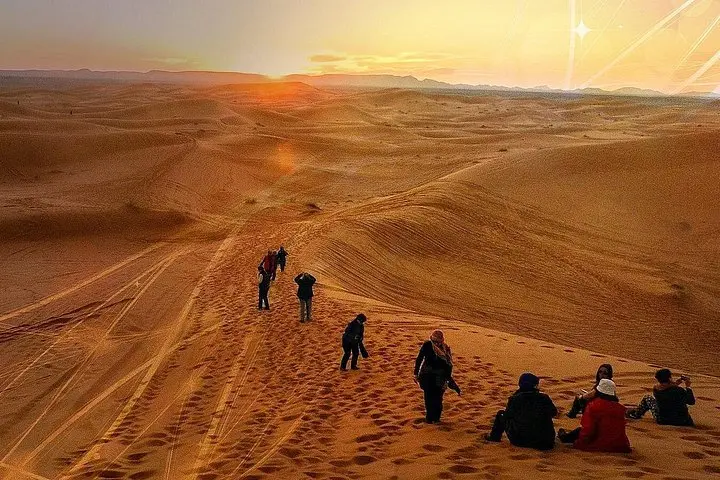
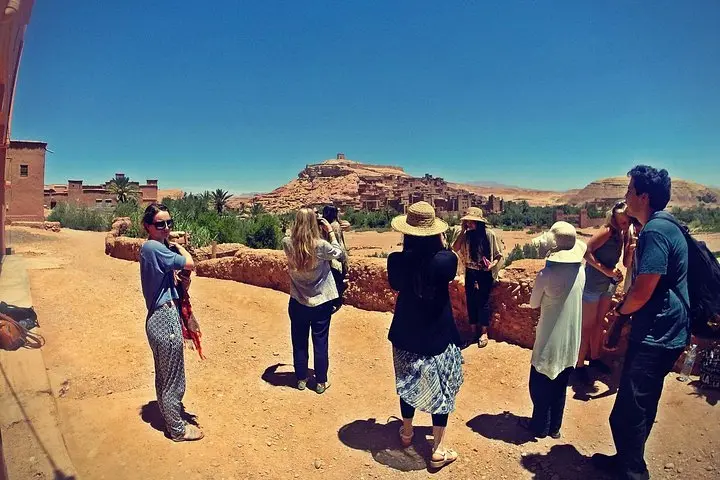
The route threads history: Ait Ben Haddou, the earthen ksar protected by UNESCO, marks an old caravan artery between the plains and the desert; further east the Dades and Todra canyons show the region’s geological work—water chiseling vertical walls through limestone and sandstone over millennia. Local Berber culture remains visible in kasbahs, palm groves and the camp life outside Zagora where traditional tents and tagine meals bring communal warmth to cold desert nights.
Travelers should expect long road sections (Marrakech to Zagora is several hundred kilometers with multiple stops), brief walks through rocky gorges, and short camel treks at sunrise or sunset. Nights are cold; daytime can be intensely sunny. Facilities in desert camps are basic—bring layers, sun protection and a small daypack for essentials.
Practical tips: confirm pickup point and passport needs in advance, carry cash for small purchases at roadside stops, and allow extra time for photography and unexpected delays on mountain roads. The trip is an accessible introduction to Morocco’s southern landscapes—best for those who like varied terrain, cultural stops and an overnight under wide, starry skies.
The tour uses a designated meeting point close to central Marrakech; confirm the exact spot and pickup time with the operator before departure.
The tour includes dinner (traditional tagine) at the desert camp and breakfast the next morning; lunches in towns like Ait Ben Haddou are usually paid locally (roughly €8–€10).
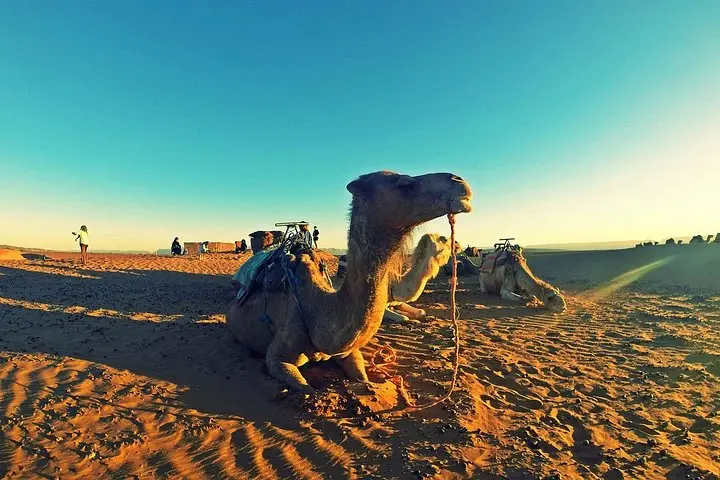
Sunrise and sunset camel treks are included; rides are typically short transfers to and from camp—not multi-day treks—lasting around 30–90 minutes depending on the schedule.
The operator notes the tour is physically easy and stroller-accessible, but it is not recommended for travelers with serious heart conditions due to long driving stretches and altitude during mountain crossings.
Sundunes Experience operates guided outdoor trips and adventures with an emphasis on safety, stewardship, and memorable experiences.
Dawn lifts off the red roofs of Marrakech as a minibus snakes over the High Atlas, climbing the Tizi n’Tichka pass and dropping travelers into a harsher light where the mountains hand the road to wide, stubbled valleys. In two days the landscape will change from cedar-dotted slopes to palm-lined riverbeds and the open, stony edge of the Sahara.
Dawn lifts off the red roofs of Marrakech as a minibus snakes over the High Atlas, climbing the Tizi n’Tichka pass and dropping travelers into a harsher light where the mountains hand the road to wide, stubbled valleys. In two days the landscape will change from cedar-dotted slopes to palm-lined riverbeds and the open, stony edge of the Sahara.
The route threads history: Ait Ben Haddou, the earthen ksar protected by UNESCO, marks an old caravan artery between the plains and the desert; further east the Dades and Todra canyons show the region’s geological work—water chiseling vertical walls through limestone and sandstone over millennia. Local Berber culture remains visible in kasbahs, palm groves and the camp life outside Zagora where traditional tents and tagine meals bring communal warmth to cold desert nights.
Travelers should expect long road sections (Marrakech to Zagora is several hundred kilometers with multiple stops), brief walks through rocky gorges, and short camel treks at sunrise or sunset. Nights are cold; daytime can be intensely sunny. Facilities in desert camps are basic—bring layers, sun protection and a small daypack for essentials.
Practical tips: confirm pickup point and passport needs in advance, carry cash for small purchases at roadside stops, and allow extra time for photography and unexpected delays on mountain roads. The trip is an accessible introduction to Morocco’s southern landscapes—best for those who like varied terrain, cultural stops and an overnight under wide, starry skies.