THE ADVENTURE COLLECTIVE® · Independent discovery and booking for outdoor travel

A compact, two‑day loop from Marrakech that delivers High Atlas views, a camel trek at sunset, an overnight Berber camp and a stop at the iconic Ait Ben Haddou ksar. Expect long scenic drives, starry nights and direct contact with Berber culture.
A compact, two‑day loop from Marrakech that delivers High Atlas views, a camel trek at sunset, an overnight Berber camp and a stop at the iconic Ait Ben Haddou ksar. Expect long scenic drives, starry nights and direct contact with Berber culture.
Sand slips under camel hooves as the minivan drops down from the Tizi n'Tichka pass and the High Atlas folds away into ochre plains. On this two‑day loop from Marrakech, the road alternates between tight switchbacks, palm‑lined riverbeds and wide horizons where the Sahara dares you to slow down and look.
Verified experiences and guided adventures in the surrounding area.
Operated by Mbarek Ait Khouya · Zagora, Drâa-Tafilalet
Sand slips under camel hooves as the minivan drops down from the Tizi n'Tichka pass and the High Atlas folds away into ochre plains. On this two‑day loop from Marrakech, the road alternates between tight switchbacks, palm‑lined riverbeds and wide horizons where the Sahara dares you to slow down and look.
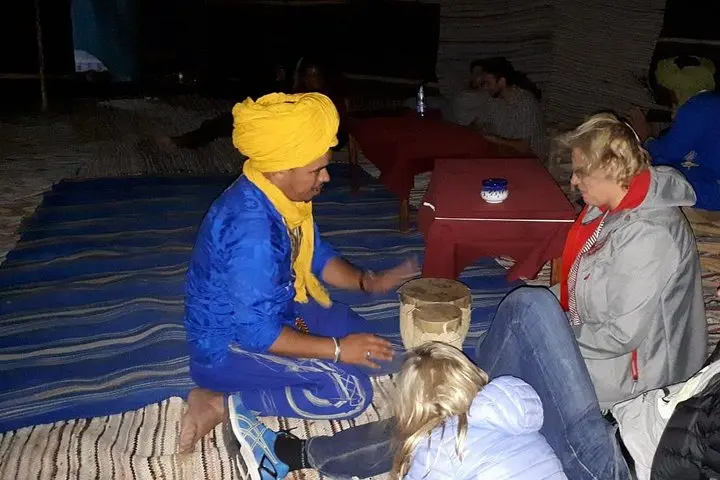
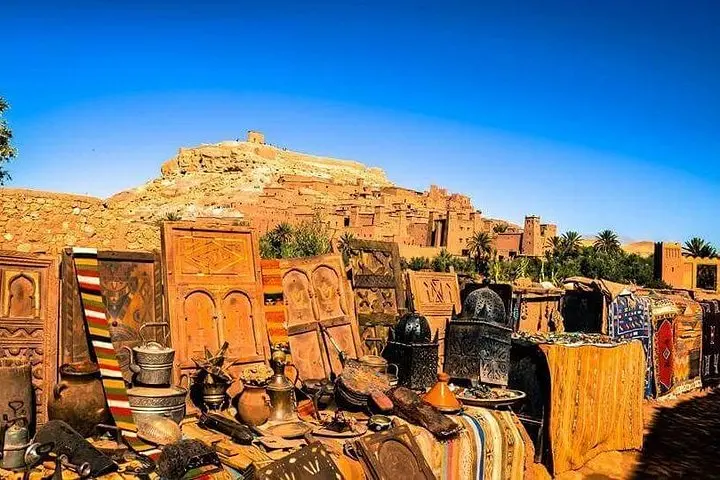
Geology here is blunt and obvious: granitic peaks of the High Atlas (Tizi n'Tichka ~2,260 m) give way to eroded foothills and the alluvial terraces of the Draa Valley, where date palms mark centuries of irrigation. Culture arrives in stacked-earth silhouettes — Ait Ben Haddou’s UNESCO ksar is a reminder of trans‑Saharan caravan routes and the mud‑brick craftsmanship that shaped local life. Along the way, Berber villages and roadside cooperatives offer a direct link to living traditions.
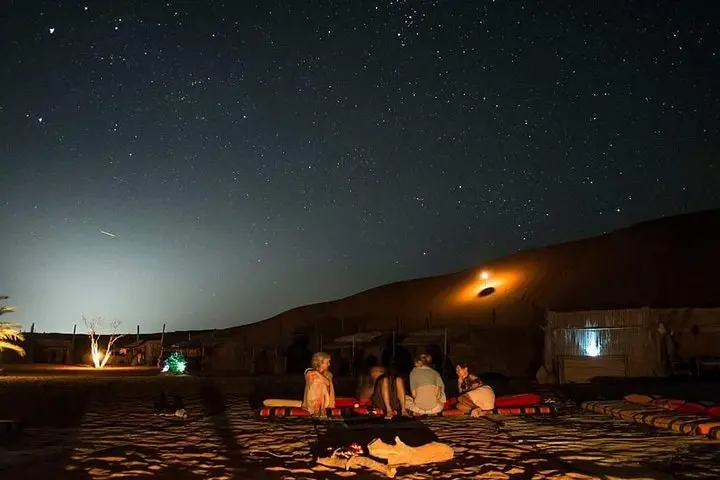
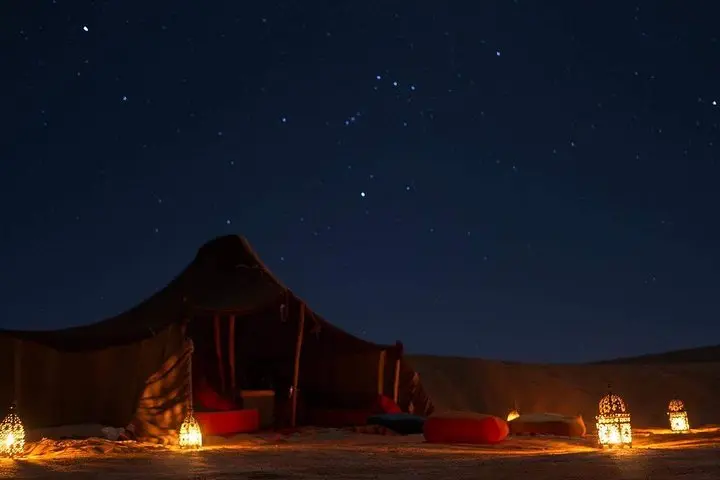
Expect long stretches in an air‑conditioned vehicle (Marrakech to Zagora ~360–380 km, 6–8 hours of driving with stops), a late‑afternoon camel trek across smaller dunes (roughly 45–90 minutes), and an overnight in a Berber desert camp beneath spectacular stars. Sunrise camel rides, a visit to Ait Ben Haddou and time in the Draa palm groves round out the route.
Practical notes: bring layered clothing for hot days and cold nights, plenty of water and sunscreen, and small cash for markets and tips. Mobility is generally easy but the camel trek and dune walking require light balance and comfortable footwear. Bookings typically include transfers, meals and a guide; check pickup time in Marrakech and confirm dietary needs in advance.
The tour departs from and returns to accommodations in Marrakech — confirm your pickup point when booking.
Camel treks are typically 45–90 minutes at sunset and sunrise; they’re gentle but require basic balance and ability to mount/dismount with assistance.
Camps are traditional Berber tents with sleeping mats or simple beds; meals are included and toilets are basic — expectations should be modest.
Most operators can handle dietary requests if informed at booking; bring snacks if you have strict requirements.
Mbarek Ait Khouya operates guided outdoor trips and adventures with an emphasis on safety, stewardship, and memorable experiences.
Sand slips under camel hooves as the minivan drops down from the Tizi n'Tichka pass and the High Atlas folds away into ochre plains. On this two‑day loop from Marrakech, the road alternates between tight switchbacks, palm‑lined riverbeds and wide horizons where the Sahara dares you to slow down and look.
Sand slips under camel hooves as the minivan drops down from the Tizi n'Tichka pass and the High Atlas folds away into ochre plains. On this two‑day loop from Marrakech, the road alternates between tight switchbacks, palm‑lined riverbeds and wide horizons where the Sahara dares you to slow down and look.
Geology here is blunt and obvious: granitic peaks of the High Atlas (Tizi n'Tichka ~2,260 m) give way to eroded foothills and the alluvial terraces of the Draa Valley, where date palms mark centuries of irrigation. Culture arrives in stacked-earth silhouettes — Ait Ben Haddou’s UNESCO ksar is a reminder of trans‑Saharan caravan routes and the mud‑brick craftsmanship that shaped local life. Along the way, Berber villages and roadside cooperatives offer a direct link to living traditions.
Expect long stretches in an air‑conditioned vehicle (Marrakech to Zagora ~360–380 km, 6–8 hours of driving with stops), a late‑afternoon camel trek across smaller dunes (roughly 45–90 minutes), and an overnight in a Berber desert camp beneath spectacular stars. Sunrise camel rides, a visit to Ait Ben Haddou and time in the Draa palm groves round out the route.
Practical notes: bring layered clothing for hot days and cold nights, plenty of water and sunscreen, and small cash for markets and tips. Mobility is generally easy but the camel trek and dune walking require light balance and comfortable footwear. Bookings typically include transfers, meals and a guide; check pickup time in Marrakech and confirm dietary needs in advance.