THE ADVENTURE COLLECTIVE® · Independent discovery and booking for outdoor travel

Escape Marrakech for two days of high Atlas passes, the Draa Valley’s palm groves, Ait Ben Haddou’s cinematic ksar and an overnight under desert stars. This compact loop mixes accessible culture with raw desert scenery and an authentic camel-camp night.
Escape Marrakech for two days of high Atlas passes, the Draa Valley’s palm groves, Ait Ben Haddou’s cinematic ksar and an overnight under desert stars. This compact loop mixes accessible culture with raw desert scenery and an authentic camel-camp night.
At first light a convoy peels away from Marrakech, the city’s ochre walls shrinking as the road climbs the Tizi n’Tichka pass. The air thins, Atlas peaks rub shoulders with sun-baked plains, and fields of argan and stubbled scrub give way to the long green thread of the Draa River daring you forward.
Verified experiences and guided adventures in the surrounding area.
Operated by Malakane travel · Marrakech, Marrakech-Safi
At first light a convoy peels away from Marrakech, the city’s ochre walls shrinking as the road climbs the Tizi n’Tichka pass. The air thins, Atlas peaks rub shoulders with sun-baked plains, and fields of argan and stubbled scrub give way to the long green thread of the Draa River daring you forward.
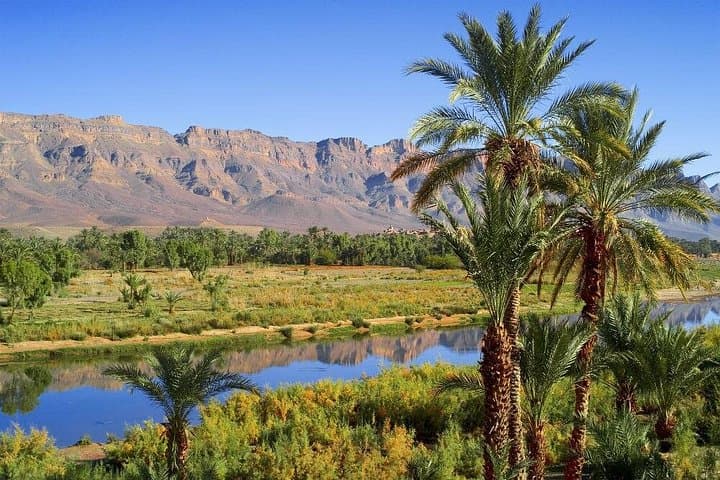
This two-day loop threads history, geology and living culture. Caravans once followed this corridor from the Sahara to Marrakech; the mud-brick ksar of Ait Ben Haddou—part medieval fortress, part film set—still watches the road. The geology is blunt and elemental: folded limestone and volcanic ridges funnel seasonal wadis into the Draa’s palm-lined oases, creating unexpected pockets of irrigation and life in a semi-arid landscape.
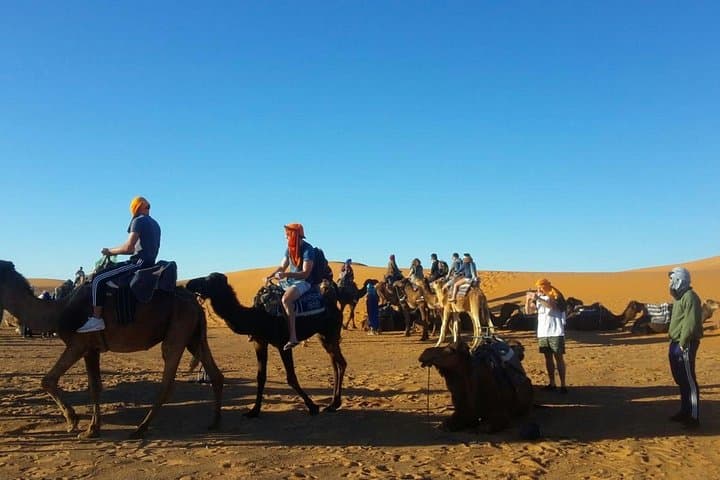
The cultural beat here is Berber and Saharan: small villages, palm groves tended by irrigation channels, and nomadic traditions reframed for visitors. In Zagora the dunes feel immediate—camel backs creak, the wind re-sculpts the sand, and the desert night is shockingly cold after sunset.
Practical guidance: pack layered clothing for hot days and chilly nights, bring a reusable water bottle and sun protection, and be prepared for long vehicle stretches between stops. Expect simple desert camping facilities and shared haimas; camel rides last roughly 1–2 hours with the option to walk. Logistics are straightforward: private transfers, an English-speaking driver-guide on many departures, and a minimum two-person booking. Time your trip for spring or autumn for the most comfortable temperatures and best light for photography.
No prior experience is required; guides give a short briefing and camels are trained for tourist saddles and steady lines.
Camps usually have shared facilities; some haimas offer private tents but amenities are basic—bring personal hygiene supplies.
You cross the Tizi n’Tichka pass (~2,260 m) briefly—altitude effects are uncommon but allow time to acclimatize if you have respiratory or cardiac concerns.
Many departures require a minimum of two people and include hotel pickup in Marrakech; check booking details for exact pickup logistics.
Malakane travel operates guided outdoor trips and adventures with an emphasis on safety, stewardship, and memorable experiences.


At first light a convoy peels away from Marrakech, the city’s ochre walls shrinking as the road climbs the Tizi n’Tichka pass. The air thins, Atlas peaks rub shoulders with sun-baked plains, and fields of argan and stubbled scrub give way to the long green thread of the Draa River daring you forward.
At first light a convoy peels away from Marrakech, the city’s ochre walls shrinking as the road climbs the Tizi n’Tichka pass. The air thins, Atlas peaks rub shoulders with sun-baked plains, and fields of argan and stubbled scrub give way to the long green thread of the Draa River daring you forward.
This two-day loop threads history, geology and living culture. Caravans once followed this corridor from the Sahara to Marrakech; the mud-brick ksar of Ait Ben Haddou—part medieval fortress, part film set—still watches the road. The geology is blunt and elemental: folded limestone and volcanic ridges funnel seasonal wadis into the Draa’s palm-lined oases, creating unexpected pockets of irrigation and life in a semi-arid landscape.
The cultural beat here is Berber and Saharan: small villages, palm groves tended by irrigation channels, and nomadic traditions reframed for visitors. In Zagora the dunes feel immediate—camel backs creak, the wind re-sculpts the sand, and the desert night is shockingly cold after sunset.
Practical guidance: pack layered clothing for hot days and chilly nights, bring a reusable water bottle and sun protection, and be prepared for long vehicle stretches between stops. Expect simple desert camping facilities and shared haimas; camel rides last roughly 1–2 hours with the option to walk. Logistics are straightforward: private transfers, an English-speaking driver-guide on many departures, and a minimum two-person booking. Time your trip for spring or autumn for the most comfortable temperatures and best light for photography.